
Watering
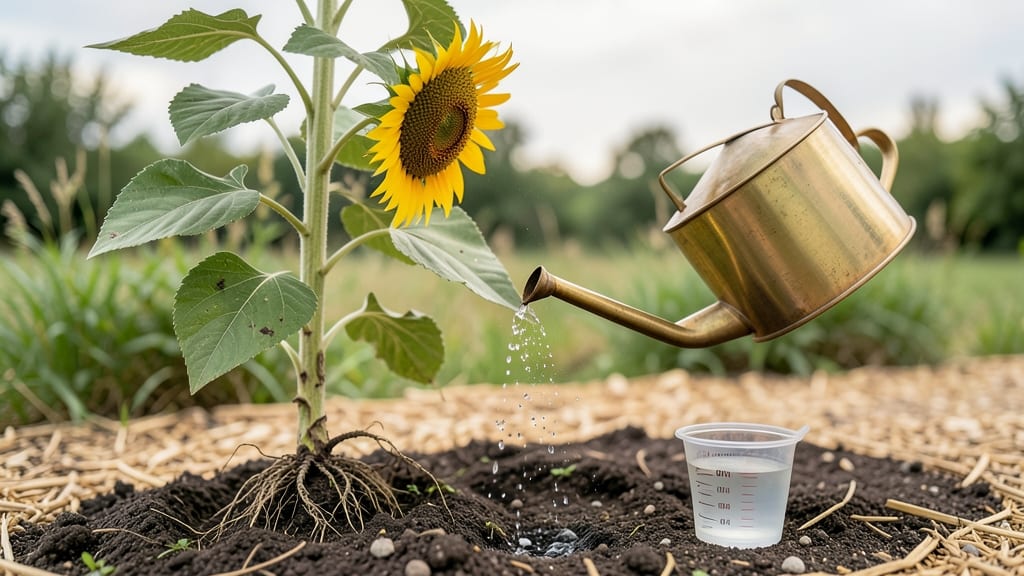
A sunflower needs about 1 inch of water per day during its growing season to fuel its towering growth and vibrant blooms 🌻.
Picture this: you’ve poured water into the soil, but your sunflower still looks wilted by noon. That’s because consistency matters more than frequency—too little, and roots struggle; too much, and they drown.
The key is striking that balance, especially when temperatures soar or winds dry out the soil faster than you can water.
This isn’t just about guessing—it’s about understanding how much water your sunflower actually needs at each stage, from tiny seedlings to towering giants. Below, I’ll break down the exact amounts, the signs to watch for, and how to adjust when Mother Nature throws a heatwave or a downpour your way.
You’ll learn how to water smartly, not just often, so your sunflowers grow strong, tall, and ready to turn heads in your garden.
Daily water requirements for sunflowers by growth stage: a precision guide
Sunflowers are sun-worshippers, but their thirst changes dramatically as they grow. Seedlings need gentle care, while flowering giants demand deep hydration. The key? Consistent moisture without drowning their roots. Let’s break down exactly how much water sunflowers need each day, adjusted for their growth stage and your local climate.
Your sunflower’s water needs are tied to its life cycle. Seedlings (first 2-3 weeks) are delicate, while vegetative growth (weeks 4-8) fuels rapid stem expansion. Finally, flowering and seed development (weeks 9-12+) require steady hydration to support those towering blooms.
Ignore these stages, and you’ll end up with leggy stems or drooping heads.
Here’s the science: Sunflowers have deep taproots that can reach 6 feet or more. This means they need deep watering—not just a light sprinkle—to encourage strong root growth.
Shallow watering leads to weak stems and poor nutrient uptake. Aim to water until moisture reaches 12-18 inches deep in the soil.
Environmental factors like temperature, wind, and humidity also play a huge role. In hot, dry climates, sunflowers may need watering every 1-2 days, while cooler, humid regions might only require weekly deep soaks.
Always check the top 2 inches of soil—if it’s dry, it’s time to water.
For hot climates (90°F+), increase watering by 30-50% to combat evaporation. In windy conditions, water in the early morning to reduce moisture loss.
If your soil is sandy, water more frequently but less deeply—sandy soil drains quickly. Clay soil, on the other hand, holds moisture longer, so you can space watering out slightly.
Morning watering is non-negotiable. Watering in the evening can lead to fungal diseases like powdery mildew, which thrives in damp foliage. Aim to water between 6 AM and 10 AM to give leaves time to dry before nightfall.
Use a soaker hose or drip irrigation to deliver water directly to the roots, minimizing waste and reducing fungal risks.
Overwatering is just as harmful as underwatering. Yellowing leaves or mushy stems are red flags for root rot. If your sunflower’s leaves feel soggy or the soil smells musty, cut back on watering immediately.
Let the top 3-4 inches of soil dry out between waterings to prevent oxygen deprivation in the roots.
Mulching is your secret weapon for water efficiency. Apply 2-3 inches of mulch (straw or wood chips) around the base of your sunflower to lock in moisture, regulate soil temperature, and suppress weeds. This reduces watering frequency by 20-30% while keeping roots cool and hydrated during peak summer heat.
Adjust your watering schedule based on rainfall. If you’ve had 0.5 inches of rain in the past 24 hours, skip your scheduled watering. Use a rain gauge to track precipitation and avoid overwatering during wet spells.
In drought-prone areas, consider installing a drip irrigation system for precise, automated watering.
Watch your sunflower’s leaves for clues. Drooping leaves in the afternoon? It’s likely thirsty. Crispy edges? You’re underwatering. Wilting flowers before opening? Increase water slightly.
The goal is balanced hydration—not a swampy soil or bone-dry roots. With this precision approach, your sunflowers will grow tall, strong, and radiant.
Signs your sunflower is thirsty or overwatered (and how to fix it)
Sunflowers 🌻 communicate their water needs through subtle (and sometimes dramatic) visual cues. If your towering blooms start showing signs of distress, it’s often a direct result of either underwatering or overwatering. The key is learning to read these signals before they become irreversible.
For example, drooping leaves by midday might mean your sunflower is parched, while yellowing foliage could signal overwatered roots struggling for air.
First, check the soil moisture by sticking your finger 1-2 inches deep. If it feels bone-dry, your sunflower is thirsty. But if it’s soggy or has a musty smell, you’ve crossed into overwatering territory.
Both extremes stress the plant, but the fixes are simple once you identify the root cause. Let’s break down the most common warning signs and how to correct them immediately.
Seedlings: ¼ inch daily (keep soil moist but not soggy). Vegetative stage: ½ inch every 2-3 days. Flowering stage: 1 inch weekly (deep watering). Adjust for climate—hotter days may require daily morning watering to prevent stress.
Pro Tip: Water at the base, not the leaves, to avoid fungal diseases like powdery mildew.
One of the first visual red flags is wilting leaves, especially if they don’t perk up by evening. This is your sunflower’s way of saying, “I need water NOW.”
For immediate relief, give the plant a deep soak—aim for 1 inch of water per week during dry spells. If the soil is hard and cracked, it’s a clear sign of chronic underwatering, which can stunt growth or cause buds to drop before flowering.
On the flip side, overwatered sunflowers often show yellowing leaves starting from the bottom. This is a classic sign of root rot, where roots suffocate in waterlogged soil.
If you notice mushy stems or a foul odor near the base, reduce watering immediately and improve drainage by amending the soil with compost or perlite. Let the top 2 inches of soil dry out between waterings to give roots room to breathe.
Another common mistake is inconsistent watering, like giving your sunflower a drink one day and forgetting the next. This causes stress cycles that weaken the plant.
To avoid this, create a watering schedule based on your sunflower’s growth stage. Seedlings need frequent moisture, while mature plants can handle slightly drier conditions once established. Use a moisture meter or your finger to check soil consistency regularly.
If your sunflower’s leaves develop brown or black spots, it could be a sign of fungal infection from overwatering or poor air circulation. Prune affected leaves immediately and water only at the base in the morning to allow foliage to dry quickly.
For extra protection, apply a light mulch layer around the plant to regulate soil moisture and prevent evaporation.
Finally, pay attention to the growth rate of your sunflower. If it’s growing slowly or the stems appear weak, it might be struggling with either too much or too little water.
Adjust your routine by monitoring the plant’s response: healthier leaves and sturdy stems mean you’re on the right track. With these fixes, your sunflower will bounce back and reach its full 12-foot potential in no time! 🌻