
Flowers
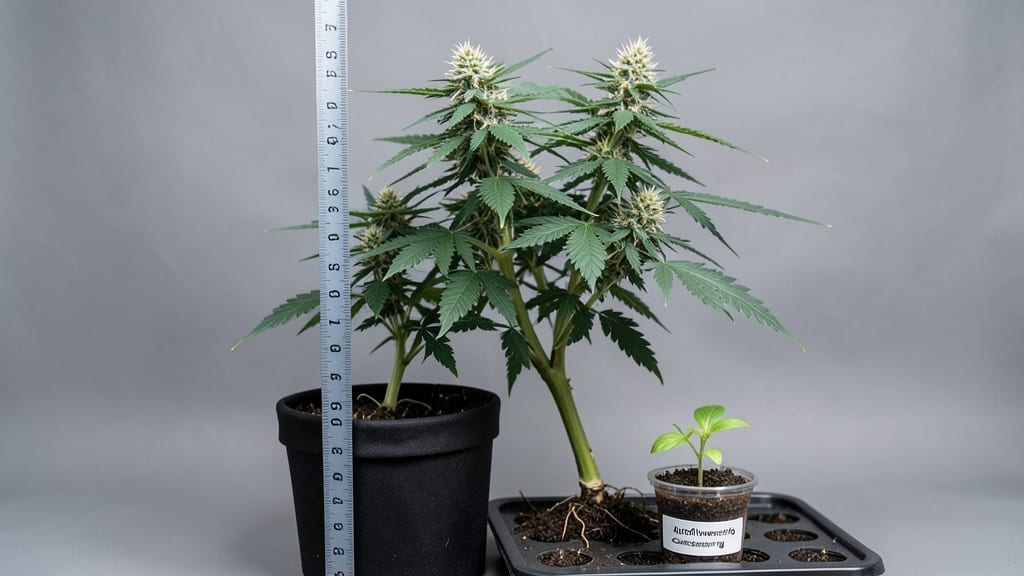
Autoflowering plants grow between 1 to 5 feet tall, depending on the strain and growing conditions—but knowing the exact range can save you from space surprises or wasted light.
Picture this: You’ve set up your grow space with just enough room for a 3-foot plant, only to watch your autoflower stretch toward the ceiling like a teenager. Height isn’t just about aesthetics—it affects your light setup, pruning needs, and even how much you’ll harvest.
From dwarf varieties that stay under 12 inches to towering giants reaching 5 feet, the difference comes down to genetics, training, and environment. Some strains naturally stay compact, while others will stretch unless you intervene with pruning or light control.
Below, I break down the height ranges by popular autoflower types, how to manage growth for your space, and the simple tricks to keep them from outgrowing their welcome.


Autoflower height ranges by variety type: dwarf to giant sizes explained
Autoflowering plants offer growers incredible versatility, but their final height can vary dramatically depending on genetics and growing conditions. If you're planning your setup, knowing these height ranges will help you choose the right varieties for your space.
Some stay under 12 inches while others can exceed 5 feet, making the difference between a stealthy indoor garden and a towering outdoor display.
Understanding these ranges isn't just about aesthetics—it directly impacts your lighting setup, pruning strategy, and even yield potential. Let's break down the most common height categories with real-world examples and environmental factors that influence growth.
The outdoor vs. indoor height difference is striking. Outdoor plants often grow 6-12 inches taller due to unlimited light exposure and natural wind training. In contrast, indoor plants hit their genetic height limit faster because their light cycle is controlled, typically resulting in slightly more compact growth.
Light intensity plays a crucial role too. Plants under high-intensity discharge (HID) lights or LED grow lights with full spectrum coverage may grow slightly taller than those under weaker lights. This is because they can stretch toward the light source more aggressively when not properly managed.
Pruning techniques like low-stress training (LST) or topping can dramatically alter height. For example, a 48-inch variety like Auto Grand Daddy Purple can be kept under 24 inches with aggressive LST, while a 12-inch dwarf like Auto Blueberry might grow to 18 inches if left unpruned and given extra nutrients.
Nutrient levels also influence height. Overfeeding nitrogen can cause excessive vegetative growth, while balanced nutrients promote a more controlled height. For instance, a 36-inch variety like Auto White Widow might reach 42 inches if given too much nitrogen early in its life cycle.
Temperature fluctuations can also affect height. Outdoor plants in cooler climates (like USDA zone 6a) may stay shorter due to slower growth rates, while those in hotter climates (like zone 9a) can grow significantly taller.
This is why the same variety might measure 40 inches indoors but 50 inches outdoors in a warm region.
When planning your grow space, always account for 20-30% extra height than the listed range. This gives room for environmental factors and ensures your lights or trellis system can accommodate the plants without stressing them.
For example, if you're growing a 24-inch variety, plan for at least 30 inches of clearance.
For stealth growers, dwarf varieties under 12 inches are ideal. They fit easily under desks or in closets while still producing substantial yields. Meanwhile, taller varieties like Auto Big Bud require dedicated spaces with proper ventilation and support structures to prevent toppling.
Why some autoflowers stay short while others shoot up: genetics and grow conditions
Autoflower height variations aren't random—they're hardwired into the plant's genetics. Some varieties carry dwarfing genes that limit vertical growth, while others inherit tall-growing traits from their parent strains.
For example, Northern Lights typically max out at 3-4 feet, while Auto Blueberry can stretch to 5 feet or taller when given ideal conditions.
The cannabinoid profile also plays a subtle role. High-CBD strains often grow more compactly, while THC-dominant varieties tend to stretch taller. Terpene profiles like myrcene (sedating) can promote bushier, shorter growth, while pinene (uplifting) strains may grow taller.
This genetic diversity explains why two autoflowers from the same grow room can look completely different in height.
Light spectrum is another controllable factor that dramatically affects height. Blue-dominant light (like early morning sunlight) triggers stretching by promoting vertical growth hormones, while red-dominant light (late afternoon) encourages compaction.
Indoor growers can manipulate height by adjusting their LED spectrum—adding more red light in the vegetative stage keeps plants shorter.
Pruning techniques offer the most immediate control over height. Low-Stress Training (LST), where you gently bend and tie down stems, can keep a 5-foot plant under 3 feet without harming it. Topping (cutting the main stem) forces the plant to grow wider instead of taller, creating a bushier, more compact structure.
Even defoliation (removing large leaves) can redirect energy toward horizontal growth rather than vertical stretching.
Nutrient imbalances are a common height hack gone wrong. Too much nitrogen early in growth sends plants shooting upward, while phosphorus and potassium promote flowering and compaction.
For space-saving grows, I recommend a 5-7-7 NPK ratio during the first 3 weeks to encourage bushier growth before switching to a 1-3-2 ratio for flowering.
For my growth hack to optimize height based on space, I use a two-phase light training approach: 12/12 light cycle with blue-heavy spectrum for the first 2 weeks to encourage early bushiness, then switch to 18/6 with red-dominant light to cap height while maximizing yield.
Combine this with LST every 5 days to keep plants under 4 feet even for tall varieties.