
How To
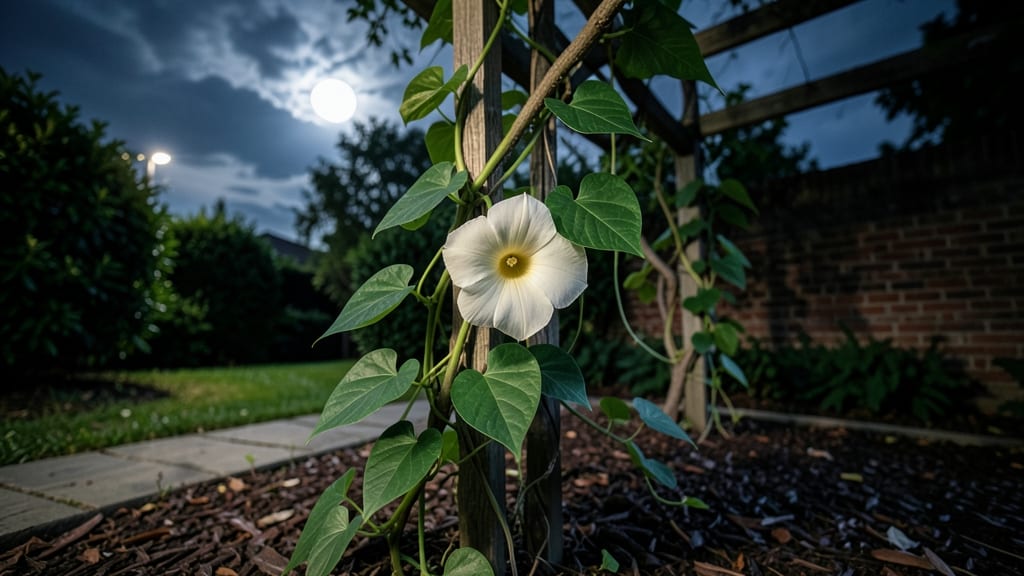
Moonflower grows up to 20 feet tall when given the right conditions, turning even a small garden into a dramatic vertical escape with its silvery vines and fragrant night blooms.
If you’ve ever dreamed of a magical garden escape with night-blooming flowers that climb like vines and glow under moonlight, moonflower (Ipomoea alba) could be your perfect plant—but first, you need to know how tall it will grow to plan your space wisely.
This fast-growing annual isn’t just about height; it’s about covering space quickly. Without support, it sprawls, but with a sturdy trellis or fence, it can reach 15–20 feet in a single season, making it a standout for privacy screens or dramatic backdrops.
Below, I’ll break down exactly how tall moonflower varieties grow, when they hit their peak, and the simple care tips to keep those vines climbing strong—so you can enjoy its enchanting nighttime display without sacrificing your garden layout.


Moonflower height by variety: exact growth ranges for 5 common types
Moonflowers (Ipomoea spp.) are legendary for their dramatic night-blooming displays and rapid vertical growth, but not all varieties reach the same towering heights.
Understanding these differences helps you choose the perfect type for your garden—whether you need a 10-foot vine for a small trellis or a 20-foot climber to cover a pergola. Let’s break down the exact growth ranges for five popular moonflower varieties, including their vining habits and trellis needs.
First, it’s crucial to note that moonflowers are annual vines that grow aggressively in warm climates (USDA zones 9–11). They’re not perennial in most regions, so they’ll die back with frost but can reseed prolifically.
Their height depends on the variety, sunlight, and support structure. Without proper support, vines sprawl, but with a sturdy trellis, they’ll reach their full potential.
Here’s a quick comparison of the five most common moonflower varieties and their mature heights, including how they behave in gardens:
The Ipomoea alba (white moonflower) is the tallest variety, often reaching 20 feet with proper support. It’s ideal for dramatic vertical displays but requires a sturdy trellis to handle its weight.
In contrast, Ipomoea quamoclit (cypress vine) stays shorter (6–10 ft) and is perfect for smaller gardens or containers. Its feathery foliage adds texture even when not in bloom.
If you’re working with limited space, consider Ipomoea nil, which tops out at 12 feet and thrives in containers with a small trellis or obelisk. This variety also blooms earlier in the season, giving you nighttime magic sooner.
For a ground-cover option, Ipomoea batatas (sweet potato vine) spreads widely but can climb to 12 feet with support, making it versatile for borders or hanging baskets.
All moonflowers need full sun (6+ hours daily) and well-draining soil to reach their maximum height. Without enough sunlight, vines grow leggy and produce fewer blooms.
If you’re in a cooler climate (USDA zones 7–8), opt for shorter varieties like Ipomoea purpurea or Ipomoea nil, as they handle slightly cooler temperatures better than the towering Ipomoea alba.
Pro tip: Train vines early by gently tying them to supports every few feet. This encourages upward growth and prevents sprawling. Avoid over-fertilizing with nitrogen, as it promotes leafy growth over flowers.
Instead, use a balanced 5-10-10 fertilizer to support blooming. With the right variety and care, your moonflower can transform any garden corner into a moonlit sanctuary.
🌙
How to control moonflower growth: pruning, training, and space planning tips
Moonflowers (Ipomoea alba) can grow 10 to 20 feet tall in a single season, but their rapid growth doesn’t mean you’re powerless to guide them. With the right pruning techniques and training methods, you can manage their height while keeping those stunning night-blooming flowers thriving.
Whether you’re working with a small balcony or a large garden, these strategies will help you control their spread without sacrificing beauty.
One of the first decisions you’ll need to make is whether to let your moonflower climb naturally or train it along a trellis, fence, or arbor. Without support, vines can sprawl wildly, reaching heights of 15-20 feet and widths of 6-10 feet.
But with proper directional training, you can keep them contained while maximizing vertical space—ideal for small gardens or container growing. Let’s break down how to do it step by step.
- Step 1: Install Support Early 🪜 Set up a trellis, fence, or sturdy arbor as soon as seedlings reach 6-12 inches tall. Use garden twine or soft ties to gently guide vines upward without damaging them.
- Step 2: Prune for Directional Growth ✂️ Pinch back side shoots that grow away from your support structure to encourage upward growth. Focus on main vines—these will produce the most flowers.
- Step 3: Thin Overcrowded Vines 🌿 If multiple vines emerge from one base, remove the weakest to reduce competition. Keep 2-3 strong vines per plant for optimal airflow and bloom production.
- Step 4: Regular Pruning for Height Control 🌱 Trim overly long vines in early summer to redirect energy toward flower production rather than excessive height. Aim to keep vines within 50% of your desired height (e.g., 10 feet for a compact look).
- Step 5: Use Containers for Small Spaces 🪴 For balconies or patios, grow moonflowers in large containers (15+ gallons) with a vertical trellis. Prune aggressively to limit height to 6-8 feet while still enjoying abundant blooms.
For gardeners with limited vertical space, consider dwarf varieties like Ipomoea alba ‘Moonlight’, which typically max out at 8-10 feet when trained. These varieties are perfect for small yards, decks, or even large pots.
Just remember: even dwarf moonflowers need support—they won’t stay compact without guidance. If you’re growing in containers, choose a lightweight trellis (like a bamboo teepee) to avoid toppling over.
Another key to controlling moonflower growth is seasonal pruning. In late summer, after the first flush of flowers, give your plant a light trim to remove wilted blooms and leggy growth. This encourages new, bushier growth and prevents the vine from becoming too top-heavy.
Avoid heavy pruning in fall, as the plant needs energy to store nutrients for next year’s growth (though moonflowers are annuals in most climates, so this mostly applies to tropical regions).
Finally, space planning is critical. Moonflowers thrive in full sun (6+ hours daily) and need well-draining soil rich in organic matter. If you’re planting near other climbing plants (like morning glories or sweet peas), give them at least 3 feet of space to avoid competition.
For small gardens, interplant with shorter perennials (like salvia or lavender) to create a layered, balanced look while keeping the moonflower’s height in check.
With these pruning, training, and space-saving tips, you can enjoy the magical beauty of moonflowers without losing control of your garden’s layout.
Whether you’re aiming for a romantic trellis display or a compact container garden, a little guidance goes a long way—especially with a vine that can reach towering heights in just a few months! 🌙