
How To
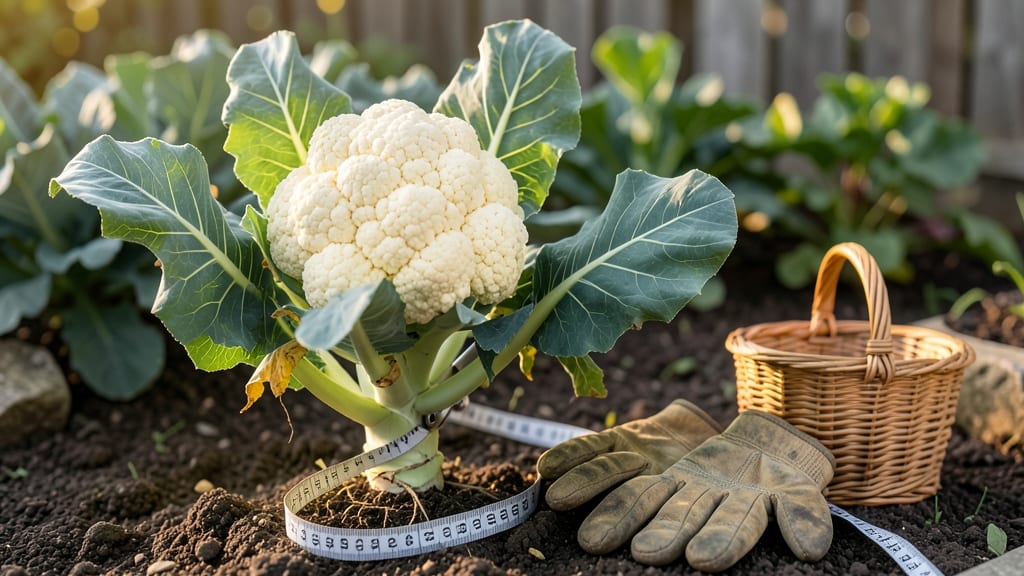
To know when to harvest cauliflower 🥬, watch for a firm, compact head with tightly packed curds that still resist gentle pressure—this is the sweet spot between tenderness and bitterness.
Picking too early means tiny, underdeveloped florets, while waiting too long turns those creamy curds into tough, woody messes. I’ve seen gardeners miss the window by days, only to end up with heads that split open or taste like cardboard.
The key is timing: most varieties take 70 days to mature, but heat waves or cool snaps can speed or stall development. Check the head’s size (about 6-8 inches wide), color consistency, and leaf health—yellowing outer leaves or loose buds mean it’s past its prime.
Here’s what you’ll learn: the simple finger test to check firmness, how seasonal shifts affect ripening, and why a sharp knife (not shears) makes all the difference when harvesting. Let’s get those curds at their peak!


5 Visual & physical signs your cauliflower is perfectly ripe
Nothing beats the satisfaction of harvesting a cauliflower at its peak—creamy, tender, and bursting with flavor. But timing is everything! A cauliflower left too long on the plant becomes woody and bitter, while one harvested too early stays small and underdeveloped.
The key lies in reading your plant's visual cues and physical signals. I’ve grown cauliflowers for years, and these five signs never fail me.
First, focus on the head color. A perfectly ripe cauliflower will have a uniform color—whether it’s pure white, pale green, or deep purple—with no pale or yellowing spots.
The color should be fully developed, not patchy. For example, my Romanesco varieties develop a stunning fractal pattern when ready, while white cauliflower heads turn a bright, even hue.
Next, check the head size. An ideal cauliflower head should be 6 to 8 inches in diameter, firm, and tightly packed. If it’s smaller than a softball, it’s likely not ready yet.
Larger heads may start to loosen or split, signaling overmaturity. I once let a head grow too big, and it turned into a sad, woody mess—definitely not worth the wait!
Now, let’s talk about the leaf condition. The outer leaves should remain green and healthy, not yellowing or dying back. If the leaves start to brown or wilt, the plant is directing energy elsewhere, often a sign the head is past its prime.
I always trim the largest outer leaves to protect the head from sun exposure, which can cause the curds to turn yellow.
Here’s a trick I swear by: the finger squeeze test. Gently press the head with your thumb and forefinger. A ripe cauliflower will feel firm yet slightly yielding, like a ripe avocado.
If it feels rock-hard, it’s underripe. If it’s mushy or the florets separate easily, it’s overripe. This test is foolproof—I’ve used it for years to avoid bitter, tough heads.
Finally, pay attention to the buds. The tiny florets should be tightly closed, not starting to open into yellow buds. If you see even a few buds blooming, the head is already past its peak.
I once missed this sign and ended up with a head full of tiny yellow flowers—hardly the tender curds I was hoping for!
- 1 Uniform Color: Head should be fully colored (white, purple, or green) with no pale or yellow spots. Check for evenness—uneven color means it’s not ready.
- 2 Size Matters: Aim for a 6-8 inch diameter head. Smaller heads are underdeveloped; larger ones risk becoming woody or splitting.
- 3 Firm Texture: Gently squeeze the head—it should feel firm but slightly yielding. Rock-hard = underripe; mushy = overripe.
- 4 Healthy Leaves: Outer leaves should stay green and vibrant. Yellowing or dying leaves signal the head is past its prime.
- 5 Closed Buds: Tiny florets should remain tightly closed. Opening buds mean the head is overripe and starting to flower.
Pro tip: Harvest on a cool, cloudy day to preserve the head’s freshness. I always grab my harvesting shears in the morning, right after dew has dried but before the sun gets too intense.
Cut the head about 1 inch below the base to avoid damaging the plant—this leaves room for side shoots to form, giving you a second harvest!
If you’re growing purple cauliflower, like the stunning Graffiti variety, the color will deepen as it ripens. But don’t wait too long—the moment the head starts to loosen, it’s time to harvest. I’ve learned the hard way that patience has its limits with cauliflower!
One last thing: seasonal timing matters. In my Zone 6a garden, spring-planted cauliflowers are ready by late April, while fall varieties hit their prime in September. Always check your local frost dates—cauliflower hates heat and will bolt (go to seed) if stressed by extreme temperatures.
Master these five signs, and you’ll never miss the perfect moment to harvest your cauliflower again. Trust me, your taste buds will thank you—especially when you sink your teeth into that first creamy, flavorful bite! 🥬
Cauliflower harvesting mistakes that ruin your curds (and how to avoid them)
There’s nothing worse than slicing into a cauliflower head only to find it’s woody, bitter, or already splitting open. I’ve made these mistakes myself—waiting one extra day can turn a perfect curd into a sad, overripe mess.
The good news? Most harvesting errors are easy to avoid with a few simple checks before you pick.
First, timing is everything. Cauliflower heads mature at different rates depending on the variety and weather conditions. A heatwave can speed up ripening, while cool temperatures might delay it. Ignoring these signs leads to heads that either stay small or bolt before they’re ready.
Even the color can change if you’re not paying attention—what starts as creamy white can turn yellowish if left too long.
⚠️ How to Know When to Harvest Cauliflower
Stop guessing! Use these 3 key tests to nail the perfect harvest:
- Size check: Head should be 6-8 inches wide—no bigger!
- Color consistency: Uniform color (white, purple, or orange) with no pale spots.
- Finger squeeze: Gently press the curd—it should feel firm but slightly yielding, like a ripe avocado.
Pro tip: Harvest on a cool morning after dew has dried to prevent rot.
One of the biggest mistakes I see is using shears or dull knives to cut the stem. This crushes the plant and invites pests or disease. Always use a sharp chef’s knife or pruners, cutting the stem about 1-2 inches below the head.
Leave the outer leaves intact—they protect the curd from sunburn and keep it fresh longer.
Another common error is harvesting during hot afternoons when temperatures exceed 85°F (29°C). The stress from heat can make the curds taste bitter or even cause them to split open.
If you’re harvesting in peak summer, do it early in the morning or in the late afternoon when temps drop. I learned this the hard way—my first cauliflower harvest in July turned out tough and stringy because I waited until noon!
Don’t forget to check the weather forecast before harvesting. If a heavy rain or windstorm is coming, pick your cauliflower a day early. Wet conditions can lead to rot, and wind can damage the delicate curds.
After harvesting, trim the outer leaves but leave the head whole until you’re ready to use it—this preserves freshness for up to 5 days in the fridge.
Finally, resist the urge to harvest multiple heads from the same plant. Cauliflower puts all its energy into forming one main head. If you see smaller side shoots forming, let them grow for a separate harvest—but only after the main head is picked.
I once tried to harvest two heads at once, and both turned out small and underdeveloped. Patience pays off with bigger, better curds!