
Blooming
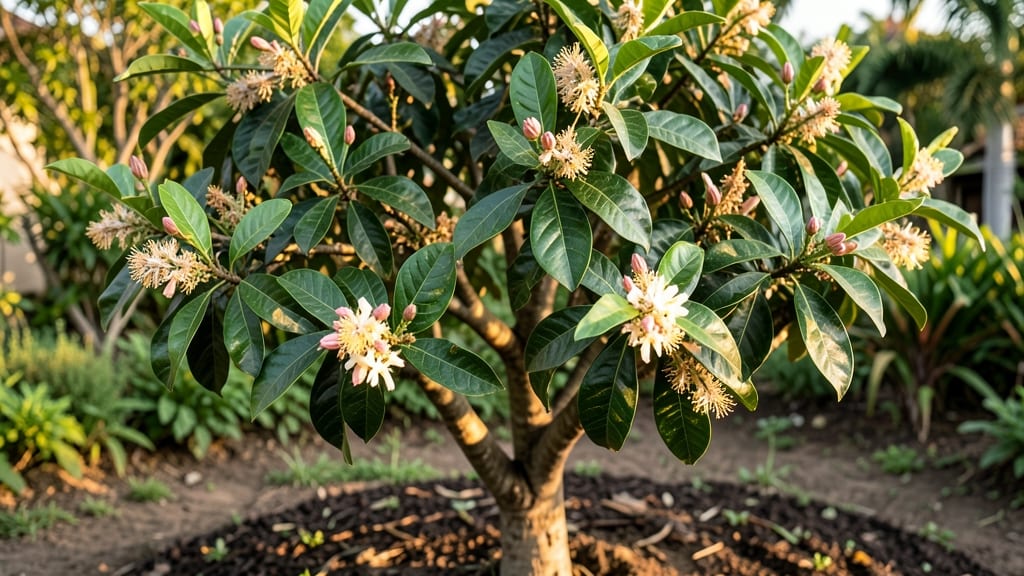
Understanding the mango tree flowering stages is your roadmap to a fruit-laden harvest 🥭 — and skipping this step can leave you staring at empty branches.
Picture this: your tropical beauty bursts into clusters of tiny blossoms, only to drop them days later, leaving you baffled. That’s not just bad luck—it’s a sign you missed the critical timing or environmental cues.
From pre-flowering buds to fruit set, each phase demands attention, especially in Tropical/Subtropical zones like Florida or Hawaii.
Here’s what happens month by month, from the first signs of panicles to the race against pollinators. I’ll break down how to spot healthy blooms, avoid common pitfalls, and even hand-pollinate if nature falls short.
Whether you’re a seasoned grower or just planting your first 🥭, these stages are the key to turning blossoms into sweet rewards.
Ready to transform your tree’s potential into a bountiful harvest? Let’s dive into the exact steps—so you never miss another flowering cycle again.
Mango tree flowering stages by month: a seasonal breakdown
Understanding your mango tree’s flowering stages is key to predicting fruit production. In tropical zones like Florida or Hawaii, blooms appear year-round, while subtropical areas (e.g., California) see peaks in late winter or fall.
Each stage—from bud formation to fruit set—lasts 4–8 weeks, depending on climate and variety.
For example, ‘Haden’ mangoes in Zone 10 often bloom in February-March, while ‘Keitt’ varieties in Zone 9b may flower in September-October after summer heat. Pay attention to leaf color shifts and bud scent—these are your early warnings.
🌱 Visual cues like pinkish buds or white flower clusters signal active growth. In cooler zones, delayed blooming can occur if temperatures drop below 60°F (15°C) during critical stages.
| Stage | Months (Tropical) | Months (Subtropical) | Key Visual Cues | Care Tips |
|---|---|---|---|---|
| Pre-Flowering | Dec-Feb | Sep-Oct | Small green buds appear; leaves thicken | Reduce nitrogen fertilizer; increase potassium |
| Panicle Formation | Jan-Mar | Oct-Nov | Pink buds develop; clusters form | Avoid overwatering; prune dead branches |
| Full Blooming | Feb-Apr | Nov-Dec | White flowers with sweet scent; yellow anthers | Hand-pollinate if no bees (gently shake branches) |
| Fruit Set | Mar-May | Dec-Feb | Small green mangoes (pea-sized); flower drop | Thin fruit to 6–8 inches apart for larger mangoes |
During panicle formation (January–March in tropical zones), watch for pinkish buds that signal imminent blooming. In subtropical areas, this stage often shifts to October–November due to cooler nights. Overwatering now can cause buds to drop, so monitor soil moisture closely.
When flowers open (full blooming stage), your tree emits a sweet, tropical fragrance—a sure sign pollinators are active. In urban areas with few bees, hand-pollination (gently shaking branches) boosts fruit set by up to 40%. Use a soft brush to transfer pollen between flowers.
The fruit set stage (March–May) is critical: thin excess fruit to prevent overburdening branches. Leave 6–8 inches between mangoes to ensure proper growth. In Zone 9b, late blooms may face spring frost risks, so protect young fruit with frost cloth.
Climate plays a huge role—tropical mangoes (e.g., ‘Alphonso’) bloom year-round, while subtropical varieties (e.g., ‘Carrie’) rely on temperature triggers. In California’s coastal regions, fall blooms thrive due to mild winters, whereas Florida’s heat can cause bud abortion if humidity drops below 60%.
For container-grown mangoes, flowering may be delayed by root-bound stress. Repot if roots circle the pot, and move to a sunny spot with 6+ hours of light. Dwarf varieties like ‘Julie’ often bloom earlier than standard trees, making them ideal for small gardens.
Your mango tree’s flowering stage reveals everything about its future fruit production. Healthy blooms mean successful pollination and eventual harvests, while stressed flowers signal problems like nutrient deficiencies or environmental stress. I’ll show you how to spot the difference between thriving and struggling blooms. First, focus on the fruit set rate. A productive tree retains 20-30% of flowers after pollination, turning them into small, firm fruit. If you see massive flower drop (over 50% falling within days), that’s a red flag. Unproductive trees often drop blooms due to water stress or over-fertilization with nitrogen.
How to identify healthy vs. unproductive flowering in mango trees
✅ HEALTHY FLOWERING SIGNS
❌ UNPRODUCTIVE SIGNS
Watch for aborted blooms, where buds turn brown or black instead of opening. This often happens due to temperature fluctuations (below 50°F or above 95°F) or pesticide damage. Healthy flowers open fully with a sweet fragrance, while stressed ones may stay closed or emit a foul odor.
Another key indicator is leaf condition. Dark green, glossy leaves signal a tree ready for fruit production. If you notice yellowing leaves (chlorosis) or leaf drop, your tree is likely nutrient-deficient (lack of zinc/magnesium) or overwatered. Adjust care immediately to save the blooms.
Common mistakes like over-fertilizing with nitrogen during flowering can cause excessive vegetative growth at the expense of fruit. Instead, switch to a balanced 6-6-6 fertilizer or potassium-rich feed to support fruit development. Always water deeply but avoid soggy soil.
For indoor or container-grown mango trees, hand-pollination may be needed if natural pollinators are absent. Use a small brush to transfer pollen between flowers. Monitor for fruit drop—if it continues after 2 weeks, check for pests like mango hoppers or bacterial infections.