
Planting
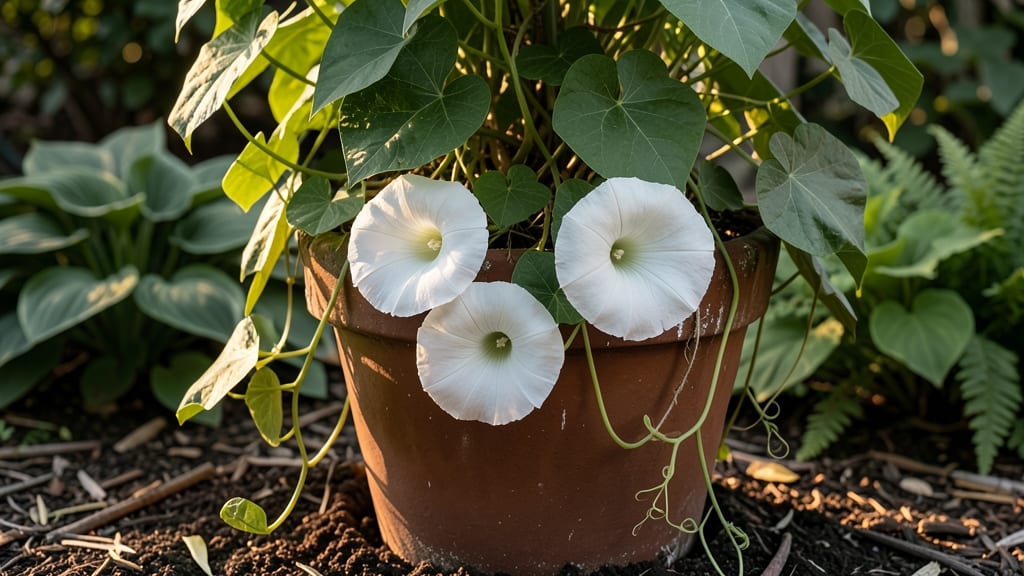
A moonflower plant looks like a dreamy nighttime spectacle with its 10-inch white trumpet blooms and heart-shaped leaves 🌙, but its real magic happens after dark.
If you’ve ever spotted a ghostly white bloom glowing under the moonlight—or wondered why gardeners call it the "queen of the night"—you’re about to discover the moonflower’s mesmerizing secrets.
These vines climb 15 to 20 feet tall in a single season, producing fragrant flowers that only open at dusk and close by mid-morning, unlike morning glories or jasmine.
Below, I’ll break down the key ID features—from leaf shape to bloom timing—so you can spot one instantly, even in your garden’s darkest corners.

Distinctive moonflower plant features: leaves, stems, and flowers explained
The moonflower (Ipomoea alba) is a night-blooming vine that steals the show with its ethereal beauty. Its most striking feature is its 10-inch white trumpet-shaped flowers that only unfurl after sunset, emitting a vanilla-like fragrance that fills the evening air.
This nocturnal bloomer earns its nickname as the "queen of the night" for good reason—its flowers close by mid-morning and reopen the following evening.
One of the first things you’ll notice about moonflowers is their heart-shaped leaves, which are thick and leathery with a smooth, waxy texture. These leaves grow on woody, twining vines that can reach 15-20 feet tall when fully mature, making them perfect for trellises or arbors.
The vines are glabrous (hairless), which helps distinguish them from other vining plants.
Here’s a quick visual guide to help you recognize a moonflower’s key features at a glance:
| Feature | Description |
|---|---|
| Leaves | Thick, heart-shaped, 3-6 inches wide, dark green, smooth edges |
| Stems | Woody vines, twining clockwise, 15-20 ft tall, hairless |
| Flowers | 10-inch white trumpets, subtle purple veins, opens at night, closes by morning |
| Fragrance | Sweet vanilla scent, strongest at dusk |
| Bloom Time | Summer to early fall, only at night, 24-hour lifespan |
The flowers themselves are the showstopper, with their pure white petals and delicate purple veins that add a touch of elegance. Each bloom is 10 inches wide when fully open, making them one of the largest night-blooming flowers you’ll encounter.
The trumpet shape is unique to moonflowers and sets them apart from other vines like morning glories.
When young, moonflower vines produce smaller, more rounded leaves that gradually develop into the larger, heart-shaped foliage as the plant matures. This progression is a great way to track the plant’s growth stages.
The leaves are alternate (one leaf per node) and grow on sturdy stems that can support the plant’s weight as it climbs.
One of the most magical aspects of moonflowers is their nocturnal blooming cycle. Unlike many flowers that open in the morning, moonflowers wait until dusk to reveal their beauty.
This adaptation helps them attract night-pollinating moths, which are drawn to their vanilla-like fragrance. The flowers will close by mid-morning and won’t reopen until the following evening.
If you’re growing moonflowers in your garden, pay attention to their growth habits. They thrive in full sun and need a support structure like a trellis or fence to climb.
The vines can become woody and thick over time, especially in perennial climates, so provide something sturdy for them to twine around. In cooler climates, moonflowers are annuals, while in warmer zones, they may return year after year.
To distinguish moonflowers from similar plants like morning glories, look for these key differences: moonflowers have larger, heart-shaped leaves, white flowers with purple veins, and bloom only at night.
Morning glories, on the other hand, often have blue or pink flowers and bloom in the morning. This distinction is crucial if you’re trying to identify your vine correctly.
Whether you’re admiring them from afar or growing them in your garden, moonflowers are a stunning addition that brings a touch of mystery and elegance to any space.
Their unique nocturnal blooms and vanilla fragrance make them a favorite among gardeners who love a little nighttime magic in their outdoor oasis. 🌙🌿
How to identify moonflowers vs. similar night-blooming plants
Moonflowers (Ipomoea alba) stand out from other night-blooming plants with their giant white trumpet flowers that only open after sunset—unlike morning glories, which bloom in daylight. The key? Their 10-inch-wide blooms with faint purple veins and a sweet vanilla scent that fills the evening air.
While morning glories and evening primrose share some traits, moonflowers have thicker, heart-shaped leaves and vines that climb aggressively to 15-20 feet in one season. Jasmine, another night bloomer, has star-shaped flowers and a woody shrub structure, making it easy to distinguish at a glance.
Here’s how to spot the differences instantly—especially when comparing moonflowers to their look-alikes:
| Plant | Bloom Time | Flower Color | Leaf Shape | Vine Growth |
|---|---|---|---|---|
| Moonflower (Ipomoea alba) | Night only (dusk) | Pure white, 10+ inches | Thick, heart-shaped | 15-20 ft, fast-climbing |
| Morning Glory (Ipomoea purpurea) | Morning (daylight) | Blue/purple, 2-3 inches | Thin, arrowhead-shaped | 6-10 ft, moderate |
| Jasmine (Jasminum spp.) | Evening (twilight) | White/yellow, star-shaped | Oval, glossy | Woody shrub, 6-10 ft |
| Evening Primrose (Oenothera biennis) | Dusk (short-lived) | Yellow, 1-2 inches | Lance-shaped, fuzzy | 2-3 ft, upright |
Moonflowers also close by mid-morning, while morning glories stay open all day. Their fragile, waxy petals and vanilla-like fragrance are dead giveaways—no other night bloomer combines these traits.
If you’re still unsure, check the vine structure: moonflowers twine clockwise, while morning glories twist counterclockwise. This simple trick helps even novice gardeners tell them apart in seconds.
Next time you see a mysterious white bloom glowing in your garden after dark, you’ll know exactly what it is—no guesswork required! 🌙