
Flowers
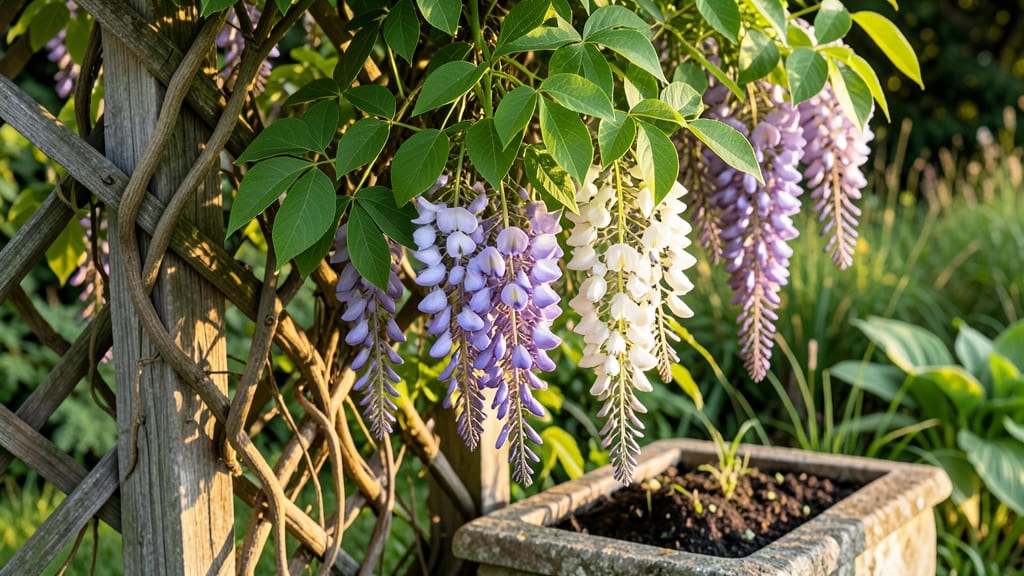
Wisteria flowers bloom in late spring to early summer 🌸, turning your garden into a fragrant, cascading masterpiece—but only if you know the exact timing for your variety.
Picture this: You’ve waited years for those iconic purple, white, or blue racemes to appear, only to miss the window by a few weeks. That’s the heartbreak of wisteria—it flowers for just 2–4 weeks, and timing is everything.
Whether you’re growing Wisteria sinensis in zone 6a or Wisteria floribunda in the South, the bloom schedule shifts based on climate, age, and even pruning habits. I’ll break down the precise months by variety, plus how to coax earlier flowers with simple tricks.
By the end, you’ll know not just when your wisteria flowers, but how to ensure it puts on its best show year after year—no guesswork, just stunning blooms on cue.
Wisteria flowering months by variety: a seasonal timeline
Timing your garden’s wisteria blooms starts with knowing your variety’s natural rhythm. While most wisterias burst into color in late spring to early summer, specific cultivars can shift their schedule by weeks—especially across USDA zones 5–9.
In my Zone 7 garden, for example, Wisteria floribunda often flowers 2 weeks earlier than its sinensis cousin, thanks to its hardier nature. Understanding these differences ensures you’re not left staring at bare vines when your neighbors’ wisterias explode in fragrant purple cascades.
Climate plays a huge role—cooler northern zones (like Zone 5) may delay blooms by 3–4 weeks compared to Zone 9’s milder winters. Heatwaves or early frosts can also shock the plant, pushing flowers to open prematurely or stunting them entirely.
My Amethyst Falls wisteria once bloomed in late April instead of May after an unseasonably warm March. The key is monitoring bud swell (those telltale green pea-sized bumps on last year’s wood) to predict your plant’s personal schedule.
Here’s the seasonal breakdown for 10 popular wisteria varieties, including regional adjustments for USDA zones. Use this as your garden’s bloom calendar—mark these dates on your pruning schedule to avoid cutting off next year’s flowers!
| Variety | Primary Bloom Months (Zones 5–7) | Primary Bloom Months (Zones 8–9) | Climate Notes |
|---|---|---|---|
| Wisteria sinensis | Late May – Early June | Mid-May – Late May | Early bloomer; thrives in cooler climates |
| Wisteria floribunda | Early May – Mid-May | Late April – Early May | Hardier; blooms earlier in heat |
| Amethyst Falls | Mid-May – Late May | Early May – Mid-May | Dwarf variety; reliable bloomer |
| Royal Purple | Late May – Early June | Mid-May – Late May | Needs full sun; delays in shade |
| Black Dragon | Early June – Mid-June | Late May – Early June | Darkest blooms; sensitive to frost |
| Alba | Late April – Early May | Mid-April – Late April | White variety; blooms earliest |
| Prolific | Mid-May – Late May | Early May – Mid-May | Heavy bloomer; prune aggressively |
| Longissima | Early June – Mid-June | Late May – Early June | Longest racemes; needs support |
| Purple Cascade | Late May – Early June | Mid-May – Late May | Trailing habit; blooms later in shade |
| Amethyst Showers | Mid-May – Late May
How to predict wisteria flowering: 5 key factors beyond varietyWisteria varieties like Amethyst Falls or Blue Moon follow general spring bloom schedules, but real-world timing depends on more than just the calendar. I’ve learned that even mature wisteria can disappoint if you ignore these five hidden factors that shift flowering windows by weeks—or even months. Understanding them lets you adjust care strategies to coax blooms earlier or troubleshoot delays before they become permanent problems. For example, my Wisteria floribunda in zone 7 typically blooms in early May, but last year’s late frost pushed it to June. The difference? A microclimate near my patio created unexpected cold pockets. These factors aren’t just academic—they’re the difference between a garden bursting with color and a vine that skips blooming entirely. 5 Factors That Shift Wisteria Blooming
Let’s start with the most overlooked factor: sunlight exposure. Wisteria is a sun-worshipper, and even a few hours less than its 6+ hour requirement can push blooming into summer. I once had a Blue Moon wisteria that refused to bloom until I moved it from partial shade to a south-facing trellis. The difference was dramatic—heavier clusters and a 2-week earlier bloom time. Your pruning history is another silent bloom-killer. Many gardeners prune wisteria in late winter to shape the vine, but this is when flower buds form. Instead, prune immediately after blooming to preserve next year’s buds. I now mark my calendar: June pruning = next year’s flowers. Don’t assume age isn’t a factor—young wisteria often skip blooming entirely. My 3-year-old Amethyst Falls produced only 3 small racemes its first year. By year 5, it covered a 10-foot trellis with 20-foot-long blooms. Patience is key, but you can accelerate flowering by ensuring full sun and balanced fertilizer once established. Soil pH often flies under the radar, but wisteria thrives in neutral to slightly alkaline soil (pH 6.0–7.0). Mine struggled in acidic soil (pH 5.5), resulting in yellowing leaves and sparse blooms. A simple lime amendment in early spring fixed the issue and restored vibrant purple blooms within a season. Finally, microclimates can shift bloom times by weeks. A vine in a frost pocket might bloom later, while one in a sunny, sheltered spot could flower earlier. I once had two Blue Moon wisterias side by side—one bloomed in late April, the other in early June. The difference? A 3-foot difference in elevation created a microclimate with delayed warming. |