
Planting
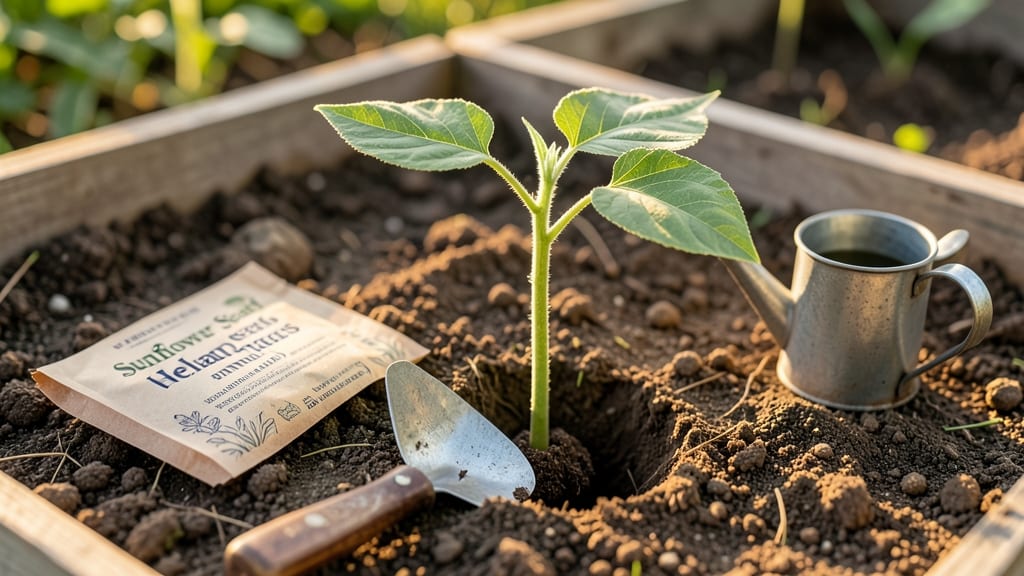
Planting sunflower seeds the right way up ensures faster germination and stronger plants 🌻 — and there’s a simple trick to get it right every time.
Struggling to grow sunflowers? Planting them upside down can delay sprouting by days—or even kill your seedlings before they emerge. The key is in the seed’s shape and texture, which I’ll show you in just a minute.
Most seeds have a pointed end that should face downward, but sunflower seeds are a little different. Their flat side naturally aligns with the soil, while the slightly rounded end points upward—this is how nature designed them to break through the earth.
Below, I’ll walk you through the exact steps, including the best depth and spacing for quick growth, so you can skip the guesswork and enjoy towering sunflowers by summer.

How to tell which way up to plant sunflower seeds (with visual clues)
Sunflower seeds might look simple, but planting them the wrong way up can mean the difference between a thriving 10-foot giant and a sad, stunted seedling. Most seeds have subtle clues that reveal their correct orientation—sunflowers included.
The key lies in their seed coat texture and natural growth pattern. If you’ve ever wondered, "Do sunflower seeds have a top and bottom?"—the answer is yes, and here’s how to spot it.
First, hold a sunflower seed between your fingers and examine its seed coat. You’ll notice one side is slightly flatter and smoother, while the other has a rounded, slightly tapered end.
The rounded end is where the radicle (root) will emerge first, so this should face downward in the soil. Think of it like a tiny arrow pointing toward Earth—the blunt end down, the pointy end up.
Here’s a pro tip: Sunflower seeds often have a small crease or dimple near the rounded end. This is a natural growth indicator left by the plant’s development. When planting, place the seed so this dimple faces downward.
This tiny detail can save you from waiting weeks for a seed that might never sprout because it’s planted backward.
But what if your seeds lack these visual cues? Don’t worry—sunflowers are forgiving compared to other plants. While the correct orientation speeds up germination, they can still grow if planted upside down.
However, the root and shoot may grow in opposite directions, causing the seedling to loop or bend as it searches for light. This can lead to weak stems or even death if the seedling can’t straighten itself.
| Seed Feature | Correct Orientation | What Happens If Wrong? |
|---|---|---|
| Seed Shape | Rounded end down, flat side up | Seedling may loop or grow weak |
| Seed Coat Texture | Smoother side up, textured side down | Delayed germination by 3-7 days |
| Natural Dimple | Dimple faces downward | Root may grow askew, causing stunted growth |
| Seed Size | Larger end up (where shoot emerges) | Seedling may fail to break soil |
Now that you know the visual clues, let’s talk about the planting process. Once you’ve oriented your seed correctly, plant it 1 inch deep in well-draining soil. Press the soil gently around the seed to remove air pockets, then water lightly to settle the soil.
The goal is to keep the seed moist but not soggy—sunflowers hate waterlogged soil, which can cause rot before the seed even sprouts.
If you’re planting multiple seeds, space them 6 inches apart in rows that are 18-24 inches apart. This gives their tall stems room to grow without competing for sunlight or nutrients. Pro tip: Use a seed spacing marker or a simple ruler to ensure even spacing.
Uneven rows can lead to crowded seedlings, which weakens each plant’s ability to reach its full height.
Here’s a common mistake I see: gardeners assume all seeds look the same and plant them haphazardly. But sunflower seeds, like many others, have hidden growth patterns.
For example, the Mammoth sunflower variety has slightly larger seeds with a more pronounced dimple, while dwarf varieties like 'Teddy Bear' have smaller, rounder seeds. Always check the seed packet for variety-specific tips—some may even include a diagram showing the correct orientation.
One last piece of advice: If you’re planting in containers, use a deep pot (at least 12 inches tall) to accommodate the sunflower’s long taproot. A shallow pot can restrict root growth, leading to leggy, weak plants.
And remember, sunflowers love full sun—place your container where it gets at least 6-8 hours of sunlight daily. Without enough light, even a correctly planted seed may struggle to grow.
With these tips, you’ll be planting sunflower seeds like a pro in no time. Your tall, happy sunflowers will thank you by reaching for the sky—literally! 🌻
The best planting depth and soil conditions for sunflower germination
Once you’ve got your sunflower seeds oriented correctly, the next critical step is planting them at the right depth and in the ideal soil conditions. Sunflowers thrive when planted 1 inch deep—any deeper, and they’ll struggle to break through the soil.
The key is loose, well-draining soil with a temperature of at least 50°F (10°C) for germination to begin.
Sunflowers need consistent moisture but hate soggy soil. Overwatering can cause seeds to rot before they sprout, while too little water slows germination. Aim to keep the soil evenly moist until the seedlings emerge, then taper back slightly as they grow.
A light layer of mulch helps retain moisture and keeps the soil temperature stable.
Here’s a quick reference for the perfect planting conditions:
Avoid these common mistakes that can stall germination: planting seeds too deep, using cold soil, or letting the soil dry out completely. If your soil is compacted, loosen it gently with a fork before planting to give roots room to establish.
Sunflowers are hardy once they sprout, but getting them off to the right start makes all the difference.
After planting, place a small marker near each seed to track its progress. Germination typically takes 7-14 days, depending on soil warmth. Once your seedlings emerge, thin them to the strongest 6-inch spacing to ensure they have room to grow tall and sturdy. 🌱
For extra speed, cover the planting area with a clear plastic dome or row cover until germination occurs. This traps heat and moisture, encouraging faster sprouting—just remove it once the first green shoots appear. With the right conditions, your sunflowers will shoot up toward the sun in no time! ☀️
Pro tip: If you’re planting in containers, use a deep pot (at least 12 inches tall) to accommodate the long taproot. Dwarf varieties can grow in smaller pots, but standard sunflowers need room to stretch their legs. Happy planting! 🌻