
Shrubs
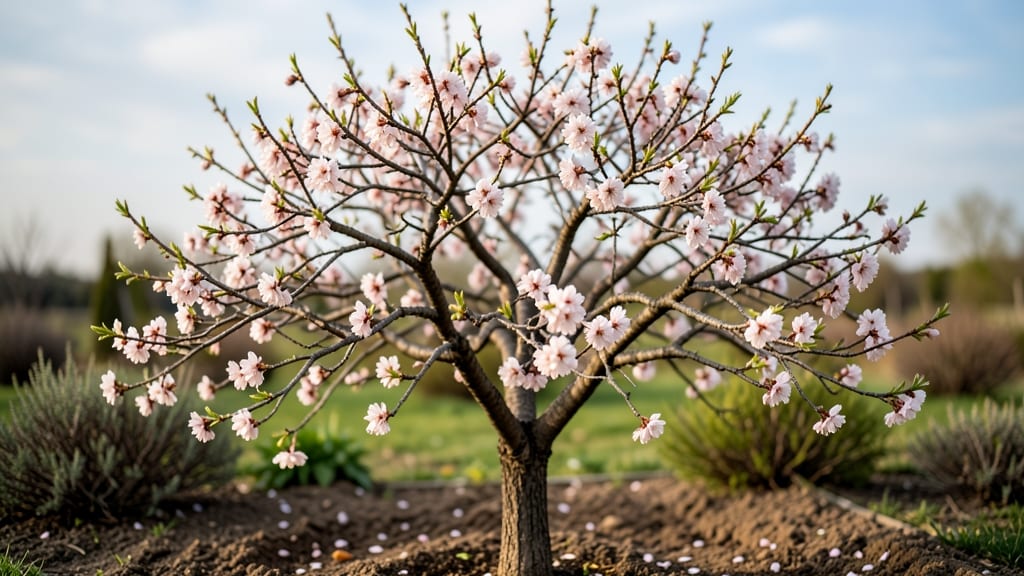
The size of a flowering almond 🌸 can range from 6 to 12 feet at maturity, depending on the variety and growing conditions.
If you're dreaming of a stunning, fragrant tree that bursts into pink or white blossoms every spring, the flowering almond could be your perfect garden addition—but first, you need to know exactly how big it will grow.
Some varieties stay compact, perfect for small yards or containers, while others reach towering heights, making them ideal for larger landscapes. Understanding these differences helps you choose the right spot and spacing for your plant.
In this guide, you'll discover how to control growth through pruning, the best varieties for small spaces, and the sunlight and soil needs that keep your flowering almond thriving.


Flowering almond tree size by popular varieties (with height charts)
Choosing the right flowering almond variety depends entirely on your space and vision. Some varieties grow as compact shrubs perfect for small yards, while others become tall ornamental trees that dominate landscapes.
Understanding these differences helps you plan your garden layout and avoid overcrowding. For example, a 10-foot flowering almond needs completely different spacing than a 3-foot dwarf variety.
Flowering almonds (Prunus spp.) are prized for their springtime blooms and low-maintenance nature, but their mature sizes vary dramatically. The key to happy planting lies in selecting a variety that matches your available space and growth goals.
Whether you're designing a small urban garden or a large landscape feature, knowing the exact height and spread of each type ensures your tree thrives—and doesn't outgrow its welcome.
| Variety | Mature Height | Mature Spread | Growth Rate | Ideal Spacing | Best For |
|---|---|---|---|---|---|
| Prunus triloba (Common Flowering Almond) | 10–15 ft | 10–12 ft | Moderate (1–2 ft/year) | 15–20 ft from structures | Large gardens, landscapes |
| Prunus glandulosa (Dwarf Flowering Almond) | 6–8 ft | 6–8 ft | Slow (6–12 in/year) | 8–10 ft from structures | Small yards, containers |
| Prunus jamasakensis (Japanese Flowering Almond) | 12–18 ft | 12–15 ft | Fast (2–3 ft/year) | 20–25 ft from structures | Large estates, focal points |
| Prunus 'Snow Fountain' (Dwarf Cultivar) | 4–6 ft | 4–5 ft | Very slow (3–6 in/year) | 5–7 ft from structures | Containers, patios, urban gardens |
| Prunus 'Royal Burgundy' (Multi-Stemmed) | 8–10 ft | 8–10 ft | Moderate (1–2 ft/year) | 12–15 ft from structures | Multi-stemmed hedges, mixed borders |
The Prunus triloba, or common flowering almond, is the most widely grown variety, reaching heights of 10–15 feet with a similar spread. This makes it ideal for large garden landscapes where you want a statement tree with dramatic spring blooms.
Its moderate growth rate means it won’t overwhelm your space overnight, but it does need room to breathe—plant it 15–20 feet away from structures or other trees.
For smaller spaces, the Prunus glandulosa (dwarf flowering almond) is a game-changer. This variety tops out at just 6–8 feet, making it perfect for urban gardens or container cultivation. Its slow growth rate also means less pruning and more time to enjoy its fragrant pink blossoms.
Plant it 8–10 feet from buildings or fences to allow for airflow and future growth.
If you’re dreaming of a tall, elegant tree with showstopping flowers, the Prunus jamasakensis (Japanese flowering almond) is a stunning choice. This variety can grow up to 18 feet tall with a spread of 12–15 feet, making it perfect for large estates or focal points in your garden.
Its fast growth rate means it will fill out quickly, so give it plenty of space
How to control flowering almond size through pruning & care
Managing the size of your flowering almond (Prunus triloba) starts with smart pruning techniques and consistent seasonal care. Whether you want a compact specimen or a healthy standard-sized tree, understanding the right timing and methods makes all the difference.
I’ve learned that pruning in late winter (just before buds swell) is ideal for shaping without disrupting blooms, while soil health and watering habits directly impact growth rates.
For most varieties, mature heights range from 8–12 feet, but aggressive pruning can keep them shorter. The key is balancing structural pruning (removing dead or crossing branches) with size-control pruning (cutting back 1/3 of new growth annually).
I’ve found that well-draining soil with a slightly acidic pH (6.0–7.0) encourages slower, bushier growth, while overwatering can lead to weak, leggy stems.
🌸 Step-by-Step Guide to Controlling Flowering Almond Size
-
1. Late Winter Pruning (Feb–March)
Cut back 1/3 of last year’s growth to encourage bushier blooms. Remove dead or diseased branches first, then thin out crowded stems for airflow. -
2. Post-Bloom Light Pruning (May)
Trim only water sprouts (shoots growing straight up) to maintain shape. Avoid heavy cuts—this preserves next year’s flowers. -
3. Summer Watering Adjustments
Water deeply but infrequently (every 10–14 days). Overwatering in summer leads to soft, weak growth—stick to 2L per tree in dry spells. -
4. Fall Soil Enrichment (Oct)
Add compost or aged manure to the root zone. This boosts root strength for winter and supports compact growth. -
5. Winter Mulching (Dec)
Apply 3–4 inches of mulch around the base (keep it 6 inches from the trunk) to insulate roots and prevent winter dieback.
I’ve noticed that dwarf varieties like ‘Snow Fountain’ stay under 6 feet with minimal pruning, while standard types need annual structural cuts to prevent overgrowth. Always use sterilized pruners to avoid bacterial infections, and never prune in fall—this can stimulate tender new growth that won’t survive frost.
For container-grown flowering almonds, prune more aggressively in early spring to control root-bound stress. Use a large pot (24+ inches wide) with drainage holes, and repot every 2–3 years to refresh the soil.
I’ve kept ‘Purple Haze’ in a container for 5 years by pruning it back by half each spring—it’s now a perfect patio-sized shrub!
Remember, patience is key—flowering almonds grow 2–3 feet per year under ideal conditions. If your tree is outgrowing its space, gradual pruning over 3 years will yield better results than drastic cuts.
Start with 10% of the canopy each year to avoid shock, and always prune just above a bud or branch collar for clean wounds.
With the right approach, you can enjoy fragrant blooms and a tree that fits your garden perfectly—whether it’s a 6-foot patio centerpiece or a 12-foot landscape star**. Happy pruning! ✂️🌿