
Shrubs
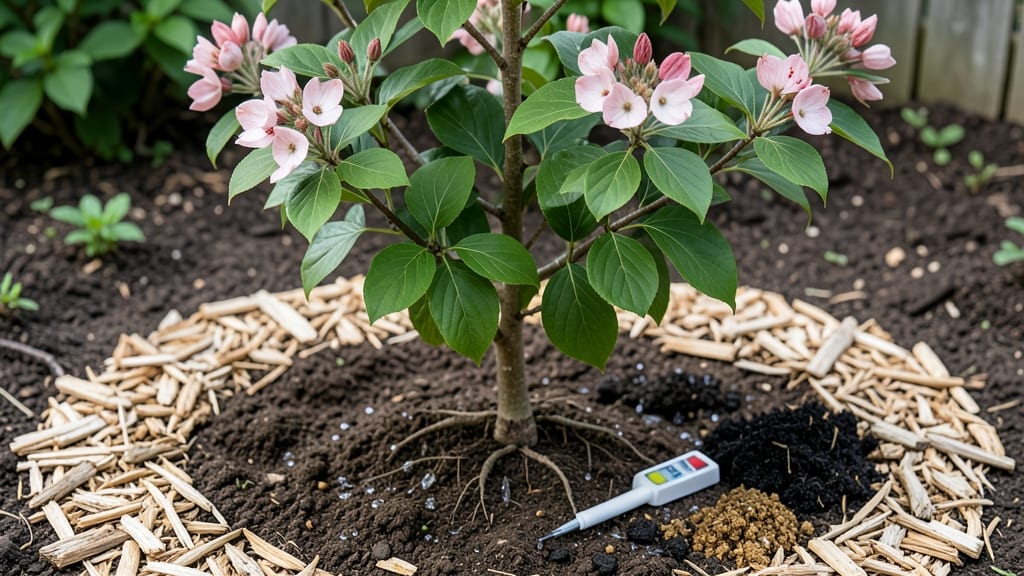
Your flowering dogwood soil requirements are all about creating the perfect acidic haven for vibrant blooms 🌸 — think rich, well-draining loam with a pH between 4.5 and 6.0 to unlock that showstopping spring display.
Struggling to get your flowering dogwood to bloom? The secret might be hiding in your soil—these acid-loving trees demand precise conditions to thrive, and getting it wrong can mean sparse flowers or even leaf scorch.
In USDA Zone 6, where most gardeners grow them, the biggest mistakes are alkaline soil or heavy clay that smothers roots. The fix isn’t complicated—just a few amendments like pine bark fines or peat moss can transform compacted ground into the ideal growing medium.
Below, I’ll break down the exact soil mix your dogwood craves, how to test and adjust pH, and regional tweaks to keep those blooms coming year after year—no guesswork required.
Optimal pH levels and soil composition for flowering dogwood trees
Flowering dogwoods (Cornus florida) are finicky about their soil—get it right, and you’ll reward yourself with showstopping spring blooms. These trees thrive in slightly acidic soil with a pH between 4.5 and 6.0. Outside this range, nutrient uptake suffers, leading to weak growth and sparse flowers.
I’ve learned the hard way that alkaline soil (pH 7.0+) can lock out essential nutrients like iron and manganese, which dogwoods need for vibrant foliage and blooms.
The ideal soil for dogwoods is a well-draining loam rich in organic matter. Think of it as a fluffy, crumbly texture that holds moisture without becoming waterlogged. Sandy loam works best, but clay-heavy soils need amendments to improve aeration.
I once planted a dogwood in pure clay, and it struggled until I mixed in compost and sand—now it’s thriving! Organic matter also feeds beneficial microbes that help break down nutrients into forms the tree can absorb.
Here’s the science behind why these conditions matter: Dogwood roots prefer aerated soil with good microbial activity. When soil pH is too high, aluminum and manganese become less available, while toxic elements like iron can bind and become inaccessible.
The root zone’s acidity also influences how well the tree absorbs phosphorus, a key nutrient for root and flower development. Aim for 5.0-5.5 pH for the most dramatic blooms, though the full 4.5-6.0 range is acceptable.
Now, let’s talk texture. Dogwoods hate soggy feet—poor drainage leads to root rot, which can kill your tree. If your soil feels compacted or stays wet for days after rain, it’s time to amend.
I recommend blending in 3-4 inches of compost or well-rotted leaf mold into the top 12 inches of soil before planting. For heavy clay, mix in 20-30% coarse sand or perlite to improve drainage while retaining moisture.
Organic matter isn’t just about texture—it’s also a nutrient reservoir. Compost, peat moss, or pine bark fines add carbon-rich material that feeds soil microbes. These microbes, in turn, release nutrients like nitrogen, phosphorus, and potassium in forms dogwood roots can absorb.
I swear by a 50/50 mix of garden soil and compost when planting new dogwoods, and I top-dress annually with a 1-inch layer of mulch (like pine straw or shredded leaves) to maintain acidity and moisture.
🌱 Pro Tip: Test your soil before planting! Home test kits (like LaMotte or Luster Leaf) are affordable and give you instant pH readings. If your soil is too alkaline, you’ll need to lower the pH with sulfur or aluminum sulfate.
For acidic soil, add lime or wood ash sparingly—dogwoods are sensitive to sudden pH shifts.
If your soil tests outside the ideal range, don’t panic—amendments can fix most issues. For alkaline soil (pH > 6.0), work in elemental sulfur at a rate of 1–2 pounds per 100 sqft and retest in 2–3 months.
For sandy soil (poor nutrient retention), add 2–3 inches of compost annually to replenish organic matter. I’ve seen dogwoods transform in just one growing season after proper soil prep—it’s like watching a plant wake up!
One common mistake is assuming all mulch is equal. Dogwoods prefer acidifying mulches like pine straw, cedar chips, or oak leaves. Avoid lime-rich mulches (like hardwood chips from some trees), which can raise soil pH over time.
I’ve had success with a 3-inch layer of pine straw around my dogwoods, which slowly acidifies the soil while suppressing weeds. Replenish it annually to maintain effectiveness.
🌿 Remember: Dogwoods are slow to show improvement after soil changes, so be patient. It can take 1–2 growing seasons to see noticeable differences in bloom quality. The key is consistency—test your soil annually, amend as needed, and avoid over-fertilizing.
When the conditions are right, your dogwood will reward you with abundant, showy flowers that last for weeks.
For those in clay-heavy regions, consider planting in a raised bed or mound. This improves drainage while still allowing roots to access moisture. I’ve had great luck with this method in my Zone 7
Common soil mistakes that stunt dogwood blooms (and how to fix them)
Your flowering dogwood might be struggling to bloom because of hidden soil issues. Even with perfect sunlight and water, the wrong soil conditions can starve your tree of essential nutrients and block root growth.
The most common offenders? Alkaline soil, compacted clay, and poor drainage—all of which create stress that directly impacts flowering.
I’ve seen dogwoods in my own garden refuse to bloom for years because of these exact problems. The good news? Each issue has a simple fix. Let’s start by identifying the most critical mistakes and how to correct them before your next blooming season.
⚠️ Soil pH Crisis: The #1 Blooming Killer
Flowering dogwoods demand acidic soil (pH 4.5-6.0). If your soil tests higher than 6.5, your tree can’t absorb iron and manganese—key nutrients for vibrant blooms. Alkaline soil (common in limestone-heavy areas) locks out these nutrients, causing yellowing leaves and sparse flowers.
Quick Fix: Apply elemental sulfur (1 lb per 100 sq ft) in early spring. For faster results, use peat moss or pine bark fines mixed into the top 6 inches of soil.
Another silent blooming blocker is compacted clay soil. When clay hardens after rain, it suffocates roots and prevents oxygen from reaching them. This stress forces your dogwood to divert energy toward survival instead of producing flowers.
Test your soil’s compaction by pressing your finger into moist soil—if it doesn’t penetrate easily, you’ve got a problem.
To break up clay, blend in 3-4 inches of compost or well-rotted manure around the root zone. For severe cases, consider building a raised bed (12-18 inches deep) filled with a mix of 50% topsoil, 30% compost, and 20% perlite. This mimics the loose, airy soil dogwoods crave naturally.
Poor drainage is the third major culprit. Dogwoods hate soggy feet—waterlogged roots lead to root rot, which weakens the tree and reduces flowering. If water pools around your tree after rain, your soil needs immediate attention. Amend the area with coarse sand or gravel mixed into the top 12 inches, or install a French drain if drainage is severe.
Finally, don’t overlook organic mulch. A 3-inch layer of pine straw or shredded leaves helps maintain soil acidity while suppressing weeds. Just avoid wood chips from treated lumber—they can raise pH over time. Reapply mulch annually in late winter to keep your soil’s chemistry balanced for next year’s blooms.
With these fixes in place, your dogwood should reward you with healthier growth and stunning spring flowers—no more missed blooming seasons! Start testing your soil today, and watch the difference in just one growing season. 🌸