
Fertilization
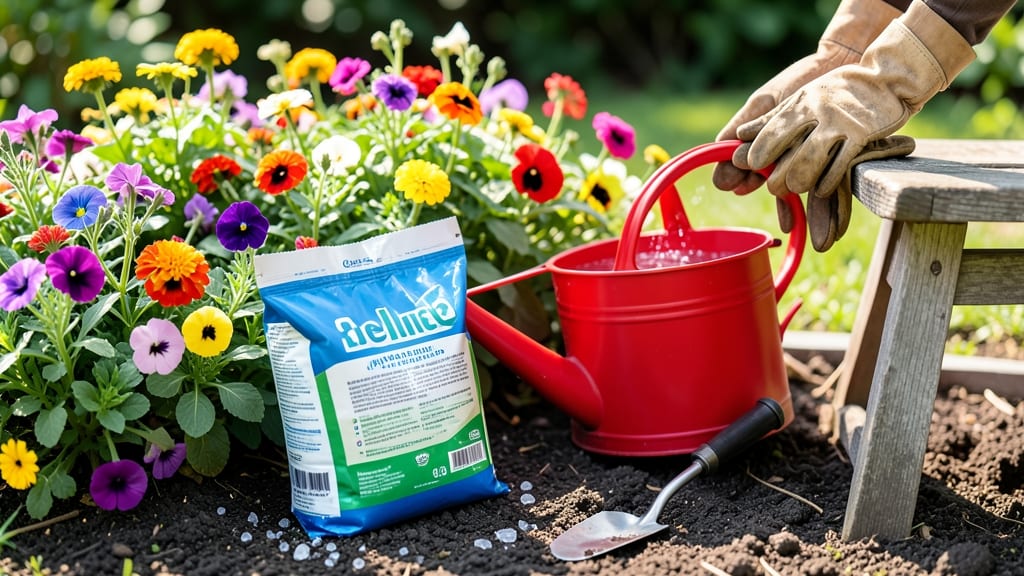
To fertilize flowers at the right time means catching them when they’re hungry—not when they’re already full or asleep.
Ever stared at your 🌸 blooms and wondered why they’re half the size of the ones at the garden center? The answer isn’t just what you feed them, but when.
Fertilizing too early can send your flowers into a leafy growth spurt instead of blooms, while waiting too long leaves them weak and struggling.
The key is matching your feedings to their natural growth cycles, whether that’s early spring for root building or late summer for a second flush of color.
Most gardeners overlook the fact that flowers have different needs at different times of year—annuals need a quick burst of nutrients, while perennials benefit from a slow-release schedule. And let’s be honest: guessing wrong can mean wasted fertilizer, burned roots, or plants that just… give up.
That’s why timing isn’t just a suggestion; it’s the difference between a showstopping garden and a disappointing one.
In this guide, you’ll get a month-by-month breakdown of when to fertilize (and when to skip it), plus how to read your plants’ signals—yellowing leaves, sparse blooms, or crusty soil—to avoid overdoing it.
Whether you’re a first-time gardener or a seasoned pro, these tips will help you grow flowers that bloom bigger, brighter, and longer.
Seasonal fertilizing schedule for flowers: month-by-month breakdown
Timing your flower fertilization like a pro means understanding how each season affects growth. Early spring kickstarts roots, summer fuels blooms, and fall prepares plants for dormancy. The key? Adjusting your fertilizer's NPK ratio (nitrogen-phosphorus-potassium) to match your flowers' needs at each stage.
For example, high-phosphorus in spring encourages root growth, while low-nitrogen in summer prevents leafy overgrowth at the expense of blooms.
Most gardeners make two critical mistakes: fertilizing too early in winter (when plants are dormant) or overdoing it in late summer (stressing plants before cold weather). Instead, think of fertilization as a seasonal conversation with your plants—listening to their cues and responding with the right nutrients at the right time.
My go-to strategy? Start with a soil test to avoid guessing, then follow this science-backed schedule tailored for annuals vs. perennials.
Let’s break down why March and April are your power months for fertilization. This is when perennials wake from dormancy and annuals start establishing roots. I always begin with a light application of a balanced fertilizer (like 10-10-10) to encourage even growth.
For bulbs, this is the time to fertilize after they’ve finished blooming—think daffodils or tulips—to build next year’s flowers. Pro tip: Mix in compost or well-rotted manure for organic matter that improves soil structure over time.
When May rolls around, shift to a bloom-boosting fertilizer with higher phosphorus (the middle number in NPK). This is when petunias, marigolds, and zinnias need extra support to produce those showstopping flowers.
I’ve found that liquid fertilizers work best here because they’re absorbed quickly during active growth. For container gardens, reduce the amount by half—roots are more confined, and over-fertilizing can burn them.
By August, your flowers are tired from months of blooming. This is the time to switch to a low-nitrogen fertilizer (like 3-4-6) to help them recover and store energy for next season. I often prune back spent blooms and apply a slow-release fertilizer to avoid shocking the plants.
For perennials, this is also when I top-dress with composted leaves—a free, nutrient-rich way to prep for winter.
One question I hear often: Should I fertilize in fall? The answer depends on your climate zone. In mild winters (like Zone 7-9), a light feeding in October can encourage fall blooms and strengthen roots.
But in cold climates, skip it—plants are dormant and won’t use nutrients until spring. For evergreens, though, a winterizing fertilizer (high in nitrogen) can keep them lush through the cold months.
Here’s a non-negotiable rule I live by: Never fertilize when soil is frozen or waterlogged. Nutrients won’t absorb properly, and you risk burning roots. Instead, plan your fertilizing schedule around soil temperatures above 50°F and active growth periods.
And if your flowers look healthy but not blooming, it’s time to adjust your approach—sometimes, less is more, especially with high-nitrogen fertilizers that encourage foliage over flowers.
To wrap up, think of your flower fertilization as a
Signs your flowers need fertilizer (and when to skip it)
Your petunias might look lush, but if they're throwing out fewer blooms than last year, it's time to check their diet. Flowers don't just need water—they crave specific nutrients to produce vibrant blooms.
I've learned the hard way that overlooking these signs leads to wasted time and money on fertilizers that won't help. The key is understanding when your plants are hungry versus when they're just overfed.
Start by examining your flower leaves. Healthy foliage should be a rich green, not pale or yellowing. Pale yellow leaves often signal nitrogen deficiency, while purplish stems can indicate phosphorus shortages. I always check the growth pattern too—stunted stems or leggy growth between blooms are classic hunger signs.
These visual cues help me decide whether to reach for the fertilizer or hold off.
🚨 Over-Fertilizing Warning Signs
- Brown leaf tips or edges
- Crusty white residue on soil
- Excessive leafy growth with few blooms
- Root burn (wilting despite watering)
✅ Under-Fertilizing Clues
- Pale yellow leaves (nitrogen deficiency)
- Stunted or leggy growth
- Slow recovery after pruning
- Fewer blooms than expected
One mistake I made early in my gardening journey was assuming more fertilizer always equals better blooms. But over-fertilizing can actually burn roots and prevent flowering. Look for white crusts on soil or burnt leaf edges—these are clear signs you've gone too far.
I now keep a detailed garden journal to track when I fertilize, what I use, and how my plants respond. This helps me spot patterns and adjust my approach.
Timing matters just as much as the product. For spring-blooming flowers like tulips, I hold off until after the first flush of blooms. For summer annuals like zinnias, I fertilize every 3-4 weeks during their active growth phase.
The key is matching the fertilizer to the plant's life cycle. I've found that slow-release fertilizers work best for perennials, while liquid blooming formulas give annuals the quick boost they need.
Don't forget about organic alternatives like compost tea or fish emulsion. These gentle options work well for container gardens where precise dosing is tricky. I've had great success with a compost top-dressing in early spring—it feeds the soil ecosystem while providing slow-release nutrients.
The trick is to test your soil first using a simple home kit. This tells me exactly what my plants are missing before I start guessing.
Remember that some flowers don't need much. Native wildflowers and drought-tolerant plants often thrive with minimal intervention. I've learned to observe my local ecosystem—what grows naturally with little care often needs the least help.
The goal isn't to force every plant to bloom spectacularly, but to create a balanced garden that supports both beauty and biodiversity. Sometimes the best fertilizer is simply good soil preparation and proper watering.