
Flowers
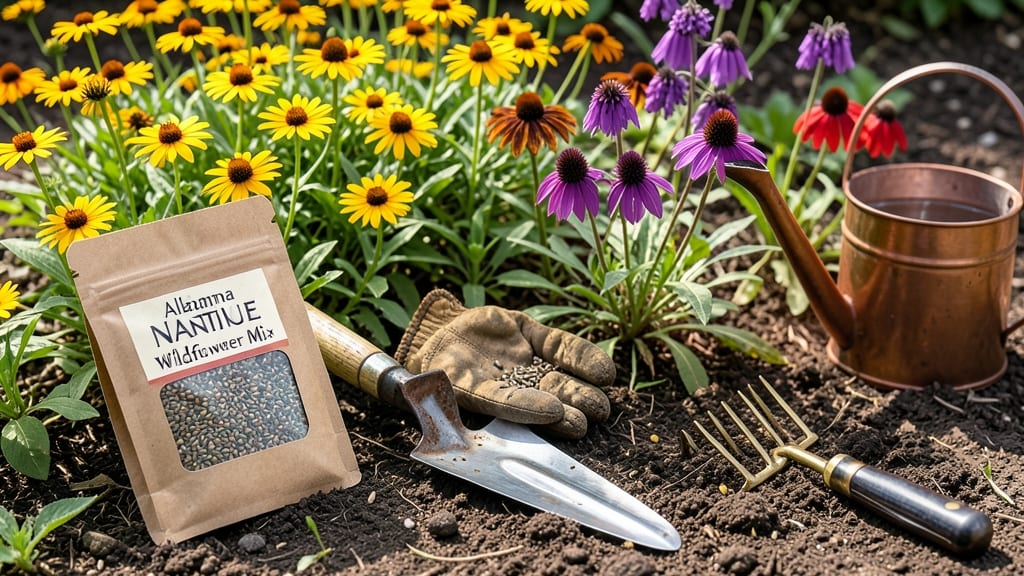
To plant wildflowers in Alabama, aim for late winter to early spring or late summer to early fall when frost risks fade and soil warms up 🌼.
Alabama’s diverse climate—from humid subtropical to warm temperate—means wildflowers can bloom year-round if planted at the right time. But timing isn’t one-size-fits-all: USDA Zones 7a-8b demand precision to avoid frost damage or missed blooms.
Miss that window, and you might end up with six-foot vines and no blooms—or worse, seeds that won’t germinate in the heat. I’ve seen it happen, and it’s a costly lesson.
Here’s the zone-by-zone breakdown you need, plus the best native species for each season, so you can enjoy wildflowers from spring to frost.
Best wildflower planting months by Alabama USDA Zone (7a-8b)
Alabama’s USDA Zones 7a-8b create a unique gardening puzzle—warm winters in the south clash with cooler springs in the north. For wildflowers, this means two prime planting windows per year: early spring (before last frost) and late summer (for fall blooms).
Timing matters because frost dates vary by 3-4 weeks between North Alabama (Zone 7a) and the Gulf Coast (Zone 8b).
In Zone 7a (e.g., Huntsville, Decatur), the last frost typically hits mid-March, while Zone 8b (e.g., Mobile, Pensacola) stays frost-free until early December. This means spring planting in Zone 7a starts in February, but Zone 8b gardeners can sow seeds as late as April without frost risk.
For annual wildflowers, like Zinnias or Cosmos, aim for late winter to early spring (February-March) or late summer to early fall (August-September). Perennials, such as Black-Eyed Susans or Purple Coneflowers, thrive when planted in early spring (February-March) to establish roots before summer heat.
Biennials, like Foxgloves, need a late summer/fall planting (August-September) to germinate and grow foliage before winter dormancy. Microclimates also play a role—urban heat islands in Birmingham may allow earlier spring planting by 2-3 weeks compared to rural areas.
Here’s a zone-specific breakdown of when to plant wildflowers in Alabama to maximize blooms and avoid frost damage:
In Zone 7a, where winters are colder, spring planting should wrap up by March 15 to avoid late frosts that can kill young seedlings. Fall planting in August-September ensures wildflowers bloom next spring before summer heat sets in.
For example, Purple Coneflowers planted in late August will flower by May-June.
Moving to Zone 8b, the Gulf Coast’s milder climate lets gardeners plant winter annuals like Sweet Alyssum as late as November for spring blooms. However, summer heat (June-August) can stress seeds, so late afternoon shade or drip irrigation helps maintain moisture.
I’ve seen Lantana thrive when planted in September for fall-to-winter color.
For perennial wildflowers, like Goldenrod or Aster, focus on early spring planting (February-March) to give roots time to establish before summer droughts. In Zone 7a, this means light mulching to retain soil warmth, while Zone 8b gardeners can skip mulch entirely due to warmer soil.
Regional microclimates add another layer—urban areas like Birmingham often have warmer microclimates due to concrete and pavement, allowing earlier spring plantings by 1-2 weeks. Conversely, rural highlands (e.g., near Lookout Mountain) may experience later frosts, so delay planting until after April 1.
Wildflower species to plant by season for continuous blooms in Alabama
Alabama’s long growing season lets you enjoy wildflowers from spring’s first blooms to fall’s crisp air. The trick? Planting the right species at the right time. Native wildflowers like Black-Eyed Susans thrive in summer, while Coreopsis lights up fall gardens. Non-natives like Zinnias handle Alabama’s heat like champions.
I’ve tested these species in my own garden—some need cool-season prep, others warm soil to sprout. Below are my top picks, organized by season, so your garden stays colorful year-round without gaps.
For continuous blooms, I stagger plantings every 4-6 weeks. For example, sow Sweet Alyssum in February, then Black-Eyed Susans in April. This ensures one species fades as another takes over—no bloomless gaps!
Native species like Coreopsis and Black-Eyed Susans need well-draining soil and full sun. Non-natives like Zinnias are more forgiving but still prefer 6+ hours of sunlight. Always mulch lightly to retain moisture during Alabama’s hot, dry spells.
Pro tip: Save seeds from your best bloomers! Most Alabama wildflowers self-seed easily, giving you free plants next year. Just deadhead spent blooms if you want to control spread.