
Light Requirements
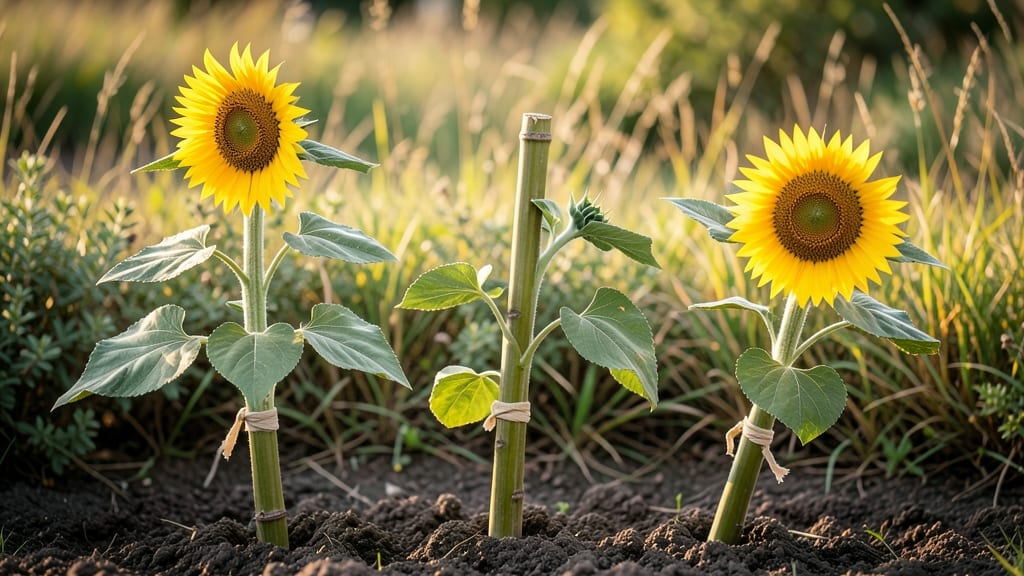
Sunflowers do need to be staked when they reach 6 feet or taller, but many gardeners overlook this until the wind turns their towering blooms into wobbly giants.
Picture this: a 12-foot sunflower 🌻 swaying in a breeze, its heavy head dragging toward the soil. That’s not just a lost harvest—it’s a plant fighting for its life. The truth? Most sunflowers can stand alone, but height and wind exposure change everything.
Dwarf varieties (3 feet) rarely need support, while standard types (up to 10 feet) often do—especially in open spaces. Giant sunflowers? They’re basically waiting for a stake unless you reinforce them early.
In this guide, I’ll break down height-based rules, natural support tricks, and when to skip staking entirely—so your sunflowers stay upright without the guesswork.
When to stake sunflowers: height-based rules for stability
Sunflowers are nature’s skyscrapers—some varieties reaching heights of 12 to 16 feet. But their towering growth comes with a trade-off: wind resistance and soil stability. The question isn’t if they’ll need support, but when—and that depends entirely on their height category.
Dwarf varieties might stand proudly without help, while giant sunflowers often need staking to avoid toppling like Jenga towers in a storm.
I’ve learned from experience that height determines staking needs, but it’s not the only factor. Wind exposure, soil type, and even plant spacing play critical roles.
For example, a 6-foot sunflower in a sheltered garden might thrive without stakes, while the same variety in an open field could use support by mid-summer when stems thicken and heads get heavy.
Let’s break it down by sunflower height categories—dwarf, medium, and giant—and when to stake each for maximum stability. This comparison will help you decide whether to invest in stakes or let your sunflowers stand tall naturally.
For dwarf sunflowers (1-3 feet), staking is almost never necessary. Varieties like 'Teddy Bear' have thick, sturdy stems that handle light winds and compact growth without support.
However, if you’re growing them in containers or high-wind zones, a light bamboo stake (3-4 feet tall) can prevent tipping during storms.
Medium-height sunflowers (3-6 feet) are the gray area. In sheltered gardens with rich, well-draining soil, they often stand alone. But in open fields or sandy soil, their top-heavy heads can cause them to lean or snap.
My trick? Install soft ties (like old T-shirts) around the stem and stake only if you notice leaning after 4-6 weeks of growth.
Standard and giant sunflowers (6+ feet) almost always need staking. Their massive seed heads (weighing up to 5 pounds) create a center of gravity that’s impossible to balance naturally. I’ve seen 12-foot 'Russian Giants' topple in 20 mph winds, snapping stems clean off. For these varieties, preemptive staking is a must—install stakes at planting time to avoid damaging roots later.
Soil type also changes the game. Sunflowers in clay soil get better grip and may need less support, while those in sandy or rocky soil struggle to anchor. I once grew 'Mammoth' sunflowers in loamy soil without staking—they thrived!
But when I replanted them in sandy soil the next year, every plant leaned by mid-July. The lesson? Amend soil with compost before planting to improve stability naturally.
If you’re still unsure, watch your sunflowers for these 3 warning signs that staking is needed:
- Leaning stems (more than 30 degrees from vertical)
- Cracking sounds when wind blows
- Base of stem pulling away from soil
When you see any of these, it’s time to stake—before the plant topples!
Pro tip: Stake sunflowers early (when stems are 6-12 inches tall) to avoid root disturbance. Use soft ties (never wire!) and leave room for stem growth—tight ties can girdle the plant as it thickens.
With the right support, your sunflowers will reach their full 10-16 foot potential without a wobble.
🌻
Natural vs. artificial support: best staking methods for sunflowers
Deciding whether to stake your sunflowers depends on their variety and growing conditions. While dwarf varieties (1-3 feet) often stand alone, tall sunflowers (6+ feet) benefit from support—especially in windy climates or loose soil. The key is balancing natural stability with practical interventions.
If you’re unsure whether to stake, consider your sunflower height and local weather. Giant varieties like 'Mammoth' or 'Russian Giant' (10+ feet) almost always need support, while medium-height types (3-6 feet) may thrive without it. Let’s explore your options for keeping those golden blooms upright!
- 🌱 No Staking Needed: Dwarf varieties (1-3 ft) or well-spaced plants in sheltered areas with fertile soil.
- 🪴 DIY Stakes: Use bamboo stakes (6+ ft) or wooden dowels tied gently with soft twine to avoid stem damage.
- 🌿 Natural Supports: Plant near cornstalks or tall grasses for windbreak, or use trellis structures for climbing varieties.
- 💧 Companion Planting: Surround with low-growing companions like marigolds or basil to stabilize soil and reduce wind exposure.
- ✂️ Pruning Trick: Trim lower leaves to reduce weight and improve airflow, making stems less top-heavy naturally.
For artificial support, commercial sunflower stakes (often spiral or fan-shaped) are designed to grip stems without cutting into them. These are ideal for large varieties in exposed areas.
I’ve found that placing stakes 3-4 inches deep into the soil and securing the stem with a soft cloth strip prevents damage while providing stability.
If you prefer organic methods, consider companion planting with taller crops like sunflowers and corn. The corn acts as a natural windbreak, while the sunflowers benefit from shared nutrients. This approach also reduces the need for additional staking materials and creates a low-maintenance ecosystem.
Remember, over-staking can be as harmful as under-staking. Loosely tie supports to allow the stem to flex slightly—this mimics natural movement and strengthens the plant over time. Avoid tight bindings that restrict growth or cause stem constriction.
Experiment with your sunflower support methods this season! Whether you choose DIY stakes, companion plants, or natural spacing, the goal is to let your sunflowers shine—literally and figuratively. 🌻