
Planting
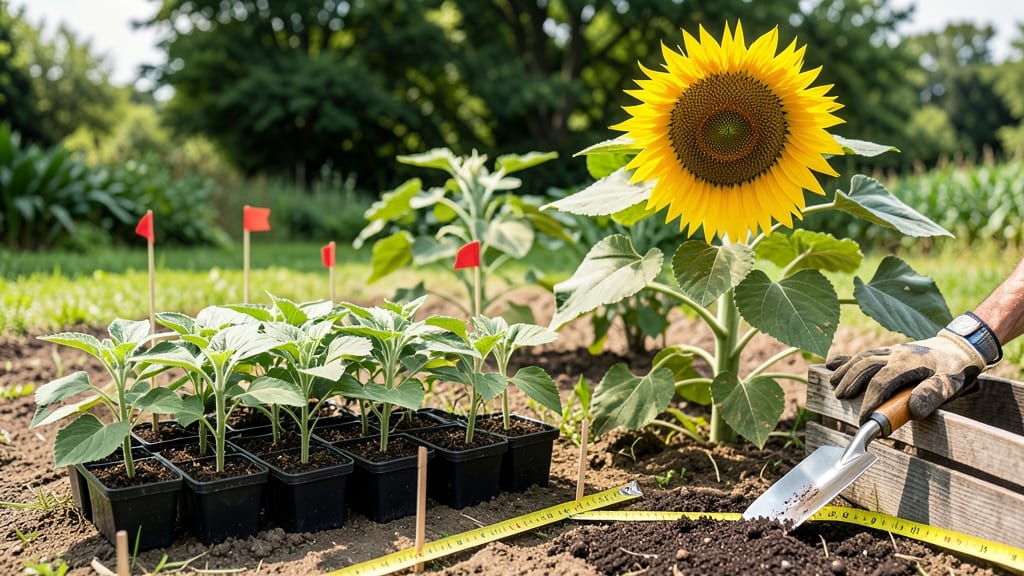
Spacing mammoth sunflower plants correctly is the secret to those 12-foot-tall stalks standing proud in your garden 🌻—not leaning, not competing, and absolutely thriving.
Picture this: you’ve just planted your Mammoth sunflowers, dreaming of a sun-drenched border that turns heads. But by mid-summer, your towering beauties are bending under their own weight—or worse, not flowering at all.
That’s the cost of spacing them too close (or too far apart), and it’s a mistake that’s easier to avoid than fix.
Whether you’re working with a sprawling backyard or a cozy container setup, the right distance ensures your sunflowers get the sunlight, airflow, and root space they crave. Too little space? You’ll battle for nutrients and risk disease.
Too much? You’ll waste garden real estate. The sweet spot is all about balance—and I’ve got the proven distances to help you nail it.
Below, I’ll walk you through the ideal spacing for in-ground beds, containers, and even small gardens, plus how to adjust for soil, climate, and companion plants. No more guesswork—just bigger blooms and stronger stems from day one.

Optimal Mammoth sunflower spacing by planting method for maximum growth
When planting Mammoth sunflowers, spacing isn't just about fitting them into your garden—it's about unlocking their full potential. These giants need 18–24 inches between plants to access sunlight, develop strong stems, and produce those iconic 12-foot-tall blooms.
Too close, and you'll struggle with weak stems, disease pressure, and fewer flowers. The right spacing ensures each plant gets the nutrients, airflow, and light it craves for maximum growth.
Your planting method—whether in-ground, containers, or raised beds—dictates the exact spacing needed. For example, raised beds allow tighter arrangements (18 inches) because of better drainage, while containers require even more space (24–36 inches) to prevent root competition.
Climate and soil fertility also play a role: rich, well-draining soil lets you plant slightly closer, while poor or compacted soil demands wider spacing to avoid stunted growth.
Here’s the science-backed breakdown of Mammoth sunflower spacing by planting method, including adjustments for single plants vs. clusters and soil conditions. Use this as your guide to avoid common pitfalls like toppling stems or reduced flower production.
For in-ground planting, the golden ratio of 18–24 inches balances sunlight exposure and stem stability. If your soil is sandy or poor, increase spacing to 24 inches to prevent nutrient competition.
In fertile, loamy soil, you can plant as close as 18 inches while still achieving healthy, sturdy stems. Always plant in full sun (6+ hours daily)—this is non-negotiable for Mammoth sunflowers to reach their full height.
In raised beds, you can afford slightly tighter spacing (18 inches) because the improved drainage and aeration reduce disease risk and root competition. However, avoid planting more than 3–4 sunflowers per 4x8-foot bed to prevent overcrowding.
If you’re growing them for cut flowers, consider a clustered arrangement with 12–18 inches between plants in compost-rich soil, but be prepared to stake taller varieties to prevent flopping.
Container growing presents unique challenges because root space is limited. For 5-gallon pots, plant one Mammoth sunflower per container and space pots 24–36 inches apart. Larger containers (10+ gallons) can accommodate two plants, but only if you’re willing to prune lower leaves to reduce competition.
Always use a well-draining potting mix with compost to mimic garden soil conditions. If you’re growing in containers, water more frequently (every 2–3 days) to compensate for the faster drying of potting soil.
Climate also influences spacing needs. In hot, dry regions, increase spacing to 24 inches to reduce water competition and stress. In cooler climates (USDA Zones 3–5), you can plant slightly closer (18 inches) because the longer growing season allows roots to spread more slowly.
If you’re in a windy area, widen spacing to 36 inches to prevent stems from toppling over—these giants need sturdy support even with proper spacing.
One common mistake is planting Mammoth sunflowers too close for a "dramatic effect." While clusters look stunning, they often lead to weak stems, fewer blooms, and increased disease risk.
If you love the look of clustered sunflowers, opt for shorter varieties (like 'Teddy Bear') or space them at least 18 inches apart with strong staking.
For maximum height and bloom production, stick to the 18–24-inch rule and avoid planting more than one per 4-square-foot area in average soil.
Pro tip: If you’re growing Mammoth sunflowers for seed production, increase spacing to 36 inches. This gives each plant enough room to develop heavy seed heads without bending or breaking.
For cut flowers, you can plant slightly closer (24 inches) but harvest stems early to encourage branching and more blooms. Always deadhead spent flowers to redirect energy into stronger stems and secondary blooms.
🌻
How close can you plant Mammoth sunflowers? Common mistakes and fixes
Planting Mammoth sunflowers too closely is one of the fastest ways to turn your dream garden into a tangled mess of weak stems and underwhelming blooms. These giants need space to breathe—literally.
When crowded, they compete for nutrients, sunlight, and water, leading to leggy stems that flop like overgrown weeds instead of standing tall. I’ve seen 12-foot sunflowers collapse under their own weight because they were planted just 12 inches apart—a classic rookie mistake.
Overcrowding doesn’t just stunt growth—it also creates the perfect conditions for fungal diseases like powdery mildew. Poor air circulation traps moisture, and before you know it, your sunflower stalks are covered in white dust.
Even the root systems suffer, struggling to establish deep enough to support those massive blooms. The result? Smaller flowers, fewer seeds, and a whole lot of frustration.
⚠️ callout-warning
Planting Mammoth sunflowers 12 inches apart might seem generous, but it’s still too close for their mature size. At this spacing, you’ll likely see:
- Stems bending under wind or rain
- Fewer flowers due to nutrient competition
- Increased disease risk from poor airflow
For healthy, sturdy stalks, aim for 18–24 inches apart in full sun.
The good news? If you’ve already planted your Mammoth sunflowers too closely, there’s still hope. My 3-step rescue plan can help salvage your bed before it’s too late. First, thin out the weakest seedlings as soon as they’re 4–6 inches tall.
Keep only the strongest, straightest stalks, and remove the rest completely—don’t just snap them, or they’ll regrow. This might seem harsh, but it’s better than watching them all flop over later.
Next, improve airflow and sunlight around the remaining plants. Use a hand pruner to gently trim back any leaves that are shading neighboring sunflowers. If your bed is particularly crowded, consider moving some plants to a different location—even if it means digging up seedlings and replanting them farther apart.
It’s a little extra work now, but it’ll pay off with taller, healthier stalks later.
For companion planting, pair your Mammoth sunflowers with shorter, low-growing plants like bush beans or marigolds. These plants won’t compete for space but will repel pests and add color to your bed.
Avoid planting sunflowers near tomatoes or corn, as they’ll steal nutrients and shade out the sunflowers before they’ve had a chance to establish themselves.
Finally, stake or cage your sunflowers early to give them support. Even with proper spacing, wind or heavy blooms can cause them to topple. Use bamboo stakes or spiral supports and tie the stems loosely with soft plant ties as they grow.
This won’t fix overcrowding, but it’ll help your sunflowers stand tall and proud despite the competition.