
Watering
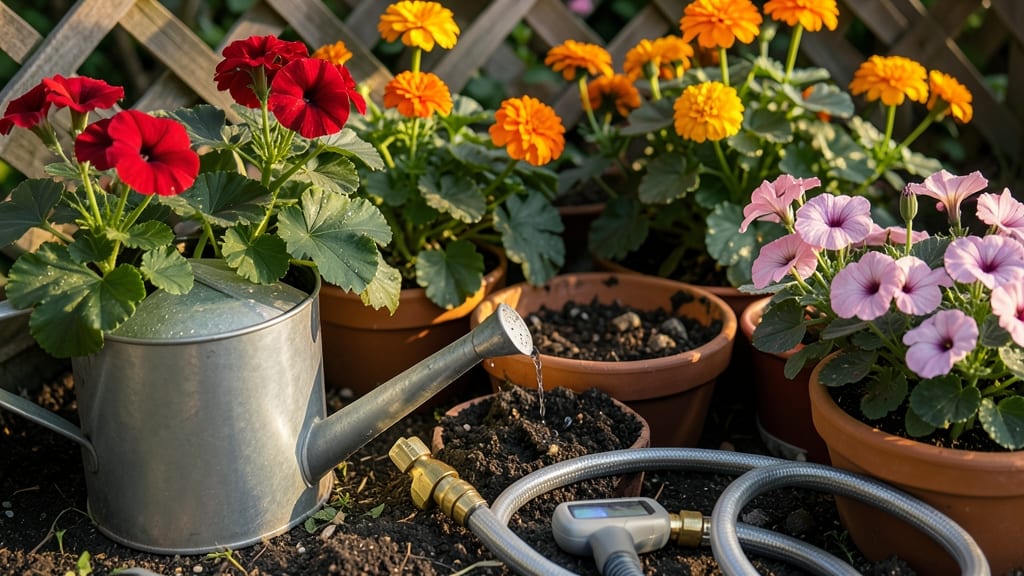
Do you have to water flowers every day? The short answer is no—and in fact, it can harm them if you’re not careful.
Overwatering kills more plants than underwatering, yet gardeners everywhere debate whether flowers need daily hydration. The truth lies in understanding your soil’s moisture zones, not just following a rigid schedule.
For example, drought-resistant blooms like lavender thrive on deep but infrequent watering, while tropical flowers like hibiscus demand consistent moisture. Even the same plant’s needs shift with the seasons: summer heat means more frequent watering, while winter often calls for a pause.
Below, I’ll break down how often flowers actually need water based on soil type, climate, and plant variety—plus the key signs you’re over- or under-watering. You’ll never guess again!
How often flowers actually need water based on soil type
Your soil type is the single biggest factor in determining how often to water flowers. Unlike the myth that all plants need daily hydration, most flowers thrive on deep, infrequent watering—especially when planted in the right soil.
For example, petunias in sandy soil may need water every 2 days, while roses in clay soil might only require watering once a week. The key is understanding how each soil type holds moisture and adjusting your schedule accordingly.
Clay soil retains water like a sponge, creating waterlogged conditions that suffocate roots. Sandy soil drains so quickly that flowers dry out between waterings. Meanwhile, loamy soil—the gardener’s gold—strikes a perfect balance.
Let’s break down how these differences impact your watering routine and which flowers adapt best to each type.
🌱 Watering science: The USDA recommends checking soil moisture 2 inches below the surface before watering. Use your finger as a gauge—if the soil feels dry, it’s time. For container gardens, the top inch of soil should be dry, but the roots below need consistent moisture. Overwatering is the #1 killer of container flowers, so always prioritize drainage.
| Soil Type | Moisture Retention | Watering Frequency (Summer) | Best Flowers | Key Tip |
|---|---|---|---|---|
| Clay | High (holds water like a sponge) | Every 7–10 days (deep soak) | Roses, Peonies, Daylilies | Amend with compost to improve drainage |
| Sandy | Low (drains too quickly) | Every 2–3 days (light daily in heat) | Petunias, Marigolds, Succulents | Add organic matter to retain moisture |
| Loamy | Moderate (ideal balance) | Every 5–7 days (adjust for heat) | Tulips, Dahlias, Lavender | Mulch to maintain even moisture |
| Silt | Medium-high (retentive but drains faster than clay) | Every 5–8 days | Ranunculus, Snapdragons, Cosmos | Test drainage with a percolation test |
If you’re unsure about your soil type, perform a simple jar test: Fill a clear jar with soil and water, then shake. Clay soil will settle in layers, sandy soil will look uniform, and loamy soil will have distinct layers with organic matter floating on top.
This test helps you tailor your watering schedule to your garden’s unique conditions, preventing both root rot and wilting.
For container-grown flowers, soil type matters just as much. Mix potting soil with perlite or vermiculite to improve drainage, especially for thirsty plants like impatiens or fuchsias.
In containers, water when the top inch feels dry, but avoid letting water pool in saucers—this mimics the drainage of sandy soil and prevents fungal diseases.
Seasonal adjustments are critical. During summer heat, even clay soil may dry out faster, requiring watering every 5–7 days instead of weekly. In winter, most flowers enter dormancy and need minimal water—only enough to keep the soil from drying completely.
Always water in the early morning to reduce evaporation and fungal risks.
Pro tip: Group flowers by water needs. Plant drought-tolerant succulents like sedum near the edge of your garden where they won’t compete with thirstier plants. Use mulch (2–3 inches of straw or wood chips) to lock in moisture and regulate soil temperature, cutting your watering needs by up to 30%.
This simple step mimics the natural moisture retention of loamy soil.
Remember, less frequent, deeper watering encourages stronger root systems. Shallow watering trains roots to stay near the surface, making plants more susceptible to drought. For example, roses with deep roots can survive longer dry spells than those with shallow roots.
Always water at the base of the plant, not overhead, to minimize disease and maximize efficiency.
💧 Final rule: If your flowers look perky in the morning but wilt by afternoon, they need more frequent watering. If leaves turn yellow or stems feel mushy, you’re overwatering.
Adjust based on your soil’s behavior, not a calendar. Your garden’s soil will tell you exactly what it needs—you just have to listen.
Signs your flowers are overwatered vs. underwatered (and how to fix it)
Your flowers might be silently screaming for help—but not in the way you think. Overwatering and underwatering both cause wilting, but the fixes couldn’t be more different.
The key is learning to read your plants: check the soil moisture 1-2 inches down (stick your finger in—it’s the best tool you have!). Yellowing leaves? That’s often a red flag for root rot from too much water, while crispy edges signal thirst.
Let’s cut to the chase: most flowers don’t need daily watering—even in summer. Instead, they thrive on deep, infrequent soakings that encourage strong roots. For example, petunias and marigolds can go 2-3 days between waterings in well-draining soil, while hibiscus and impatiens crave consistent moisture.
The mistake? Assuming all flowers have the same needs.
Overwatered Flowers
Underwatered Flowers
Here’s a pro tip: Test your soil’s moisture like a detective. Grab a handful—if it crumbles easily, it’s dry; if it sticks together, it’s overwatered. For container gardens, lift the pot: if it’s light, water it.
And remember, morning watering is your best friend—it gives leaves time to dry, reducing fungal risks.
Seasonal shifts matter too. In summer heat, your flowers might need daily watering, but in spring or fall, every 3-4 days could be perfect.
Pay attention to your local climate: humid areas need less frequent watering than dry, windy spots. The goal? Keep soil consistently moist but never soggy.
If you’re still unsure, observe your flowers’ natural rhythm. Do leaves perk up after watering? That’s your cue to adjust. And if all else fails, group plants with similar needs together—this way, you’ll water efficiently without guesswork. Your garden will thank you with vibrant blooms all season!
🌱