
Light Requirements
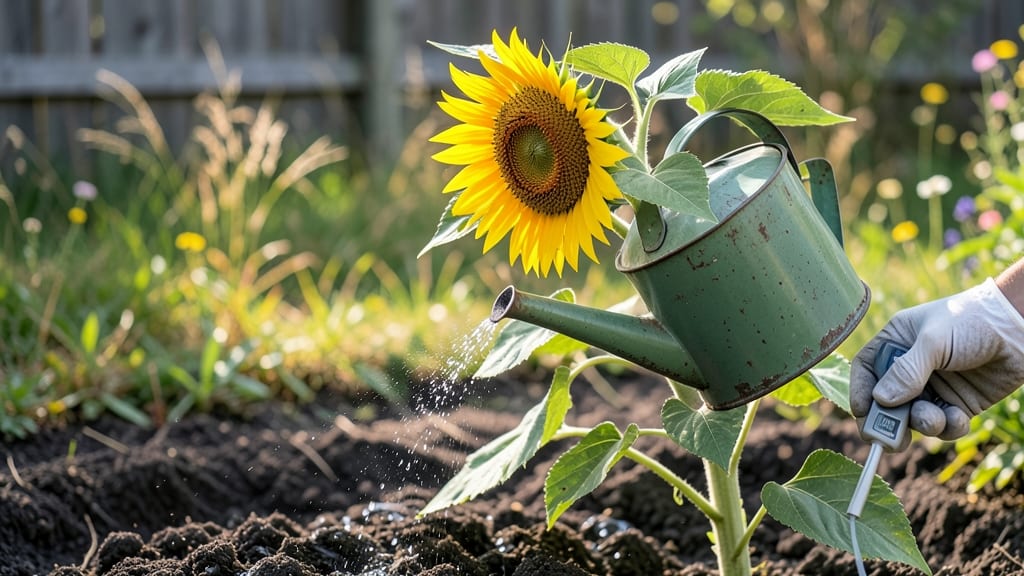
Watering sunflowers the right way means giving them 1 to 1.5 inches of water per week—deep enough to soak the soil but not so much that their roots suffocate.
You might assume sunflowers are drought-tolerant, but their towering 🌻 stems need consistent moisture to stay strong. Too little water weakens them, while too much causes rot. The secret? A balance that changes as they grow.
Young seedlings in Zone 6a need frequent, shallow watering to keep soil moist, while mature plants thrive on deep, infrequent soaks. Summer heat? That’s when you’ll need to adjust your routine to keep them blooming.
In this guide, I’ll break down exactly how much to water at each stage—from sprout to sun—plus how to spot when you’re overdoing (or underdoing) it.
Optimal sunflower watering schedule by growth stage
Sunflowers thrive on consistency, but their water needs shift dramatically from seedling to maturity. Too little water stunts growth, while excessive moisture causes root rot. Understanding these four stages—seedling, vegetative, flowering, and maturity—lets you tailor your watering for strong stems and vibrant blooms.
Each stage demands different soil moisture levels and watering frequency. For example, seedlings need daily moisture to establish roots, while mature plants can handle 5-7 day intervals once established. Climate plays a critical role too—hot, dry summers may require daily watering, while cool, rainy springs might need adjustments.
Here’s the stage-by-stage breakdown to keep your sunflowers hydrated without drowning their roots:
During the seedling stage, focus on keeping soil consistently moist but never soggy. Use a spray bottle or gentle watering can to avoid disturbing delicate sprouts. Mulch lightly with straw to retain moisture and prevent crusting.
As sunflowers enter the vegetative stage, shift to deep watering every 2-3 days. Water at the base of the plant in the morning to reduce evaporation and fungal risks. Avoid wetting leaves, which can promote powdery mildew.
The flowering stage is critical—water stress now causes buds to drop. Aim for 1-1.5 gallons per plant every 3-5 days, adjusting for heat. If your area experiences 90°F+ temperatures, water daily to prevent wilting.
Mature sunflowers become drought-tolerant but still need deep, infrequent watering. Reduce frequency to every 5-7 days unless your region is experiencing a heatwave. Overwatering at this stage can cause stem rot and weaken the plant.
Climate adjustments are key: Arid regions may need daily watering in summer, while humid climates can reduce frequency. Always check soil moisture by inserting a finger 2 inches deep—if dry, water thoroughly.
Pro tip: Drip irrigation or soaker hoses deliver water directly to roots, saving time and reducing waste. For container-grown sunflowers, water every 2-3 days due to faster drying soil.
By following this stage-specific approach, your sunflowers will grow taller, stronger, and more resilient—ready to bloom spectacularly from summer to fall. 🌻
Signs of overwatering vs. underwatering in sunflowers
Sunflowers send clear signals when their water needs aren't met. Yellowing leaves and mushy stems scream "too much water," while crispy edges and drooping foliage mean you're underwatering. The key is learning these visual cues early to save your plants before damage sets in.
For seedlings, overwatering causes blackened stems and fungal growth at the soil line, while underwatering makes leaves curl tightly like brown paper. Mature plants show similar signs but on a larger scale—stem rot from excess moisture or wilting by noon from drought.
Here’s how to tell them apart and fix the issue before your sunflowers suffer:
Overwatering vs. Underwatering in Sunflowers
Overwatering
- Yellow leaves (bottom first)
- Mushy, black stems at base
- Fungal spots (white/pink mold)
- Slow growth despite moist soil
Fix It:
- Stop watering for 3-5 days
- Improve drainage with perlite
- Repot if in compacted soil
Underwatering
- Crispy, brown leaf edges
- Drooping foliage (wilting by noon)
- Leaves curl upward (like a question mark)
- Soil pulls away from pot edges
Fix It:
- Water deeply until runoff
- Mulch to retain moisture
- Water in early morning only
Prevention starts with soil checks. Stick your finger 2 inches deep—if it’s damp, wait. If dry, water until moisture reaches 6 inches down. Morning watering is non-negotiable; evening sessions invite fungal diseases like powdery mildew.
For container-grown sunflowers, use pots with drainage holes and a well-draining mix (60% potting soil, 30% perlite, 10% compost). Overwatering in pots is deadly—roots suffocate without airflow. If your sunflower’s leaves feel slimy, it’s already too late; trim affected stems immediately.
Watch for color changes in the stem base. Healthy tissue is firm and pale green; rot turns it black or brown. Act fast—once rot spreads, even pruning won’t save the plant.
For underwatered sunflowers, a deep soak (1-2 gallons per plant) can revive them in 24 hours, but chronic drought weakens stems permanently.
Pro tip: Group sunflowers with drought-tolerant companions like marigolds or basil to create a microclimate that retains moisture. And always water at the base, not the leaves—this prevents fungal spores from splashing onto foliage.