
Watering
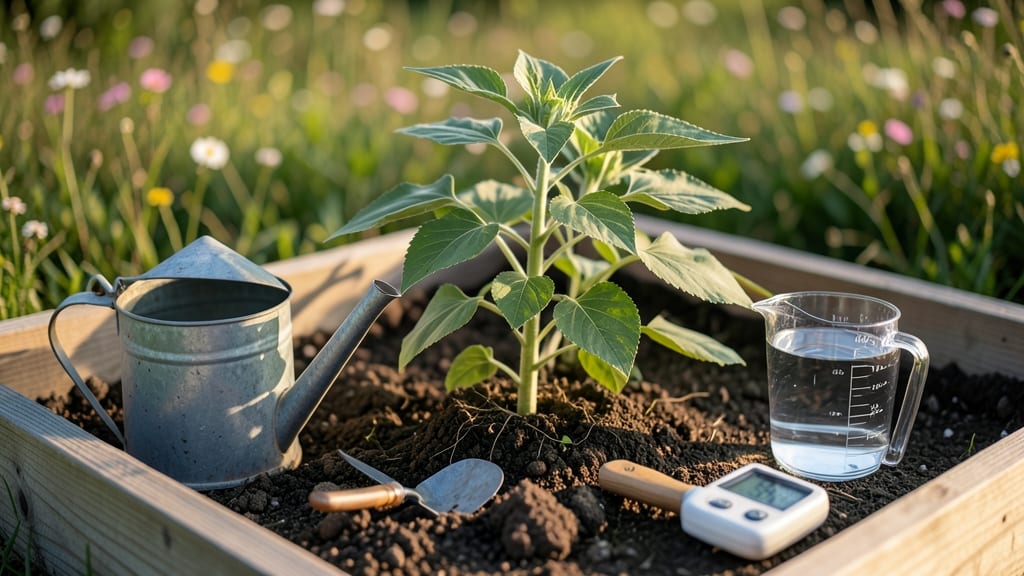
Watering sunflower seedlings the right way—how often to water sunflower seedlings—is the difference between sturdy 6-foot stalks and leggy, flopping stems.
If you’ve ever watched your 🌻 seedlings wilt by noon or drown in soggy soil, you know the stakes: too little water stunts growth, while too much rots roots before those towering blooms even appear. The trick? A schedule that keeps soil consistently moist without turning it into a swamp.
Here’s the game-changer: seedlings need water every 2-3 days in Zone 6a, but that changes as they grow. Young sprouts demand gentle, frequent hydration, while 3-foot-tall stalks can handle deeper, less frequent soaks. We’ll break down the exact routine—plus how to spot when you’re over- or underdoing it.
By the end, you’ll know not just how often to water, but when to adjust for heatwaves, pots, or rain. Let’s get those sunflowers thriving.
Optimal watering frequency for sunflower seedlings by growth stage
Sunflower seedlings demand precise watering to establish strong roots before reaching their towering mature heights. Unlike established sunflowers, which are drought-tolerant, young seedlings need consistent moisture to prevent root rot or stunted growth.
The key is maintaining even soil moisture without soggy conditions—here’s my science-backed schedule broken down by growth stage.
Your watering routine should shift as seedlings progress from germination to transplanting. Environmental factors like temperature and humidity also play critical roles. For example, in hot climates, you’ll need to water more frequently than in cooler regions.
Always check the top 1-2 inches of soil—if it feels dry, it’s time to water.
Here’s my stage-by-stage watering guide with exact intervals and soil moisture targets to keep your seedlings thriving:
During the germination phase, your seedlings need the most attention. I recommend using a fine mist spray bottle to keep the soil consistently moist without disturbing the seeds.
Once sprouts appear, switch to a gentle watering can to avoid dislodging delicate stems. The goal is to keep the soil 60-70% moisture—never waterlogged.
As your seedlings enter the establishment phase (around 2-4 weeks), you’ll notice their roots growing deeper. This is when you can gradually reduce watering frequency. Let the top 2 inches of soil dry out between waterings, but never allow the soil to become bone-dry.
Sunflowers are deep-rooted plants, so encouraging root growth now prevents future watering struggles.
Environmental factors significantly impact your watering schedule. In high-temperature zones (above 85°F), increase frequency to every 2-3 days to prevent wilting. Conversely, in cooler climates (below 70°F), extend intervals to every 4-5 days. Always adjust based on rainfall—skip watering if you’ve had recent heavy rain.
Container-grown seedlings dry out faster than those in garden beds. If your sunflowers are in pots or trays, check soil moisture daily and water every 2-3 days. Use well-draining soil mixes with perlite or vermiculite to prevent compaction.
Overcrowded seedlings also compete for moisture, so thin them to 6 inches apart once they reach 2 inches tall.
One common mistake I see is overwatering at night, which promotes fungal diseases like powdery mildew. Always water in the morning hours (between 6-9 AM) so foliage has time to dry. Another tip: use a moisture meter for precise readings—these tools take the guesswork out of soil moisture checks.
By following this stage-specific approach, your sunflower seedlings will develop strong taproots capable of supporting their eventual 10-foot stature. Consistency is key—stick to your schedule, monitor soil conditions, and adjust for your local climate. With proper hydration, you’ll be rewarded with vibrant blooms in just a few months! 🌻
Signs your sunflower seedlings need water (or too much)
Sunflower seedlings are surprisingly resilient, but even they can't handle watering extremes. The key is learning their subtle signals—drooping leaves or yellowing stems often mean you've missed the mark. Unlike mature sunflowers, seedlings have delicate root systems that need consistent moisture without becoming waterlogged.
I’ve learned the hard way that overwatering can suffocate roots just as quickly as underwatering stunts growth.
First, check the soil moisture by sticking your finger about 1 inch deep. If it feels dry, your seedlings need water immediately. For container-grown seedlings, the topsoil should never stay bone-dry for more than 24 hours.
In-ground seedlings can tolerate slightly longer dry spells, but wilting leaves by midday are a clear cry for hydration. The trick is to water deeply enough that moisture reaches 2-3 inches down—this encourages strong root development.
Watering Sunflower Seedlings: Pros & Cons
✅ DO This
- Morning watering (reduces fungal risk)
- Deep soaks (2-3 inches) every 2-3 days
- Drip irrigation (avoids leaf wetness)
- Well-draining soil (prevents root rot)
- Check soil before watering (finger test)
❌ DON'T Do This
- Night watering (promotes mold)
- Shallow sprinkles (only wets surface)
- Overcrowded pots (traps excess moisture)
- Ignoring wilting (seedlings recover poorly)
- Skipping mulch (soil dries too fast)
One of the most common mistakes I see is yellowing leaves on sunflower seedlings, which usually signals overwatering.
If the leaves turn yellow while the soil stays soggy, you’re likely suffocating the roots. Mold or fungus on the soil surface is another red flag—this means excess moisture is creating the perfect breeding ground.
In this case, let the top 1/2 inch of soil dry out between waterings and consider repotting if drainage is poor.
For underwatered seedlings, the signs are equally telling: crispy leaf edges, stunted growth, or leaves that feel paper-thin. If you notice these symptoms, water immediately and add a thin layer of mulch (like straw) to retain moisture.
Remember, sunflowers are drought-tolerant once established, but seedlings need consistent hydration to develop strong stems capable of supporting those massive blooms.
Another trick I’ve picked up is the "thumb squeeze test". Gently press the soil near your seedlings—if it crumbles easily, it’s time to water. If it stays clumped, wait another day.
This simple check saves me from both overwatering and underwatering mistakes. And always water at the base of the plant to avoid wetting the leaves, which can lead to powdery mildew.
Finally, pay attention to the weather forecast. If heavy rain is expected, skip your watering schedule—seedlings can handle extra moisture for a day or two. But if it’s hot and dry, you may need to water daily for the first 10 days after germination.
Adjusting based on your local climate is half the battle in growing healthy sunflower seedlings.