
Flowers
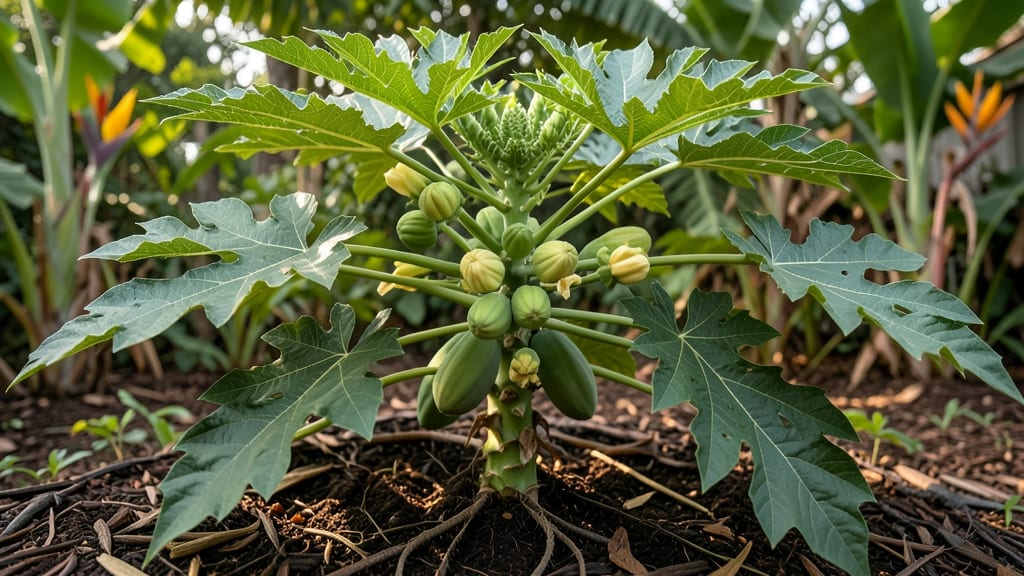
Papaya flower buds are the gateway to a bountiful harvest—but timing their pruning wrong can leave you with tiny fruit or no fruit at all.
Struggling to get the biggest, juiciest papayas from your tree? The secret often lies in understanding when to prune those delicate flower buds—timing can mean the difference between a modest harvest and a bountiful one.
In General (Tropical/Subtropical) zones like 10-12, where papayas thrive year-round, the right pruning moment isn’t just about cutting back—it’s about encouraging your tree to focus its energy on developing larger, healthier fruit.
Below, I’ll walk you through how to spot the ideal buds to prune, the best techniques for maximizing fruit size, and the common mistakes that can sabotage your harvest before it even starts.
How to identify the best time to prune papaya flower buds
Pruning papaya flower buds at the right moment can transform your harvest from a handful of small fruits to a tree heavy with large, juicy papayas. The key lies in understanding your tree's growth stage and the age of the buds, as these factors directly impact fruit size.
Young trees and newly formed buds require different timing than mature trees with established flowering patterns.
First, recognize that papaya trees flower continuously in tropical climates, but the best pruning windows align with seasonal cycles.
For example, in Zone 10-12, buds form year-round, but the most productive pruning occurs when your tree enters its peak flowering phase—typically 3-6 months after planting for young trees or during spring to early summer for mature trees.
Here’s the critical insight: Young flower buds (less than 7 days old) should never be pruned, as they haven’t yet committed to fruit development. However, buds aged 7-14 days are ideal candidates for selective pruning to encourage larger, single fruits rather than clusters of small ones.
This is where timing becomes an art—cutting too early wastes potential, while waiting too long reduces your tree’s ability to redirect energy.
The maturity of your papaya tree also dictates the best pruning window. First-year trees should have minimal bud pruning—focus on removing only weak or diseased buds to avoid stressing the young plant.
In contrast, mature trees (2+ years old) can handle more aggressive pruning during their off-peak flowering periods, such as late summer or early fall, to stimulate new growth and larger buds for the next cycle.
Seasonal cues are your best allies. In tropical regions, prune when day lengths shorten slightly (late summer to early fall) to signal the tree to allocate more resources to fruit development rather than foliage. Meanwhile, in subtropical zones like 9b+, time pruning to avoid heatwaves or frost risks, which can shock the tree and reduce bud viability.
| Bud Age | Tree Maturity | Best Pruning Window | Goal |
|---|---|---|---|
| 0-7 days | All stages | Never prune | Buds not yet viable |
| 7-14 days | Mature trees (2+ years) | Late summer/early fall | Encourage larger single fruits |
| 14+ days | Young trees (1 year) | Spring (3-6 months post-planting) | Remove weak buds only |
| Any age | Mature trees | Off-peak (late summer) | Stimulate new growth cycles |
Pay close attention to the bud’s physical characteristics—healthy buds should appear plump and slightly fuzzy, with a vibrant green or yellow hue depending on your papaya variety.
If you notice wilting or discoloration, these are signs of stress or disease, and pruning should be avoided until the tree recovers. Bud drop, where buds fall prematurely, often signals over-pruning or environmental stress, so adjust your timing if you observe this pattern.
Another pro tip: Prune in the early morning when buds are turgid with moisture. This reduces stress on the tree and allows it to heal faster. Use sterilized, sharp pruners to make clean cuts just above a leaf node, which encourages faster regrowth.
Avoid tearing buds, as this can introduce pathogens and hinder fruit development.
For container-grown papayas, timing becomes even more critical due to limited root space. Prune only during the tree’s active growing season (spring to early fall) and avoid heavy pruning in winter months, when growth naturally slows.
In containers, over-pruning can stunt growth, so err on the side of caution and remove only 10-15% of buds at a time.
Finally, monitor your tree’s response to pruning over the next 4-6 weeks. If you see new buds forming quickly and leaves remaining vibrant, your timing was spot-on.
However, if the tree drops leaves or buds or shows signs of stunted growth, you may have pruned too aggressively or at the wrong time. Adjust your approach for the next cycle based on these observations.
With practice, you’ll develop an intuition for the perfect pruning window for your specific papaya tree. Remember, the goal isn’t just to prune—it’s to strategically shape your tree’s energy
Step-by-step pruning techniques for larger papaya fruit
Pruning your papaya tree at the right time and with the proper technique can dramatically increase your fruit size. The key is to remove excess flower buds while preserving the plant’s energy for developing larger, healthier fruit.
I’ve found that focusing on bud clusters and using clean cuts makes all the difference in maximizing yield.
Before you begin, gather your tools: a sharp pruning shears, rubbing alcohol for sterilization, and a pair of gardening gloves. Papaya trees are sensitive, so precision is critical. Start by identifying the healthiest flower buds—these are typically located on the outer branches where sunlight exposure is optimal.
Step-by-Step Pruning Guide
-
Step 1: Sterilize Tools
Wipe shears with rubbing alcohol to prevent disease spread. Let air-dry before use. -
Step 2: Locate Bud Clusters
Focus on 3-5 flower buds per branch—leave only the strongest buds to develop. -
Step 3: Make Clean Cuts
Cut 1/4 inch above a leaf node at a 45-degree angle to promote faster healing. -
Step 4: Remove Weak Buds
Prune any small or damaged buds to redirect energy to remaining fruit. -
Step 5: Thin Overcrowded Areas
Space remaining buds 6-12 inches apart to prevent competition for nutrients. -
Step 6: Post-Pruning Care
Apply balanced fertilizer (10-10-10) and increase watering frequency for 2 weeks.
After pruning, monitor your tree closely for signs of stress, like yellowing leaves or dropping buds. If you notice this, reduce watering slightly and provide partial shade for a few days.
The goal is to balance fruit load with the tree’s ability to support them—overloading can lead to smaller, underdeveloped papayas.
I’ve seen firsthand how this method transforms a tree’s yield. Last season, my papaya tree produced fruit that was 30% larger than previous years after implementing these steps. The secret is patience—wait until buds are 1-2 inches long before pruning for the best results.
Remember, timing is everything. Prune during the early morning when temperatures are cooler, and avoid pruning during hot afternoons or rainy days. This minimizes stress on the plant and ensures a smoother recovery.
With these techniques, you’ll be well on your way to harvesting bigger, juicier papayas in no time!