
Trees
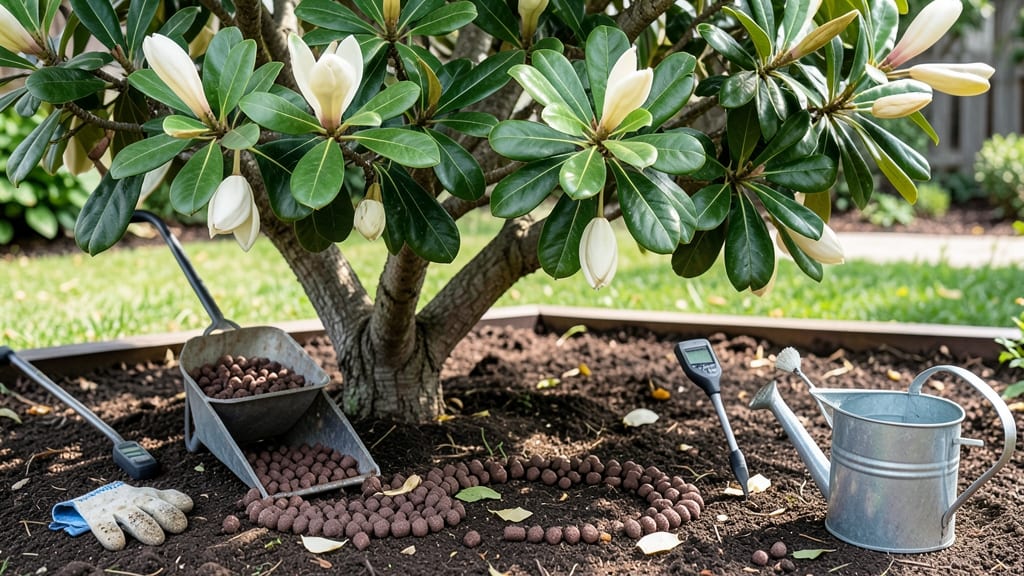
Fertilizing flowering trees at the right time is the key to vibrant blooms and long-term health 🌸 — and missing the window can leave your trees struggling to recover.
Struggling to keep your flowering trees blooming as beautifully as they did last year? The secret often lies in timing—fertilizing at the wrong season can actually harm your trees instead of helping them thrive.
In USDA Zone 6a, the best time to feed your flowering trees is early spring, just as buds begin to swell, or again in early summer to support blooming. But here’s the catch: fall and winter are off-limits unless you’re dealing with a nutrient-deficient soil test.
Below, I’ll walk you through the exact seasonal triggers for fertilization, the right fertilizer types to use, and how to spot when your trees are truly hungry—or when you’re overdoing it.
Best seasons to fertilize flowering trees for maximum bloom production
Timing is everything when it comes to fertilizing flowering trees. Unlike annuals or vegetables, trees have distinct growth cycles where nutrient uptake matters most. The critical windows for fertilization align with your tree's natural blooming schedule—not just when you think it needs a boost.
Understanding these seasonal triggers can mean the difference between vibrant blooms and sparse, weak flowers.
Most flowering trees enter dormancy in winter and begin preparing for spring growth as early as late February. This is when roots become active again, ready to absorb nutrients. Applying fertilizer too early—like in deep winter—won’t help because the tree isn’t actively growing.
Waiting until late winter or early spring ensures nutrients are available exactly when your tree needs them to fuel bud formation and root development.
Here’s the science behind it: Trees store energy during dormancy, and applying fertilizer in late winter (just before buds swell) gives them the phosphorus and potassium needed for flower production. A second application in early spring, once leaves appear, supports foliage growth and root expansion.
Skipping these steps often results in smaller blooms or trees that struggle to recover after flowering.
Now, let’s talk about what NOT to do. Fertilizing in summer or fall is a common mistake that can backfire. In summer, trees are already stressed by heat and may not absorb nutrients efficiently, leading to burned roots or overgrowth that weakens the tree.
In fall, new growth stimulated by fertilizer is vulnerable to frost damage, leaving your tree exposed to winter kill.
| Season | Best Time to Fertilize | Why It Matters | Fertilizer Type |
|---|---|---|---|
| Late Winter (Feb-Mar) | Just before buds swell | Stimulates root growth and nutrient uptake for blooming season | Slow-release organic (e.g., compost, 10-10-10) |
| Early Spring (Apr-May) | After leaves emerge | Supports foliage and flower development | Balanced NPK (e.g., 12-12-12) |
| Summer (Jun-Jul) | Avoid—unless deficient | Risk of root burn; tree focuses on maintaining growth, not blooms | None (unless soil test shows deficiency) |
| Fall (Sep-Oct) | Skip entirely | New growth can’t harden off before winter; increases frost damage risk | None |
| Winter (Nov-Jan) | Skip entirely | Tree is dormant; fertilizer won’t be absorbed | None |
For young flowering trees (under 3 years old), you can apply a light fertilizer in early spring and again in mid-summer to encourage root and canopy growth. However, mature trees (5+ years) typically only need one or two feedings per year, timed to their natural blooming cycle.
For example, a cherry blossom tree should get its first feeding in late winter to support spring blooms, while a crabapple may benefit from a second feeding in early summer for fruit development.
Pro tip: Always water deeply before and after fertilizing to help nutrients reach the roots. A 3-inch layer of mulch around the base of the tree also retains moisture and regulates soil temperature, making it easier for roots to absorb nutrients during those critical early spring weeks.
Avoid over-mulching, though—keep it 3-4 inches deep to prevent suffocation.
If you’re in a warmer climate (USDA Zones 8-10), your flowering trees may have a longer growing season, but the same principles apply. Focus on fertilizing when you see new leaf growth or bud swell, rather than sticking to a calendar.
For example, in Southern California, you might fertilize in January and March instead of February and April.
One final warning: Over-fertilizing is just as damaging as under-fertilizing. Too much nitrogen can lead to leafy growth at the expense of flowers, while excess salts from synthetic fertilizers can burn roots.
Always follow the label instructions and consider a soil test every 2-3 years to monitor nutrient levels. This way, you’re giving your trees exactly what they need—when they need it.
By aligning your fertilization schedule with your tree’s natural cycle, you’ll see healthier roots,
How to choose the right fertilizer type for flowering trees
Not all fertilizers are created equal when it comes to flowering trees. The right type can mean the difference between vibrant blooms and sparse, weak flowers.
For phosphorus-rich growth and potassium-packed strength, you’ll want to focus on fertilizers with balanced NPK ratios like 10-10-10 or 5-10-10, tailored to your tree’s specific needs.
Organic fertilizers, such as composted manure or fish emulsion, release nutrients slowly, feeding your tree consistently over time. These are ideal for long-term soil health and microorganism support, but they may take longer to show results.
On the other hand, synthetic fertilizers like granular bloom boosters deliver quick, concentrated nutrients—perfect for a mid-season boost during peak blooming.
Phosphorus (P) is the powerhouse for root development and flower production, while potassium (K) strengthens disease resistance and stress tolerance. A higher phosphorus ratio (like 5-10-5) is best for new plantings or trees recovering from stress, while a balanced NPK (10-10-10) works well for established flowering trees like crabapple or magnolia.
If your flowering tree is struggling with yellowing leaves or poor bloom quality, it might need a micronutrient boost. Look for fertilizers with added iron, magnesium, or zinc to address deficiencies.
For example, Epsom salt (magnesium sulfate) can revive chlorotic leaves in dogwood or cherry blossom trees.
For young flowering trees, like newly planted japanese maple or fructifying crabapple, start with a light application of balanced fertilizer in early spring. Avoid heavy feeding, as it can burn roots or promote weak growth.
For mature trees, split applications into two doses: one in late winter (before buds swell) and another in early summer (after blooming).
Always water deeply after fertilizing to help nutrients reach the root zone. For container-grown flowering trees, like dwarf flowering cherry, use a water-soluble fertilizer diluted to half-strength every 4-6 weeks during the growing season.
And remember: less is more—over-fertilizing can lead to salt buildup in the soil, harming your tree’s health.