
Flowers
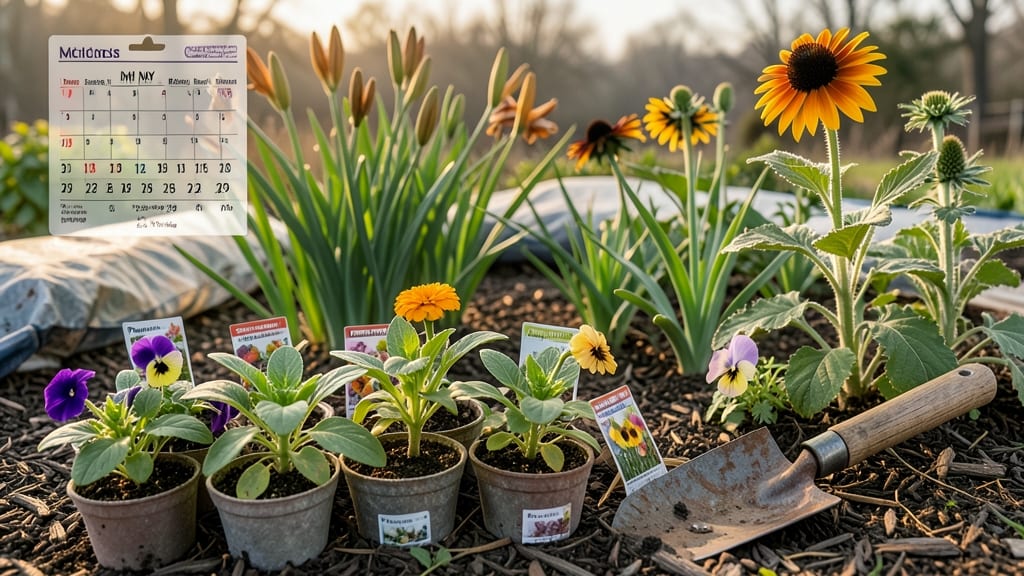
You can plant flowers in Michigan after the last frost date, typically between mid-April and mid-May for spring blooms, or in late August for fall varieties 🌸—but timing varies wildly from Detroit to the Upper Peninsula.
Michigan’s unpredictable spring weather can leave gardeners guessing—will those frost-sensitive petunias survive, or will you lose them to late snow? The key is knowing your USDA Zone (5b-6b) and local frost averages, which can shift planting windows by weeks.
Annuals like marigolds thrive once soil warms to 60°F, while hardy perennials like coneflowers can handle cooler temps. Container gardening also extends your season, letting you start 2-3 weeks earlier in protected spots.
Below, I break down exact planting dates by zone, microclimate adjustments for urban vs. rural areas, and the 5 signs you’re planting too soon—so your flowers bloom on schedule, not on hope.
Michigan flower planting calendar by USDA Zone 5 & 6 (with frost dates)
Michigan’s USDA Zones 5b and 6a create distinct planting windows, with Zone 5 (northern Michigan) typically running 1-2 weeks later than Zone 6 (southern Michigan).
The average last frost date ranges from April 15 in Detroit to May 10 in Marquette, while first frosts arrive as early as September 20 in the UP or as late as October 15 in Grand Rapids.
Understanding these variations helps you choose frost-hardy flowers for early spring and heat-tolerant varieties for summer.
For Zone 6 (southern Michigan), you can start planting hardy annuals like pansies and snapdragons as early as mid-April under row covers, while Zone 5 (northern Michigan) gardeners should wait until late April to early May.
Bulbs like tulips and daffodils can be planted in fall (October-November) for spring blooms, but tender annuals like marigolds and zinnias should wait until after the last frost date. Always check your local Michigan State University Extension for precise frost dates.
Key takeaway: Plant cool-season flowers (pansies, violas) in early spring and warm-season flowers (petunias, geraniums) after May 15 in Zone 5 or May 1 in Zone 6. Use row covers to extend early planting by 2-3 weeks in both zones.
| Month | Zone 5 (Northern MI) | Zone 6 (Southern MI) | Flowers to Plant | Notes |
|---|---|---|---|---|
| March | Start indoor seeds (pansies, snapdragons) | Start indoor seeds (pansies, violas) | Pansies, Calendula, Sweet Alyssum | Use grow lights for seedlings |
| April | Plant hardy annuals under cover (late April) | Direct sow cool-season flowers (mid-April) | Pansies, Snapdragons, Dianthus | Wait for soil temp >40°F |
| May | Plant tender annuals after May 15 | Plant warm-season flowers after May 1 | Marigolds, Petunias, Zinnias | Use row covers for late frosts |
| June | Transplant herbaceous perennials | Direct sow summer bloomers | Coneflowers, Black-Eyed Susans, Cosmos | Mulch to retain moisture |
| August | Start fall-blooming bulbs (dahlias) | Plant fall pansies for winter color | Asters, Chrysanthemums, Snapdragons | Choose frost-resistant varieties |
| September | Plant spring-blooming bulbs (tulips) | Plant spring bulbs before frost | Tulips, Daffodils, Crocuses | Aim for 6-8 weeks before freeze |
In Zone 5, late April is your window for hardy annuals like pansies and sweet alyssum, while Zone 6 gardeners can start earlier. For
How to adjust planting times for Michigan’s microclimates (urban vs. rural)
Michigan’s urban heat islands and rural wind exposure create planting windows that can differ by 2-3 weeks between Detroit and Traverse City. In cities like Detroit, pavement and buildings trap heat, warming soil faster—ideal for starting tender flowers like petunias 7-10 days earlier than rural areas.
Meanwhile, open fields in northern Michigan face stronger winds that dry out seedlings faster, requiring protective measures.
Soil temperature is your best guide: Use a soil thermometer to confirm 60°F+ for annuals like marigolds or 50°F+ for hardy perennials. In Detroit, this often means planting late April to early May, while Traverse City gardeners typically wait until mid-May to avoid late frosts.
Container gardens in both locations can start 2 weeks ahead since pots warm up faster.
Urban gardeners also benefit from urban heat islands, where asphalt and buildings raise temperatures by 5-10°F compared to rural zones. This allows you to plant tender annuals 1-2 weeks earlier in protected microclimates like south-facing patios.
However, wind exposure in open rural areas demands windbreaks or row covers to prevent transplant shock.
| Factor | Detroit (Urban) | Traverse City (Rural) | Adjustment Tip |
|---|---|---|---|
| Last Frost Date | April 20 | May 10 | Plant 7-10 days earlier in Detroit |
| Soil Warmth | Reaches 60°F by April 25 | Reaches 60°F by May 5 | Use black plastic mulch in rural areas |
| Wind Exposure | Moderate (buildings block wind) | High (open fields) | Add windbreaks or row covers |
| Urban Heat Island | +5-10°F warmer | No heat island effect | Start container gardens 2 weeks early |
| Fall Planting Window | August 15-Sept 1 | August 1-Sept 15 | Use cold frames in rural zones |
To extend your planting season, consider these season-extending tools: Row covers add 4-6°F protection and let you plant 2 weeks earlier in rural areas. Cold frames create microclimates that can push fall planting into early October for hardy flowers like pansies or snapdragons.
In urban containers, heat-retaining fabrics or dark-colored pots absorb sunlight and warm roots faster.
For wind-prone rural gardens, create windbreaks with tall grasses or shrubs on the north side of flower beds. In cities, south-facing walls or fences act as natural heat sinks, allowing you to plant tender annuals like geraniums 10 days earlier than in open fields.
Always monitor your local MSU Extension frost forecasts—they provide hyper-local adjustments for your specific zip code.
Pro tip: Test your soil’s warmth consistency by pressing your hand into the ground—if it feels cool to your wrist, wait another week.
Urban gardeners can often start pansies and violas in late March thanks to heat islands, while rural gardeners should hold off until after May 1 to avoid frost damage. The right adjustments turn Michigan’s unpredictable climate into your advantage!