
Flowers
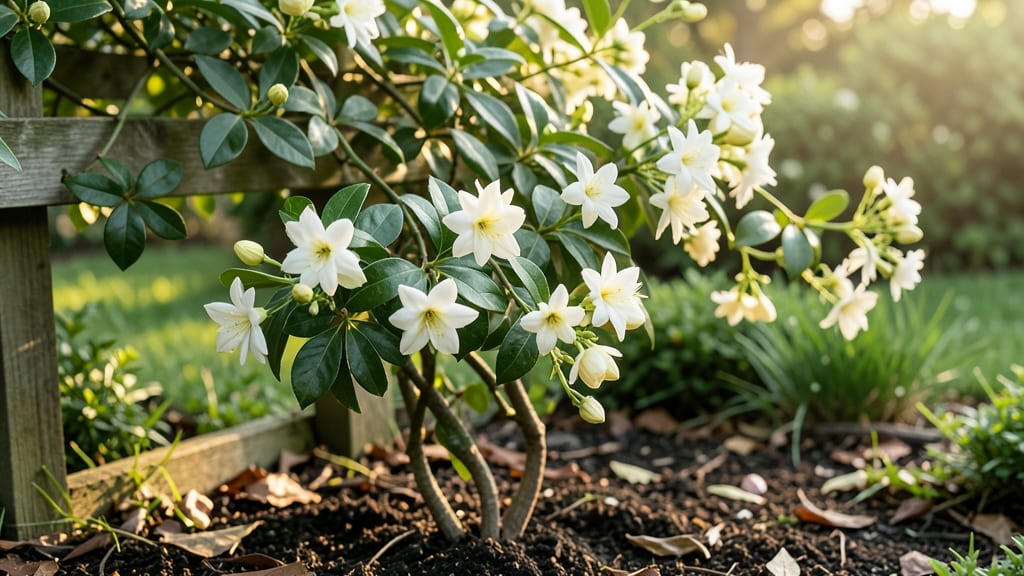
Jasmine flowers bloom in late spring and summer 🌸, with exact timing depending on your climate zone and the variety you grow.
If you’ve ever dreamed of waking up to the intoxicating fragrance of jasmine filling your garden, timing is everything—this delicate flower blooms at very specific times depending on where you live.
In cooler zones like 6a, expect buds to open around June, while tropical varieties like Jasminum sambac may start as early as May in warmer regions.
Below, I’ll break down the exact months for your area, plus care tips to encourage longer blooms—so you can enjoy that signature sweet scent all season long.
Jasmine flowering seasons by USDA climate zones: exact months
Timing your jasmine blooms means understanding your USDA climate zone—where you live dramatically changes when these fragrant vines will perfume your garden. Jasminum officinale (common jasmine) thrives in cooler zones, while Jasminum sambac (Arabian jasmine) loves tropical heat.
Even the same variety can bloom 2-3 months earlier in Zone 11 compared to Zone 7.
Most jasmine varieties follow predictable seasonal patterns, but temperature fluctuations and daylight hours trigger blooming.
For example, Spanish jasmine (Jasminum grandiflorum) often flowers in late spring to early summer in Mediterranean climates (Zone 9-11), while winter jasmine (Jasminum nudiflorum) defies the norm with late winter to early spring blooms in colder zones.
Here’s the exact timing you need to mark on your calendar—plus how to encourage longer blooms in your specific zone:
In USDA Zones 7-8, common jasmine (Jasminum officinale) typically bursts into bloom in late June, reaching peak fragrance by mid-July. The flowers last through August, but you can extend this by pruning lightly after the first flush to encourage a second wave.
These zones often experience hot summers, so morning watering is critical to prevent bud drop.
Zone 9 gardeners enjoy earlier blooms—Spanish jasmine (Jasminum grandiflorum) often starts in May, aligning with longer daylight hours. The key here is consistent moisture; let the soil dry slightly between waterings to avoid root rot.
In Zone 10-11, Arabian jasmine (Jasminum sambac) is a year-round performer, with two major bloom cycles: spring (March–May) and fall (September–November).
If you’re in Zone 6 or colder, focus on winter jasmine (Jasminum nudiflorum), which blooms January–March when most gardens are dormant. This variety thrives in full sun and well-draining soil, making it ideal for snow-free windowsills or trellises near south-facing walls.
Pro tip: Deadhead spent blooms to redirect energy into new flowers. For common jasmine, this means pinching off faded blossoms in late summer to encourage September–October reblooms. In warmer zones, fertilize lightly in early spring with a balanced 10-10-10 to boost vigor before the main bloom season.
Watch for bud formation—this is your cue to reduce pruning and increase water slightly. Buds appear as small green swellings along the stems, typically 4–6 weeks before opening.
In tropical zones, buds may form year-round, but heavy rains can wash them off, so provide partial shade during monsoon seasons.
For container-grown jasmine, blooming times shift slightly—potted plants in Zone 9+ may flower 2–4 weeks earlier due to warmer root zones. Use well-draining pots and move containers to shaded areas during midday heat to prevent stress.
🌸
How to extend jasmine blooming season: pruning and care tips
Jasmine plants reward careful attention with longer, more abundant blooms. The key to extending their flowering season lies in timing your pruning and adjusting care based on your variety—whether it's evergreen Jasminum officinale or deciduous Jasminum sambac.
With the right approach, you can enjoy that signature fragrance from late spring through early fall.
Most jasmine varieties bloom on new wood, meaning pruning after flowering encourages fresh growth that will produce more flowers. However, Jasminum nudiflorum (winter jasmine) blooms on old wood, so prune it right after blooming to avoid cutting off next year's buds.
Understanding these differences is the first step to a fragrant garden all season.
🌿 When Does Jasmine Flower?
- 🌸 Spring Bloomers: Jasminum officinale (June-August in zones 7-9)
- 🌸 Summer Bloomers: Jasminum sambac (May-September in zones 10-11)
- ❄️ Winter Bloomer: Jasminum nudiflorum (December-February in zones 5-8)
- ☀️ Year-Round Potential: With care, tropical varieties can bloom 12+ months in frost-free zones
- ✂️ Pruning Window: Late winter/early spring for most varieties (after last frost)
To encourage earlier blooms, start with proper sunlight placement. Jasmine thrives with 4-6 hours of morning sun and afternoon shade—this prevents stress that can delay flowering.
In hot climates, provide light afternoon shade to protect blooms from wilting. I've found that positioning vines near an east-facing wall gives them ideal conditions without scorching.
Fertilizing plays a crucial role too. Use a balanced 10-10-10 fertilizer in early spring to jumpstart growth, then switch to a low-phosphorus formula (like 5-5-5) when buds form to promote flowering over foliage.
I apply mine in early morning after watering to prevent root burn. For potted jasmine, reduce fertilizer by half to avoid salt buildup.
Watering strategies make a surprising difference. Jasmine needs consistent moisture but hates soggy roots. In spring and summer, water deeply every 2-3 days at the base, while in fall and winter, reduce to once weekly.
Mulching with 2-3 inches of organic matter helps retain moisture and regulates soil temperature—this simple step can extend blooming by 2-3 weeks.
For evergreen varieties like Jasminum officinale, a light pruning in late winter removes dead wood and shapes the plant. Cut back 1/3 of the oldest stems to encourage new growth.
For deciduous types, prune immediately after flowering to maintain an open structure. Always use sterilized shears to prevent disease spread—this is especially important if you're working with multiple plants.
With these care adjustments, my Jasminum sambac now blooms from May through October, filling the garden with fragrance for nearly half the year. The secret? Consistency in care and understanding your specific variety's needs. Try these tips and you'll be rewarded with longer, more abundant jasmine blooms—naturally! 🌸