
Companion Plants
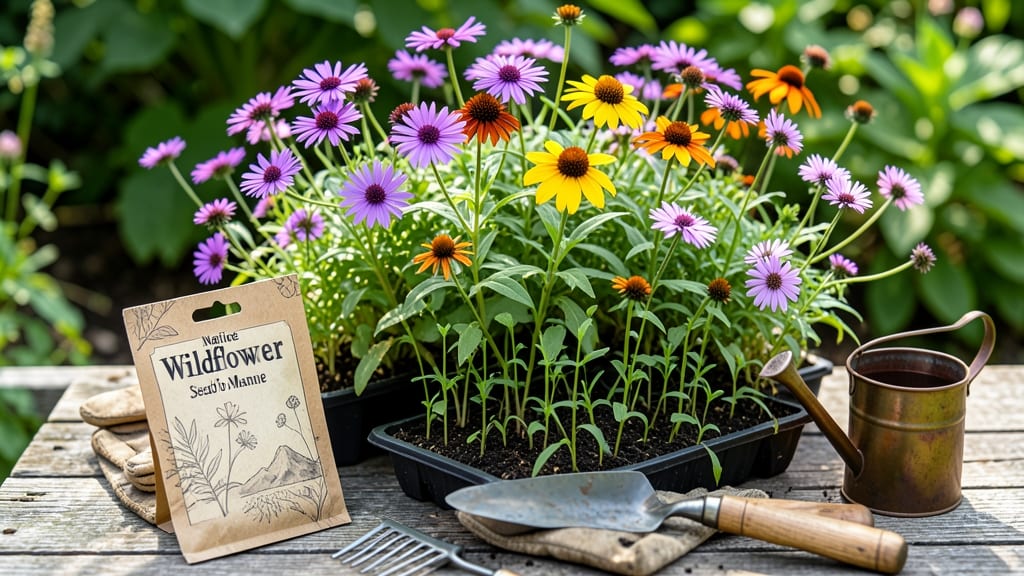
Plant wildflower seeds in Maine between late April and early May for spring blooms or August to September for fall establishment—timing that beats frost and rocky soil for vibrant 🌼 displays.
Maine’s short growing season means one wrong move, and your wildflowers never take hold. I’ve seen seeds planted too early get fried by late frosts, while late plantings struggle to root before winter—so getting the timing right is everything.
This guide breaks down the exact frost-free windows for your zone, whether you’re in coastal 5b or inland 6a, plus soil tricks to make rocky Maine dirt work for you.
You’ll learn which native wildflowers thrive in your microclimate, how to prep soil for germination, and even how to stretch your blooms from June through October with the right mix.
Maine’s wildflower planting calendar by season: best months for frost-free success
Maine’s short growing season and variable frost dates make timing critical for wildflower success. Unlike southern states, we can’t rely on long summers—fall planting is often just as vital as spring. The key? Understanding your USDA zone (5a-6b) and adjusting for northern vs. southern Maine’s microclimates.
Southern Maine (zone 6b) enjoys 10-14 extra frost-free days compared to northern zones like 5a. This means late May might be safe in Portland but risky in Bangor. Always check your last frost date (typically mid-May) and plan 6-8 weeks before for spring planting.
Cold-hardy annuals like cosmos and zinnia can handle light frosts, while perennials like black-eyed Susan establish better with fall sowing. Here’s your frost-free planting calendar broken down by season:
For northern Maine (zones 5a), delay spring planting until after May 15th to avoid late frosts. Southern Maine (zone 6b) can start as early as late April in sheltered microclimates. Always choose native wildflowers—they’re adapted to Maine’s rocky soil and short summers.
Pro tip: Stratify seeds (mix with sand, moisten, and refrigerate for 4 weeks) to mimic winter conditions. This breaks dormancy and ensures faster germination in Maine’s cool soil. Perennials like bee balm benefit most from this method.
Watering is critical in Maine’s dry summers. After planting, keep soil consistently moist (not soggy) for 4-6 weeks. Once established, most wildflowers thrive on rainfall alone. Mulch lightly with straw to retain moisture and suppress weeds—just don’t smother the seeds!
If you’re in Zone 6b, you can squeeze in a second planting in late July for late-summer blooms. Choose fast-growing annuals like marigolds or sunflowers for quick color. For Zone 5a, focus on fall planting—these seeds will overwinter and bloom earlier next year.
Remember: Maine’s wildflowers reward patience. A well-timed fall planting can give you two years of blooms with minimal effort. Start small—try a 5x5-foot patch—and expand as you master the timing. Your pollinators will thank you!
🌼
How to extend Maine’s wildflower season: prepping soil and choosing late-blooming varieties
Maine’s rocky soil and short growing season can make wildflower gardening challenging, but with the right soil prep and late-blooming varieties, you can enjoy color from early spring through frost. The key lies in amending heavy clay and selecting native species that thrive in Maine’s USDA zones 5a-6b.
Start by testing your soil’s pH—most wildflowers prefer a slightly acidic to neutral range (6.0-7.0). If your soil is compacted, till in compost or sand to improve drainage, especially in urban areas where heat islands can stress plants.
For year-round blooms, focus on staggered planting with native perennials like black-eyed Susans (July-October), coneflowers (June-September), and goldenrod (August-October). These varieties not only extend your season but also support local pollinators like bees and butterflies.
In rural areas, you can plant later into the fall (up to early October), while urban microclimates may require earlier spring sowing due to heat retention.
- 1. Test soil pH—aim for 6.0-7.0—use lime to raise or sulfur to lower.
- 2. Mulch heavily (3-4 inches) with straw or wood chips to retain moisture.
- 3. Avoid fertilizers—wildflowers thrive in low-nutrient soil.
- 4. Break up rocks—use a garden fork to loosen compacted layers.
- 5. Plant in sun—6+ hours daily ensures robust blooms.
When selecting late-blooming varieties, prioritize native species adapted to Maine’s climate. New England aster (September-November) and Joe Pye weed (July-September) are excellent choices for fall color. For urban gardens, consider shade-tolerant options like wild columbine, which blooms from May to July in partial shade.
In rural areas, prairie dropseed offers golden fall foliage and thrives in drier conditions.
Microclimates play a crucial role in Maine. Urban areas often experience heat islands, so plant heat-sensitive species like lupine in morning sun spots. Rural gardens with cooler microclimates can support longer-blooming perennials like beard tongue, which flowers from June to September.
Always group plants by water needs—drought-tolerant species like yarrow should never be planted near moisture-loving blue flag iris.
To create a bloom-time chart, map out your garden’s sun exposure and note when each variety flowers. For example, plant early bloomers (like wild geranium) in south-facing beds and late bloomers (like goldenrod) in west-facing areas to maximize sunlight.
A simple chart can help you visualize gaps and overlaps, ensuring continuous color from May through October.
Finally, deadhead spent blooms regularly to encourage prolonged flowering and prevent self-seeding where you don’t want it. In late summer, apply a light layer of compost to replenish nutrients without overfeeding. With these strategies, your Maine wildflower garden will become a pollinator paradise and a year-round spectacle. 🌻