
Size
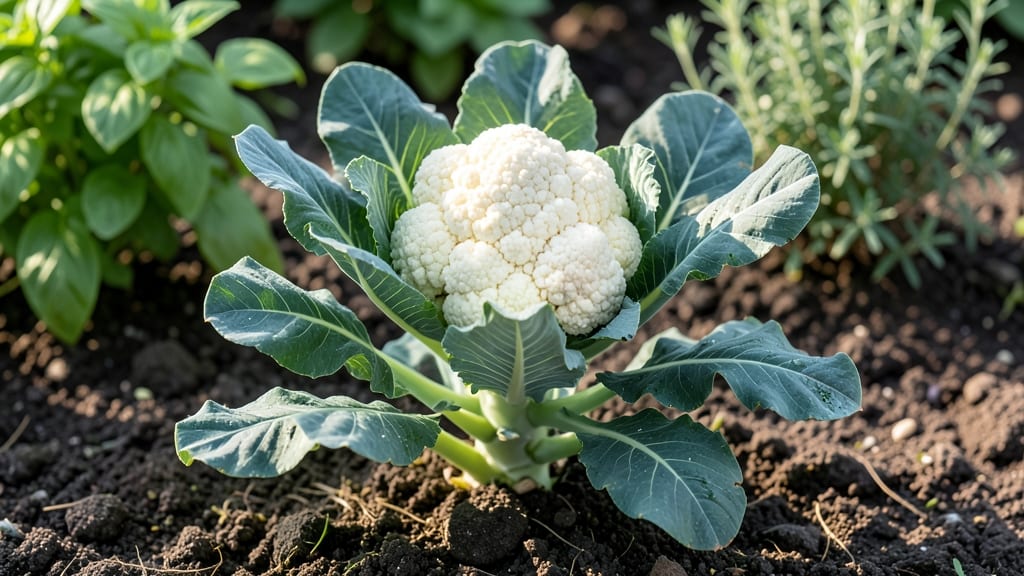
Growing cauliflower takes between 70 and 100 days from seed to harvest, depending on the variety and growing conditions—this is the timeline you need to plan for a successful crop.
If you’ve ever planted cauliflower seeds only to watch them bolt or underperform, the issue often boils down to timing. Too much heat, too little patience, or the wrong variety can turn a promising crop into a disappointment.
But with the right approach, you’ll know exactly when to expect those tight, flavorful heads.
Most varieties, like Snowball or Romanesco, follow a predictable growth pattern: seedlings in 2-3 weeks, head formation in 4-6 weeks, and full maturity in 70-100 days.
Climate plays a huge role—cooler weather speeds things up, while summer heat can stall progress or send plants into a premature flowering frenzy.
In this guide, I’ll break down the exact stages, how to adjust for your zone, and the key tricks to ensure your cauliflower stays on track for a harvest that’s as satisfying as it is delicious.


Cauliflower growth timeline: days to harvest by variety and planting method
Cauliflower’s journey from seed to harvest is a delicate dance between temperature, variety, and care. Most varieties take 70–100 days to reach maturity, but Romanesco and Asian types often mature faster, while Snowball varieties can stretch to 100+ days.
Understanding these timelines helps you plan planting windows and avoid premature bolting—especially in hot climates.
Your planting method (direct-sown vs. transplants) also shifts the timeline. Transplants shave off 2–3 weeks compared to starting from seed, while cooler zones (like USDA Zone 5) may extend growth by 10–15 days. Let’s break down the exact stages and how to optimize them for your garden.
The seedling stage (first 2 weeks) is critical—cauliflower hates cold soil (below 40°F) and bolts quickly in heat (above 85°F). For direct-sown varieties like Romanesco, start seeds indoors 4–6 weeks before your last frost date, then transplant when seedlings have 4–6 true leaves.
This cuts 10–15 days off your total timeline.
Once seedlings are established, the head formation stage begins. This is where consistent moisture and balanced fertilizer (like 10-10-10) prevent loose, misshapen heads. Purple varieties may need extra shade during peak summer to avoid yellowing.
During this phase, heads typically double in size every 2–3 weeks—so monitor closely!
In the final maturity stage, your cauliflower’s head should be 6–8 inches wide, firm to the touch, and tightly wrapped in leaves. Snowball types take the longest here, often 45–50 days to reach harvest.
If your garden is in a warmer zone (like Zone 9+), consider fall planting to avoid premature bolting—this can add 2–3 weeks to your harvest window.
Temperature zones play a huge role in timing. In cooler climates (like Zone 4–5), cauliflower may take 10–15 extra days to mature due to slower soil warming. Conversely, Zone 8+ gardens often see faster growth but risk bolting if planted too early.
Use shade cloth or row covers to protect seedlings in hot afternoons and extend your harvest season.
Pro tip: Blanching (tying leaves over the head) keeps Snowball varieties white and tight, but only do this 1–2 weeks before harvest
How to speed up or slow down cauliflower growth for perfect timing
Cauliflower’s 70-100 day journey can feel like a marathon, but with the right tricks, you can accelerate growth by weeks—or slow it down to avoid summer bolting. The key lies in soil warmth, nutrient timing, and light management.
For example, cool-season varieties like Snowball Yield thrive in 55-75°F soil, while heat-tolerant types like Romanesco need consistent moisture to prevent stress. Let’s break down how to fine-tune your cauliflower’s pace for a perfect harvest.
To speed up growth, focus on three critical factors: soil temperature, fertilizer schedules, and light exposure. Start by planting in well-warmed soil (use black plastic mulch 2 weeks before sowing) to jumpstart germination.
Then, feed plants with a high-nitrogen fertilizer (like 10-10-10) every 3-4 weeks to boost leafy growth. For slow growth, reduce nitrogen in late summer and provide partial shade to prevent bolting in hot climates.
These tweaks can shave 10-15 days off your harvest timeline—or extend it safely through summer’s heat.
- 1 Use black plastic mulch to warm soil 10-15°F faster, cutting germination time by 3-5 days. Remove mulch after seedlings emerge to avoid overheating.
- 2 Apply fish emulsion (high in nitrogen) at planting and 6-inch stage to double leaf growth speed. Avoid over-fertilizing—burnt edges slow development.
- 3 For slow growth, prune lower leaves to reduce water loss and shade heads. Use shade cloth (30%) in 90°F+ temps to prevent bolting.
- 4 Blanch heads 1-2 weeks before harvest by tying outer leaves upward. This whitens curds and signals maturity, ensuring optimal flavor and texture.
- 5 In hot climates, sow late summer seeds (August) for a fall harvest. Use drip irrigation to keep soil cool and prevent stress-induced bolting.
One of my biggest mistakes was ignoring soil temperature—I planted cauliflower in 50°F soil and waited 2 weeks for germination. After switching to black plastic mulch, seeds sprouted in 5 days.
For slow growth, I’ve had success with partial shade cloth during peak afternoon sun, which kept heads firm and prevented premature flowering. Even a 10% reduction in sunlight can extend the growing season by 2-3 weeks in scorching summers.
Timing your fertilizer applications is just as critical. I once over-fertilized with high-phosphorus mix, thinking it would speed up head formation—only to end up with small, tough curds. Instead, stick to a balanced 10-10-10 every 4 weeks for steady growth.
For slower development, reduce nitrogen in late summer and focus on potassium-rich compost to harden off plants before harvest. This balance ensures large, tender heads without wasted energy.
Light optimization often gets overlooked, but it’s a game-changer. Cauliflower needs 6+ hours of sun, but direct midday heat can stress plants. I’ve found that morning sun + afternoon shade (using a lattice trellis) keeps leaves cool while still fueling growth.
For container gardening, place pots near a south-facing window and rotate them weekly to ensure even light exposure. This trick alone can reduce bolting by 50% in hot zones.
Finally, don’t underestimate the power of blanching. When heads reach 6-8 inches, tie the outer leaves upward to block light. This not only whitens curds but also slows maturation by about 5-7 days, giving you more time to harvest at peak ripeness.
I’ve used this method to stretch my harvest window by 2 weeks in late summer, avoiding the rush to pick before heads turn yellow. It’s a simple hack that makes all the difference!