
Flowers
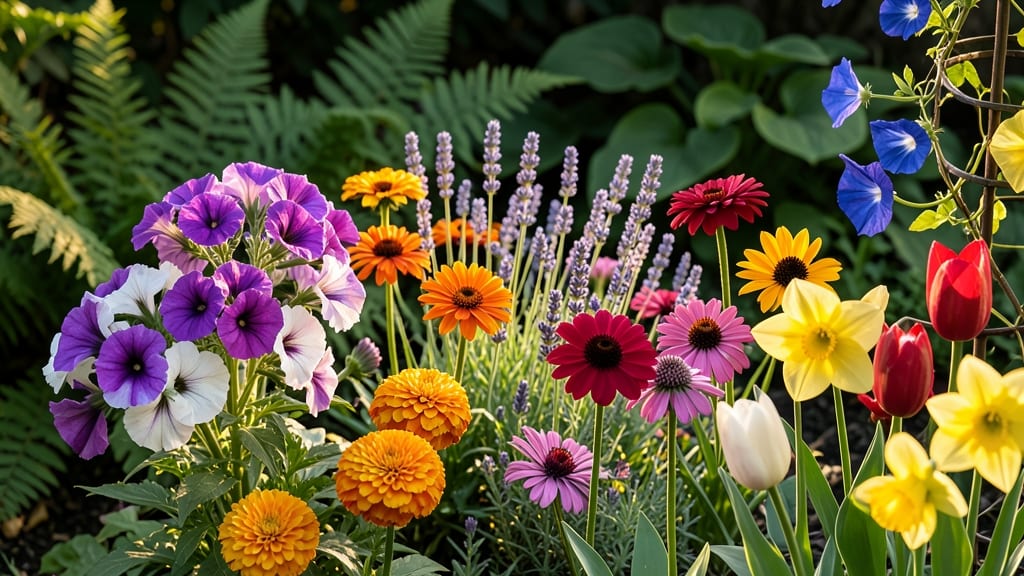
Exploring the different types of flowers can turn a simple garden into a vibrant masterpiece that changes with each season.
Picture this: a cottage garden bursting with romantic roses in summer, followed by hardy chrysanthemums in fall, and even delicate winter jasmine in the coldest months. The right blooms don’t just fill your space—they create a living timeline of color and texture that reflects your style and climate.
Whether you’re drawn to low-maintenance perennials like lavender or bold annuals like sunflowers, every flower has a role to play. Some thrive in containers, others in borders, and a few even climb trellises, making them perfect for small spaces or grand landscapes.
The key is matching the right blooms to your garden’s personality and growing conditions.
In this guide, you’ll discover 12 essential flower types by season and habit, plus rare varieties that will make your garden stand out. From pollinator-friendly picks to drought-tolerant darlings, we’ll help you curate a space that’s as unique as you are.
12 Essential flower types by growth habit and seasonal bloom
Understanding the different types of flowers helps you create a vibrant garden that blooms throughout the year. Each flower type—whether annuals, perennials, biennials, or bulbs—offers unique benefits and seasonal interest.
For example, annuals like zinnias provide bold summer color, while perennials like coneflowers return year after year with minimal effort. Knowing their peak bloom seasons ensures your garden stays lively from spring to frost.
Your garden’s design also depends on where you plant these flowers. Borders often feature low-growing perennials and bulbs for structure, while containers shine with compact annuals or trailing petunias.
Meadow-style gardens thrive with wildflower mixes and biennials that self-seed naturally. Let’s explore how to choose the right flowers for your space and climate.
Here’s a quick reference for 12 essential flower types by their growth habit and seasonal bloom, along with their best garden placements:
| Flower Type | Growth Habit | Peak Bloom Season | Ideal Placement | Notes |
|---|---|---|---|---|
| Zinnias | Annual | Summer-Fall | Containers, borders | Drought-tolerant, attracts butterflies |
| Coneflowers | Perennial | Summer-Fall | Meadows, pollinator gardens | Low-maintenance, deer-resistant |
| Sweet Alyssum | Annual/Biennial | Spring-Fall | Hanging baskets, edging | Fragrant, great for pollinators |
| Daffodils | Bulb | Early Spring | Borders, woodland gardens | Deer-proof, naturalizes well |
| Black-Eyed Susans | Perennial | Summer-Fall | Wildflower meadows | Long bloom time, golden centers |
| Snapdragons | Annual/Biennial | Spring-Fall | Cut flower gardens | Tall spikes, great for arrangements |
| Peonies | Perennial | Late Spring-Early Summer | Foundation plantings | Fragrant, long-lived, low-maintenance |
| Marigolds | Annual | Summer-Fall | Vegetable gardens, containers | Pest-repellent, bright colors |
| Lavender | Perennial | Summer | Rock gardens, borders | Drought-tolerant, aromatic |
| Tulips | Bulb | Spring | Containers, spring borders | Wide color range, early blooms |
| Cosmos | Annual | Summer-Fall | Wildflower gardens | Drought-resistant, self-seeds |
| Foxgloves | Biennial/Perennial | Summer | Shady borders, cottage gardens | Tall spikes, toxic to pets |
For spring blooms, focus on bulbs like daffodils and tulips, which bring early color and naturalize beautifully. These are perfect for woodland gardens
How to choose flowers based on your garden’s climate and style
Your garden’s climate zone and design style are the foundation for selecting flowers that thrive and harmonize. In USDA zones 3-10, the same dahlias might flourish in zone 7 but struggle in zone 3, while succulents could wilt in humid zone 9.
Pairing your climate with your aesthetic—whether it’s a romantic cottage garden or a sleek modern minimalist design—makes all the difference in creating a cohesive, low-stress garden.
For example, black-eyed Susans thrive in zones 3-9 and add rustic charm to cottage gardens, while echeverias (zones 5-10) bring geometric elegance to modern spaces. Pollinator-friendly gardens often blend coneflowers (zones 3-9) with lavender (zones 5-9), while low-maintenance designs might focus on sedum (zones 3-11) and Russian sage (zones 4-9).
🌱 Flower Type Pros and Cons by Garden Style
| Garden Style | Best Flower Types | Pros | Cons |
|---|---|---|---|
| Cottage Garden | Roses, Peonies, Foxgloves | Romantic, fragrant, long bloom | Requires pruning, attracts pests |
| Modern Minimalist | Succulents, Grasses, Echeverias | Drought-tolerant, clean lines | Limited color variety, needs well-draining soil |
| Pollinator-Friendly | Coneflowers, Lavender, Milkweed | Supports bees/butterflies, hardy | May spread aggressively |
| Low-Maintenance | Sedum, Russian Sage, Black-Eyed Susans | Drought-resistant, minimal care | Limited seasonal interest |
Start by identifying your USDA zone—this determines which flowers will survive winter or handle summer heat. For instance, hollyhocks (zones 3-9) bring vertical drama to cottage gardens, while bougainvillea (zones 9-11) thrives in warm climates for modern designs.
Next, consider your garden’s sun exposure. Shade-loving impatiens (zones 10-11) won’t survive full sun, while sunflowers (zones 2-11) need at least 6 hours of sunlight daily.
For cottage gardens, prioritize perennials like hollyhocks and delphiniums for vertical interest, paired with annuals like pansies for seasonal pops of color. In modern gardens, opt for structured shapes like yucca or ornamental grasses, which pair well with monochromatic palettes of whites, grays, and deep greens.
If you’re designing for pollinators, focus on native plants like purple coneflowers and bee balm, which attract butterflies and bees year-round. These flowers often have long bloom times and require minimal intervention, making them ideal for eco-conscious gardeners.
For low-maintenance designs, drought-tolerant plants like sedum and lavender are perfect—they thrive on neglect and still deliver stunning visuals.
Finally, don’t overlook seasonal transitions. Plant spring bulbs like tulips (zones 3-8) alongside fall perennials like mums (zones 4-9) to ensure your garden stays vibrant year-round. Mixing textures and heights—tall delphiniums behind low-growing thyme—adds depth and visual appeal.