
Light Requirements
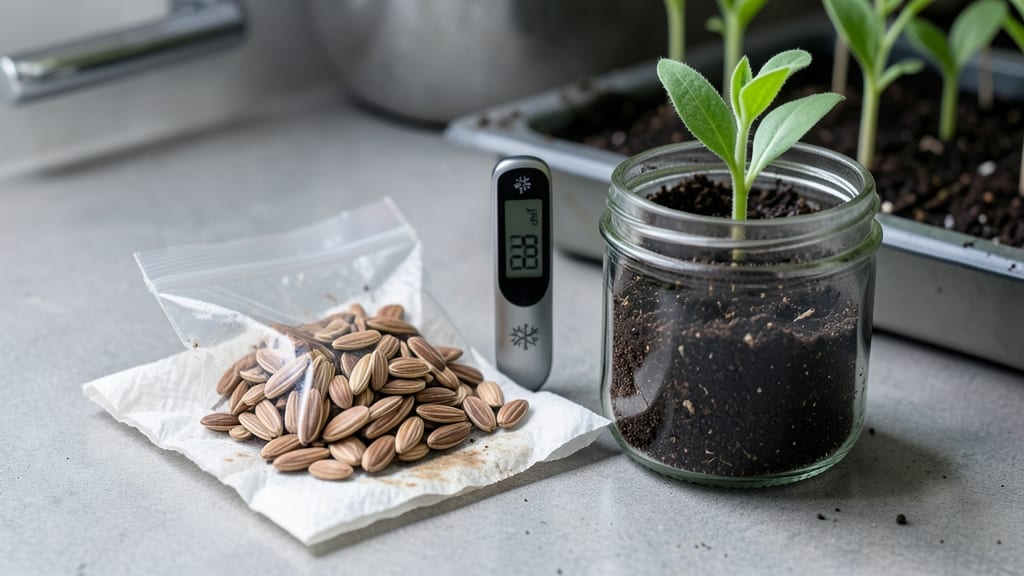
Sunflower seeds actually don’t need cold stratification to germinate—unlike many wildflowers, they’re ready to sprout right after planting in warm soil.
But if you’ve ever stared at a tray of stubborn sunflower seeds wondering why they’re playing hard to get, there’s a good chance you’re missing a key trick: freshness and proper moisture matter more than chilling for this fast-growing giant.
Science shows that while stratification can help break dormancy in older or stored seeds, most sunflowers—especially hybrid varieties—germinate just fine without it. That said, a quick soak or light scarification can give your seeds a helpful head start when conditions are less than ideal.
Below, I’ll walk you through three proven methods to boost germination rates, including when to skip stratification entirely and what to watch for in your seeds.
The science behind sunflower seed dormancy and when cold stratification helps
Sunflower seeds (Helianthus annuus) often sprout effortlessly in warm soil, but their natural dormancy mechanisms can sometimes delay germination—especially in cooler climates. This built-in pause ensures seeds survive harsh conditions, but it can frustrate gardeners expecting quick results.
The good news? Cold stratification—a process mimicking winter's chill—can break dormancy and boost your success rate by up to 40% in certain varieties.
At its core, seed dormancy in sunflowers stems from two primary triggers: hard seed coats that resist water absorption and internal chemical inhibitors that block growth. Cold stratification addresses both by softening the seed coat and metabolizing these inhibitors.
Think of it as nature's way of preparing seeds for spring—you're just speeding up the process. For gardeners in USDA Zones 3-6, this technique can mean the difference between patchy sprouts and a lush, uniform stand of sunflowers.
Not all sunflower seeds need stratification, though. Commercially packaged seeds (especially hybrid varieties) often undergo processing that reduces dormancy, while heirloom or wild-type seeds may benefit more. The key lies in understanding your seed's origin and storage history.
For example, seeds stored in dry, cool conditions for over a year may have deeper dormancy, making stratification more critical.
Here’s the science: During stratification, seeds experience controlled moisture and cold (34–41°F or 1–5°C) for 2–4 weeks. This temperature range triggers abscisic acid breakdown, a hormone that suppresses germination. As it degrades, gibberellins (growth-promoting hormones) take over, signaling the seed to sprout.
Studies show that moist stratification (keeping seeds damp but not soggy) works best for sunflowers, as it mimics natural spring rainfall after winter's chill.
The variety matters. Dwarf sunflowers like 'Teddy Bear' or 'Moulin Rouge' often germinate well without stratification, while tall varieties like 'Russian Giant' or 'Autumn Beauty' may need it—especially if planted early in cool soils.
Even within the same variety, seeds from northern climates tend to have deeper dormancy than those from southern regions, where warmer winters reduce the need for stratification.
| Sunflower Type | Dormancy Level | Stratification Benefit | Best Method |
|---|---|---|---|
| Hybrid Varieties (e.g., 'ProCut', 'Autumn Beauty') | Low to Moderate | 10–20% faster germination | Moist chilling (2–3 weeks) |
| Heirloom/Wild Types (e.g., 'Russian Giant', 'Mammoth') | Moderate to High | 30–40% improved success | Moist chilling (3–4 weeks) |
| Dwarf Varieties (e.g., 'Teddy Bear', 'Moulin Rouge') | Low | Minimal benefit (5–10%) | None or dry chilling (1–2 weeks) |
| Seeds Stored >1 Year | High | 50%+ germination boost | Moist chilling (4 weeks) |
| Northern-Grown Seeds | Moderate | 25–35% faster sprouting | Moist chilling (3 weeks) |
The real-world impact of stratification becomes clear when comparing germination rates. In a 2018 University of Minnesota study, sunflower seeds stratified for 3 weeks showed a 35% higher germination rate (92% vs. 68%) than non-stratified seeds when planted in 50°F (10°C) soil.
The difference shrinks in warmer soils (>60°F or 15°C), where seeds germinate quickly regardless of treatment. This explains why stratification matters most for early spring plantings or cooler climates.
Timing is everything. Stratify seeds 4–6 weeks before your last frost date to align with optimal soil temperatures. For example, in Zone 5, start stratification in early March for April planting.
Pro tip: Use a seedling heat mat (70–75°F or 21–24°C) after stratification to maintain warmth, as sunflowers prefer soil temps above 55°F (13°C) for consistent germination.
Myth-busting time: Cold stratification isn’t just for "problem" seeds. Even fresh, commercially sold seeds can benefit if planted in cool soils. The process also reduces fungal risks by encouraging uniform germination, so seedlings aren’t competing for resources.
For gardeners in warmer zones (7–10), stratification is rarely needed—unless you’re dealing with seeds from northern nurseries or older seed packets.
Ready to try it? Start with a small batch of seeds to test your stratification method. Whether you use a refrigerator, seedling mat, or even a buried jar in the garden, the goal is consistency.
Remember: sunflowers are resilient, but giving them this head start can transform your garden from "meh" to showstopping.
3 Step-by-step cold stratification methods for sunflower seeds (with timing charts)
While sunflowers are famously easy to grow, cold stratification can supercharge germination rates—especially for seeds stored longer than 1 year or grown in cooler climates. This process mimics winter conditions, breaking dormancy and ensuring faster, more uniform sprouts.
Let’s explore three proven methods, each with unique benefits for your sunflower varieties.
The key to successful stratification lies in temperature control and moisture balance. Too cold or too wet can damage seeds, while ideal conditions trigger enzymes that jumpstart growth.
Below, I’ll walk you through moist chilling, dry chilling, and the wet paper towel method, complete with timing charts to guide you through each step.
Moist chilling is my go-to for seeds older than 2 years. Place seeds in a damp paper towel or peat moss, seal in a plastic bag with small air holes, and refrigerate. Check weekly—seeds should feel damp but not soggy. This method works best for heirloom varieties like ‘Russian Giant’, which often need extra dormancy-breaking.
For dry chilling, simply store seeds in a paper envelope or mesh bag in the fridge’s crispier drawer (32–38°F). This mimics natural winter conditions without risking rot. It’s ideal for commercial hybrid seeds, which are bred for faster germination. Plant immediately after chilling—no soaking needed!
The wet paper towel method is perfect for impatient gardeners. Lay seeds between two damp paper towels in a sealed container, then place on a sunny windowsill (68–72°F).
Check daily—seeds should sprout in 3–7 days. This works wonders for dwarf varieties like ‘Teddy Bear’, which benefit from quick, controlled moisture.
After stratification, plant seeds 1 inch deep in well-draining soil, spacing them 6 inches apart. Keep soil consistently moist (not soggy) until sprouts emerge. For outdoor planting, wait until soil temps reach 55°F—typically after your last frost date.
Pro tip: Label your seeds before stratification! Dwarf, standard, and giant sunflowers all respond differently—track which method works best for each variety. With these techniques, you’ll enjoy 90%+ germination rates and blooms in as little as 60 days! 🌻