
Fertilization
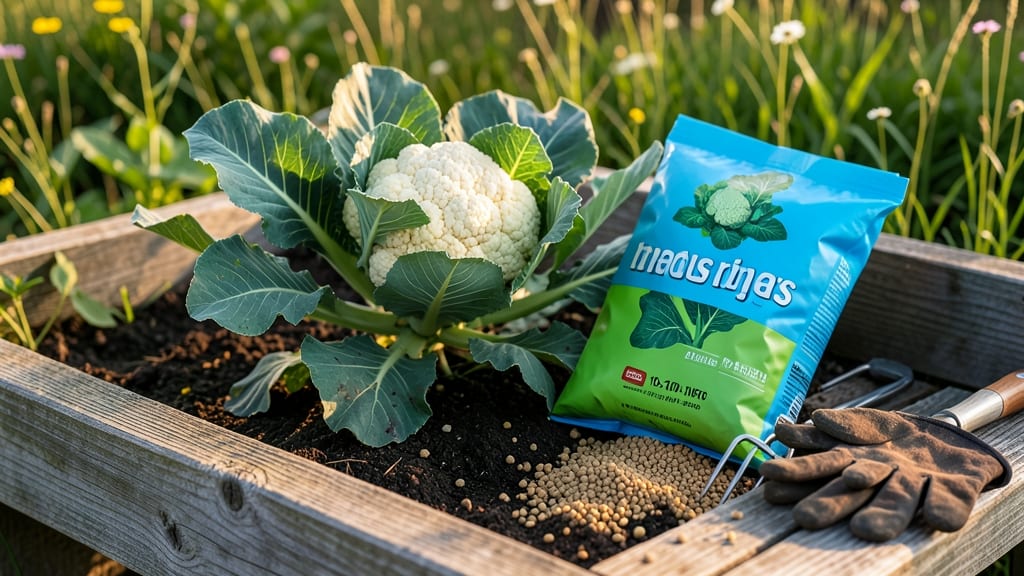
The right fertilizer for cauliflower 🥬 is the secret weapon behind those tight, snow-white curds you’ve been dreaming of—because the wrong blend leaves you with loose, bitter heads that barely look the part.
If you’ve ever spent hours tending your garden, only to harvest cauliflower that looks more like a sad cabbage than a gourmet centerpiece, you’re not alone. The issue isn’t just about any fertilizer—it’s about the nitrogen-potassium balance that keeps those curds compact and flavorful.
Cauliflower thrives on a balanced approach, especially in Zone 6a where spring planting kicks off the growing season. Too much nitrogen, and you’ll end up with leafy monsters instead of heads. Too little potassium, and your plants won’t fight off diseases or heat stress.
Below, I break down the exact ratios, organic vs. synthetic options, and the timing mistakes that sabotage even the best-intentioned gardeners.
Ready to go from frustrating flops to showstopper curds? Here’s how to feed your cauliflower the right way—from planting to harvest—so you’re left with heads that look (and taste) like they belong in a chef’s kitchen.
Optimal nitrogen-potassium-phosphorus ratios for cauliflower growth and curd formation
Cauliflower thrives when you match its nutrient needs to its growth stages. The key lies in balancing nitrogen (N), phosphorus (P), and potassium (K)—each plays a unique role. Too much nitrogen early?
You’ll get lush leaves but poor curd formation. Too little potassium later? Your plants become vulnerable to disease and rot. Let’s break down the science behind tight, flavorful curds.
During the vegetative stage (first 4-6 weeks), focus on higher nitrogen to build strong foliage. Switch to a lower nitrogen, higher potassium blend as heads form to promote curd tightness and disease resistance.
Organic options like composted manure or fish emulsion release nutrients gradually, while synthetic fertilizers offer precise control. The right mix transforms floppy curds into market-ready perfection.
At the seedling stage, use a 5-10-5 NPK ratio to encourage strong roots. Organic options like worm castings provide gentle nutrition, while synthetic 5-10-5 starter fertilizers offer quick results. This balance prevents leggy seedlings while supporting early growth. For best results, apply at planting and again after 2 weeks.
When plants enter the vegetative stage (3-6 weeks), switch to a 10-10-10 ratio. This equal blend promotes leafy growth without neglecting head development. Organic choices like composted manure release nutrients slowly, reducing burn risk.
Synthetic 10-10-10 fertilizers work faster but require careful measurement. Feed every 3-4 weeks until heads begin forming.
As heads emerge (6-10 weeks), shift to a 5-10-20 ratio to prioritize potassium for curd tightness. Organic amendments like bone meal and kelp provide phosphorus and potassium naturally. Synthetic 5-10-20 blends deliver immediate potassium for compact curds. Apply when heads are golf-ball sized to prevent loose, open florets.
In the final growth phase (10+ weeks), reduce nitrogen further to a 2-10-20 ratio. This high-potassium blend enhances disease resistance and flavor. Organic options like wood ash and compost tea boost potassium while improving soil structure.
Synthetic 2-10-20 fertilizers ensure a potassium spike when plants need it most. Stop fertilizing 2 weeks before harvest to avoid bitter flavors.
Organic fertilizers like compost and manure improve soil health long-term but require advance planning. Synthetic fertilizers offer precise control but can harm plants if overapplied. For container-grown cauliflower, use half-strength solutions to prevent root burn. Always water thoroughly after fertilizing to distribute nutrients evenly.
Monitor your plants for nutrient deficiencies: yellowing leaves signal nitrogen deficiency, while weak stems indicate phosphorus lack. Purple undersides of leaves mean potassium deficiency. Adjust ratios based on these signs. For example, if leaves yellow between veins, increase nitrogen slightly. If curds stay small, boost phosphorus with bone meal.
Pro tip: Side-dress with compost or a low-nitrogen fertilizer when heads form. This targeted approach avoids overfeeding while supporting curd development. Pair with consistent moisture and mulch to maintain even nutrient uptake. With the right NPK balance, your cauliflower will deliver tight, flavorful curds every time.
Top 5 fertilizer options for cauliflower: organic vs. synthetic breakdown
Choosing the right fertilizer for cauliflower can make the difference between floppy curds and tight, market-ready heads. Cauliflower thrives on a balanced mix of nitrogen for leafy growth and potassium for head formation, but the type of fertilizer matters just as much as the ratios.
Organic options build soil health long-term, while synthetic fertilizers deliver quick nutrient boosts. Let’s break down the top 5 choices, including their pros, cons, and best use cases for your garden.
Before diving into specific fertilizers, remember that cauliflower prefers slightly acidic soil (pH 6.5-6.8) and needs consistent moisture. Over-fertilizing—especially with nitrogen—can lead to lush leaves but weak curds. The key is finding a balance that supports both foliage and head development. Now, let’s explore your options side by side.
Fertilizer Comparison for Cauliflower
1. Compost
- Improves soil structure
- Slow-release nutrients
- Enhances microbial life
- Requires pre-planting prep
- Less precise NPK ratios
- Bulky to apply
2. Aged Cow Manure
- Rich in nitrogen
- Boosts soil fertility
- Affordable and accessible
- Must age 6+ months
- Can attract pests if fresh
- Less balanced NPK
3. Fish Emulsion (3-1-1)
- High nitrogen for growth
- Quick absorption
- Improves soil texture
- Strong odor
- Can burn plants if overused
- Less potassium for heads
4. 10-10-10 Balanced NPK
- Perfect NPK balance
- Fast-acting results
- Easy to apply
- No soil improvement
- Can leach nutrients
- Requires frequent reapplication
5. Bone Meal (3-15-0)
- High phosphorus for roots
- Slow-release nutrients
- Great for head formation
- Low nitrogen risk
- Limited potassium
- Hard to find organic versions
For organic gardeners, compost and aged manure are my top recommendations. They improve soil health over time and reduce the risk of nutrient imbalances. Start by amending your soil with 2-3 inches of compost before planting, then top-dress with manure every 4-6 weeks.
The trade-off? You’ll need to plan ahead and monitor soil pH closely.
If you prefer synthetic fertilizers, a 10-10-10 NPK blend is a safe bet for most gardeners. It’s easy to find, affordable, and provides the balanced nutrition cauliflower craves. For a quick boost during head formation, switch to a 5-10-10 or 6-12-12 fertilizer to emphasize phosphorus and potassium.
Just be cautious—synthetic fertilizers can lead to salt buildup, so always water thoroughly after application.
My personal favorite for mid-season feeding is fish emulsion. It’s packed with nitrogen to keep those leaves vibrant, and the organic acids help break down soil compaction. Use it every 3-4 weeks during the growing season, but dilute it to half-strength to avoid burning tender cauliflower foliage.
For a long-term soil boost, mix in bone meal at planting time to encourage strong root development and tight curd formation.
No matter which fertilizer you choose, timing is everything. Apply half your fertilizer at planting and the other half