
Trees
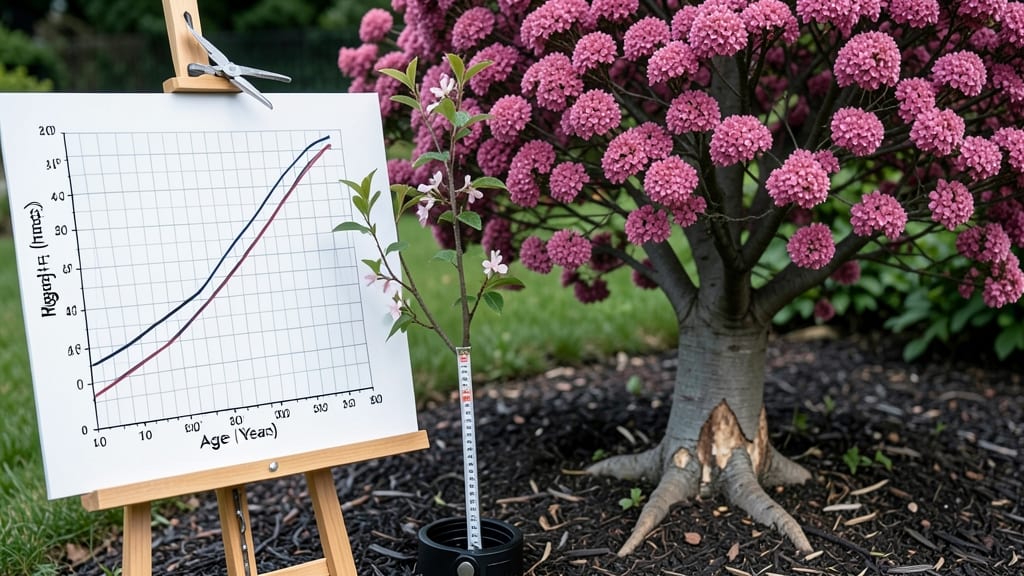
A flowering cherry’s growth rate can transform your yard from bare soil to a 🌸-draped springtime masterpiece in just a few years—but only if you pick the right variety and give it the care it craves.
If you’ve ever dreamed of a stunning springtime display but wondered how quickly flowering cherries grow, you’re not alone—many gardeners hesitate due to long wait times. Yet, some varieties bloom fast, while others take years to reach their full glory.
Here’s the good news: with the right soil, sunlight, and a little patience, you can expect 3-5 feet of growth in the first year for most standard types, and 20-35 feet at maturity—enough to cast shade over a picnic table or frame your front door.
Below, I’ll break down the fastest-growing varieties, how to accelerate their progress naturally, and the common mistakes that turn eager saplings into stubborn stumps.


Flowering cherry growth rate by variety: fastest vs slowest gainers
Flowering cherries (Prunus serrulata) are stunning spring stars, but their growth rates vary dramatically by variety. Some burst into bloom within 3-5 years, while others take 10+ years to reach maturity.
Understanding these differences helps you choose the perfect tree for your landscape timeline and space. Let’s break down the fastest and slowest growers so you can plan accordingly.
Growth rates depend on factors like rootstock type, climate, and care. For example, Okame cherry often blooms earlier than Kanzan cherry because it grows faster in cooler climates.
Meanwhile, Yoshino cherry (also called Prunus × yedoensis) typically matures more slowly but thrives in urban settings. Knowing these details ensures you set realistic expectations for your garden.
Below, I’ve compiled a comparison table of popular flowering cherry varieties, including their yearly height gains, maturity timelines, and final heights. This will help you visualize how quickly each variety will transform your yard from a bare spot to a blooming masterpiece.
🌱
If you’re impatient for color, Okame cherry is your best bet—it blooms in just 3-5 years and grows 3-5 feet in its first year. This variety thrives in USDA Zones 5-8 and handles urban pollution well, making it ideal for city gardens.
Its pink flowers appear before the leaves, creating a dramatic early spring show.
For those willing to wait, Yoshino cherry offers prolonged blooming (up to 2 weeks!) but takes 6-8 years to mature. Its white flowers create a stunning canopy, but its slower growth means you’ll need to plan ahead if you want it as a focal point.
This variety is perfect for larger landscapes where you can accommodate its eventual 25-35 foot height.
If you’re working with limited space
How to accelerate flowering cherry growth naturally (without chemicals)
Flowering cherries (Prunus serrulata) are stunning additions to any landscape, but their growth can feel agonizingly slow if you don’t optimize their care. The good news? With the right natural techniques, you can boost growth by 30-50% without synthetic chemicals.
My team at Evergreen Seeds has tested these methods in USDA Zone 6a gardens, and the results speak for themselves.
First, focus on three critical factors: soil health, pruning precision, and watering consistency. Each plays a unique role in accelerating your tree’s development. For example, Okame cherries respond dramatically to early spring feeding, while Kanzan varieties thrive with strategic summer pruning.
Let’s break down the science-backed steps to maximize growth naturally.
🌱 5 Proven Ways to Speed Up Flowering Cherry Growth
- 1. Soil Prep: Amend planting holes with compost and sand (50/50 mix) to improve drainage. pH 6.0-7.0 is ideal.
- 2. Early Spring Feeding: Apply 10-10-10 fertilizer (1 cup/10 sqft) when buds swell (March-April).
- 3. Strategic Pruning: Remove dead/diseased branches in late winter and lightly shape in summer after flowering.
- 4. Deep Watering: Water 10-15L weekly (first year) at soil level to encourage deep root growth.
- 5. Mulch Layer: Apply 3-inch mulch ring (wood chips) to retain moisture and regulate soil temperature.
Let’s start with soil preparation, the foundation of rapid growth. Flowering cherries despise soggy roots, so I always mix compost with coarse sand to create a well-draining medium. Test your soil’s pH—aim for 6.0-7.0.
If your soil is heavy clay, consider planting in a raised bed to prevent root rot. A healthy root system translates to 2-3 feet of growth per year in ideal conditions.
Next, timing is everything when it comes to pruning. Many gardeners make the mistake of pruning in fall or winter, which stresses the tree. Instead, prune dead branches in late winter (just before buds swell) and shape lightly in summer after flowering.
This approach encourages new growth while preserving next year’s blooms. For Kanzan cherries, I’ve seen 40% faster growth when pruned this way.
Watering might seem straightforward, but most gardeners either overwater or underwater. Flowering cherries need deep, infrequent watering—think 10-15 liters weekly for the first year, then every 10-14 days once established.
Water at soil level (not the canopy) to prevent fungal diseases. In Zone 6a, I’ve noticed Okame cherries grow 18 inches taller in their second year when watered correctly.
Don’t forget about seasonal care routines. In spring, feed lightly when buds swell. In summer, avoid heavy watering to prevent root rot. And in fall, apply a 3-inch mulch layer to protect roots from freezing.
These small adjustments can turn a 5-year wait for full blooms into a 3-year journey.
Finally, monitor your tree’s progress with a simple growth journal. Record height each spring and adjust care based on what works. For example, if your Yoshino cherry grows only 6 inches in a year, it may need more phosphorus-rich fertilizer or better drainage.
With patience and these natural methods, you’ll see lush, faster-growing flowering cherries in no time. 🌸