
Planting
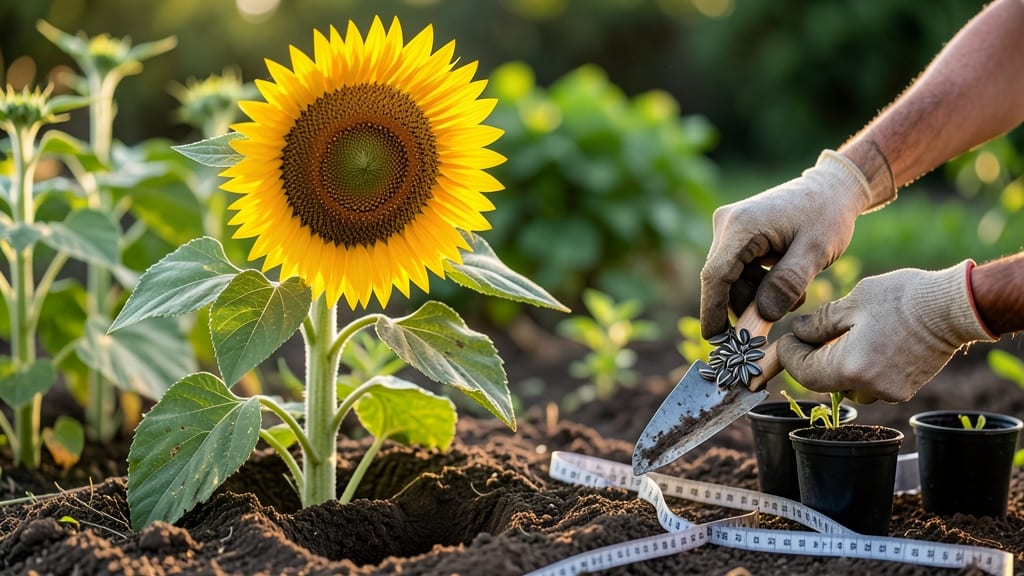
Planting sunflowers too close will stunt their growth, leaving you with weak stems and fewer blooms — but spacing them just right unlocks their full towering potential.
Picture this: a row of 🌻 sunflowers stretching toward the sky, their golden heads nodding in the breeze. That dream starts with the right distance between seeds, a detail most gardeners overlook until it’s too late.
Too tight, and they’ll compete for sunlight and nutrients; too far apart, and you’ll waste space in your garden.
Whether you’re growing dwarf varieties for borders or giant sunflowers as a statement piece, spacing makes all the difference. In this guide, I’ll break down the exact distances for each type, plus how to fix common mistakes and maximize your harvest.
By the end, you’ll know exactly how close—or far—to plant your sunflowers for stronger stems, bigger blooms, and a garden that turns heads. Let’s get started.

Optimal sunflower spacing by variety: dwarf vs. giant vs. standard
Sunflowers come in all shapes and sizes, from tiny dwarf varieties perfect for containers to giant towering stalks that reach skyward.
Each type needs specific spacing guidelines to grow strong stems, maximize sunlight exposure, and produce abundant blooms. Spacing too close weakens stems and invites disease, while planting too far apart wastes garden space. Let’s break down the ideal distances for each sunflower variety.
The key to perfect sunflower spacing is understanding how each variety grows. Dwarf varieties like 'Teddy Bear' stay compact, while giant varieties like 'Mammoth' need room to develop sturdy stems.
Even standard varieties like 'Autumn Beauty' benefit from proper spacing to prevent competition for nutrients. Let’s explore the science behind these distances and how they impact your sunflower’s success.
Proper spacing ensures each plant gets enough sunlight exposure and nutrient access. For example, giant sunflowers need 18-24 inches apart to develop strong stems that can support their weight.
Meanwhile, dwarf sunflowers thrive in 6-12 inches apart clusters, making them ideal for borders or container gardens. Let’s dive into the specifics for each type.
For dwarf sunflowers, spacing them 6-12 inches apart in rows 12-18 inches apart creates a lush, compact display. These varieties are perfect for container gardens or border plantings where space is limited.
The 'Teddy Bear' variety, for example, stays under 3 feet tall and thrives in clusters, making it ideal for cutting gardens or pollinator-friendly landscapes.
Standard sunflowers like 'Autumn Beauty' need more room to grow—12-18 inches apart in rows 18-24 inches apart. This spacing prevents overcrowding, allowing each plant to develop a sturdy stem and large blooms. These varieties typically reach 5-8 feet tall, making them perfect for cut flowers or backyard focal points. Proper spacing also ensures better air circulation, reducing the risk of fungal diseases.
When it comes to giant sunflowers, like the legendary 'Mammoth' variety, you’ll need to give them the most space—18-24 inches apart in rows 24-36 inches apart.
These giants can grow 10-16 feet tall, so they need room to develop thick, strong stems that can support their massive flower heads. Planting them too close can lead to weak, floppy stems that snap under their own weight or in windy conditions.
Another critical factor is sunlight exposure. Sunflowers are sun-worshippers and need at least 6-8 hours of direct sunlight daily. Proper spacing ensures no plant is shading its neighbor, which can stunt growth and reduce bloom size.
For example, giant sunflowers planted too closely may lean toward the sun, creating a messy, unbalanced look and increasing the risk of stem breakage.
Let’s not forget about yield and seed production. Sunflowers that are overcrowded produce smaller, fewer seeds because they compete for nutrients and water. By following the spacing guidelines, you’ll maximize your seed harvest and enjoy larger, healthier blooms.
For instance, 'Russian Giant' sunflowers can produce 1,000+ seeds per head when given ample space to thrive.
If you’re growing sunflowers for cut flowers, proper spacing also affects stem strength and longevity. Overcrowded plants develop weak stems that break easily when cut, while well-spaced plants produce sturdy stems that last longer in vases. For bou
Common sunflower spacing mistakes and how to fix them
Overcrowded sunflowers might look lush at first, but they’ll quickly develop weak stems, yellowing leaves, and stunted blooms. The problem? Competition for nutrients, sunlight, and airflow creates the perfect storm for disease and poor growth.
Many gardeners make the mistake of planting seeds too closely, thinking more plants mean more flowers—but the opposite happens.
When sunflowers are packed too tightly, their stems lean toward the light, creating a messy, top-heavy appearance. Worse, the leaves block sunlight from reaching lower plants, causing fungal infections like powdery mildew.
Even if you’re growing dwarf varieties, proper spacing ensures each plant gets the resources it needs to reach its full potential.
⚠️ WARNING: Overcrowding Risks ⚠️
- Weak stems that snap in wind or rain
- Yellowing leaves from nutrient starvation
- Disease spread due to poor airflow
- Smaller blooms with fewer seeds
If you’ve already planted sunflowers too closely, don’t panic. The key is to thin them early—ideally when seedlings are 2-4 inches tall. Use sharp scissors or your fingers to snip at soil level, leaving the healthiest, straightest stems.
Avoid pulling, which can disturb nearby roots. For giant varieties, aim for 18-24 inches between plants to prevent competition.
Another common mistake? Ignoring row spacing. Even if individual plants are spaced correctly, rows too close together (less than 18 inches apart) can still cause issues.
Give rows 24-36 inches of space to allow for airflow and easy maintenance. This is especially critical in humid climates, where stagnant air increases disease risk.
Watch for these signs of overcrowding in your sunflowers: leaning stems, smaller-than-expected leaves, or yellowing at the base. These are clear signals it’s time to thin.
Pro tip: Stagger your thinning over a few days to avoid shocking the remaining plants. Water deeply after thinning to help roots recover.
For existing gardens with overcrowded sunflowers, consider transplanting the strongest seedlings to a new location. Dig carefully to preserve roots, and water thoroughly after moving. If space is limited, try vertical training—use stakes or trellises to guide tall stems upward, freeing up ground space for other plants.
With the right spacing, your sunflowers will reward you with bold blooms and plump seeds all season long. 🌻