
Planting
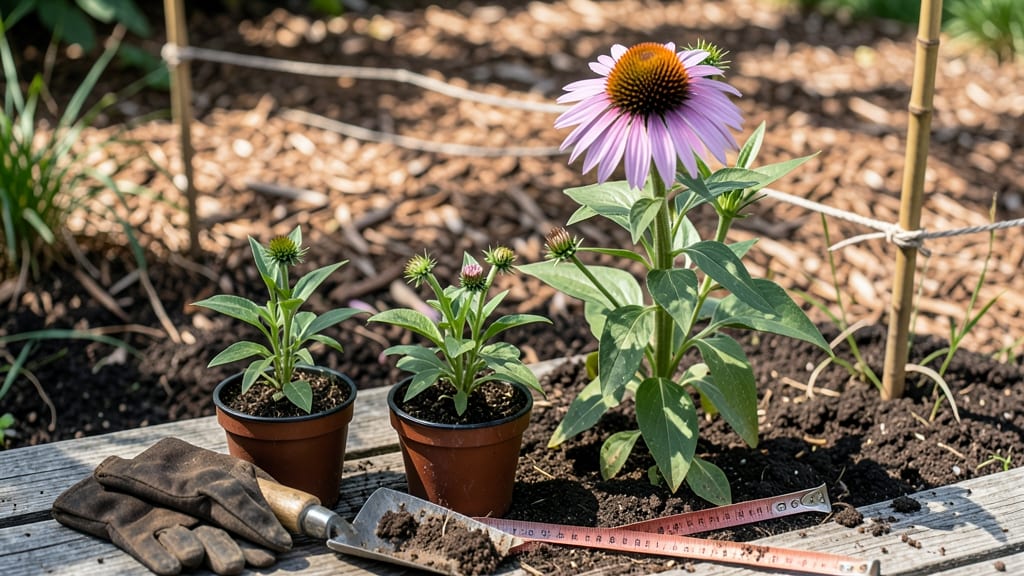
To plant coneflowers 🌼 the right distance apart ensures they thrive in full sun and reach their full bloom potential.
Struggling to get your coneflowers to thrive? Proper spacing isn’t just about aesthetics—it’s the secret to bigger blooms, fewer pests, and healthier plants in full sun gardens.
Most gardeners plant them too close, leading to crowded stems, powdery mildew, and weak growth. The key is giving each plant room to breathe while keeping clusters tight enough for a natural, pollinator-friendly look.
Below, I break down the exact spacing you need by variety—whether you’re growing tall Echinacea purpurea or shorter Echinacea paradoxa—plus how to pair them with complementary perennials for a stunning garden display.

Optimal coneflower spacing by variety: tall vs short blooms explained
Coneflowers (Echinacea) are tough, long-blooming perennials that thrive with the right spacing. Too close, and you’ll get weak stems and powdery mildew. Too far apart, and your garden will look sparse.
The key lies in knowing your variety’s mature size and growth habits. Tall varieties like 'White Swan' need more room, while compact types like 'Green Envy' can huddle closer together.
Let’s break down the spacing rules for the most popular coneflower types to help you create a stunning, healthy garden display.
First, consider mature plant size—not just the first-year growth. A 3-foot-tall coneflower planted 18 inches apart will quickly outgrow its space, leading to floppy stems and crowded foliage. Dwarf varieties (1-2 feet tall) can handle closer spacing, but even they benefit from proper airflow to prevent fungal diseases.
My rule of thumb? Always check the plant tag for mature height before digging—it’s the best predictor of spacing needs.
Here’s where many gardeners go wrong: they use one-size-fits-all spacing for all coneflowers. Echinacea purpurea (the classic purple coneflower) typically reaches 2-4 feet tall and needs 18-24 inches apart. But Echinacea paradoxa (the yellow coneflower) stays shorter (1-2 feet) and thrives with 12-18 inches of space.
Even within the same species, colors can vary in size—'Magnus' coneflowers are taller than 'Hot Papaya' varieties.
When planning your coneflower garden, think beyond just rows. Clusters of 3-5 plants create a more natural, pollinator-friendly look than straight lines. For example, group 3 'Green Envy' coneflowers in a triangle with 18 inches between each—this mimics their wild growth patterns and makes them easier to maintain.
I’ve found that odd-number groupings (3, 5, or 7 plants) look more balanced than even numbers.
Don’t forget about soil conditions when spacing. Coneflowers hate soggy roots, so if your soil drains poorly, increase spacing by 2-4 inches to reduce competition. Amend heavy clay with compost or sand before planting to improve drainage.
In well-draining soil, you can follow the standard spacing guidelines closely. But if your garden sits in a low spot where water pools, give those plants extra room to breathe.
Another pro tip: Mix heights and colors in your spacing plan. Plant taller varieties like 'White Swan' at the back of borders and shorter types like 'Green Envy' in front rows. This creates a layered effect that blooms all season long.
I like to pair purple coneflowers with silver foliage plants (like lamb’s ear) to make the blooms pop even more. The contrast in foliage textures adds visual interest while keeping the spacing functional.
For container gardening, reduce spacing by 25-30% since pots limit root growth. A 5-gallon pot can comfortably hold 3 dwarf coneflowers spaced 10-12 inches apart. Use a lightweight potting mix with perlite to prevent compaction, and water more frequently than in-ground plants.
Containers also let you move coneflowers to optimal sunlight spots as the season changes.
Finally, remember that first-year plants need less space than mature ones. If you’re starting from seed, give seedlings 12 inches apart their first year, then thin or transplant to final spacing in spring of the second year.
This two-step approach prevents overcrowding while the plants establish strong root systems. I’ve seen many gardeners rush this process and end up with leggy, weak stems that flop over by midsummer.
With the right spacing, your coneflowers will reward you with bold blooms from summer through fall and minimal maintenance. Start with the variety-specific guidelines above, then adjust based on your garden’s conditions. Soon, you’ll have a pollinator magnet that’s the envy of your neighborhood! 🌼
Why proper spacing prevents common coneflower problems
If your coneflowers are struggling with powdery mildew or flopping stems, improper spacing might be the culprit. Overcrowded plants compete for sunlight and air circulation, creating the perfect storm for fungal diseases and weak growth.
I’ve seen gardens where coneflowers were planted too closely, leading to stunted blooms and a less vibrant display.
Coneflowers thrive in full sun gardens but need room to breathe. When spaced correctly, they develop stronger stems, resist pests better, and produce larger blooms. The key is balancing their mature size with their sunlight needs—something many gardeners overlook until problems arise.
⚠️ Spacing Mistakes to Avoid
Too close (under 12 inches): Leads to powdery mildew, weak stems, and reduced blooms. Fungal spores thrive in damp, crowded foliage.
Too far (over 36 inches): Creates gaps in your garden design and wastes space. Coneflowers can outgrow their welcome if given too much room.
Ideal spacing: 18-24 inches apart for most varieties. Check your specific coneflower type—dwarf varieties need 12-18 inches, while tall ones thrive at 24-36 inches.
Poor air circulation is the #1 reason for powdery mildew in coneflowers. When plants are packed too tightly, moisture lingers on leaves, creating a breeding ground for this unsightly fungus. I’ve noticed this most often in shady or humid gardens, where airflow is already limited.
Flopping stems are another red flag. Coneflowers with weak stems often result from overcrowding, where plants lean toward the light. To prevent this, space them so each has access to 6+ hours of sunlight without competing with neighbors. A little extra room at the base also helps stems stay upright.
For maximum blooms, aim for a spacing that matches your coneflower’s mature size. Tall varieties like Echinacea purpurea need 24-36 inches apart, while dwarf types like Echinacea paradoxa do well at 12-18 inches.
This ensures they have enough space to develop strong root systems and support their flower heads.
Pro tip: Group coneflowers with companion plants that have similar spacing needs, like black-eyed Susans or bee balm. This creates a cohesive look while maintaining proper airflow. Just avoid planting them next to heavy feeders like tomatoes, which can steal nutrients.
Remember, proper spacing isn’t just about avoiding problems—it’s about creating a thriving, low-maintenance garden. With the right distance, your coneflowers will reward you with bold blooms and fewer headaches all season long. 🌼