
Blooming
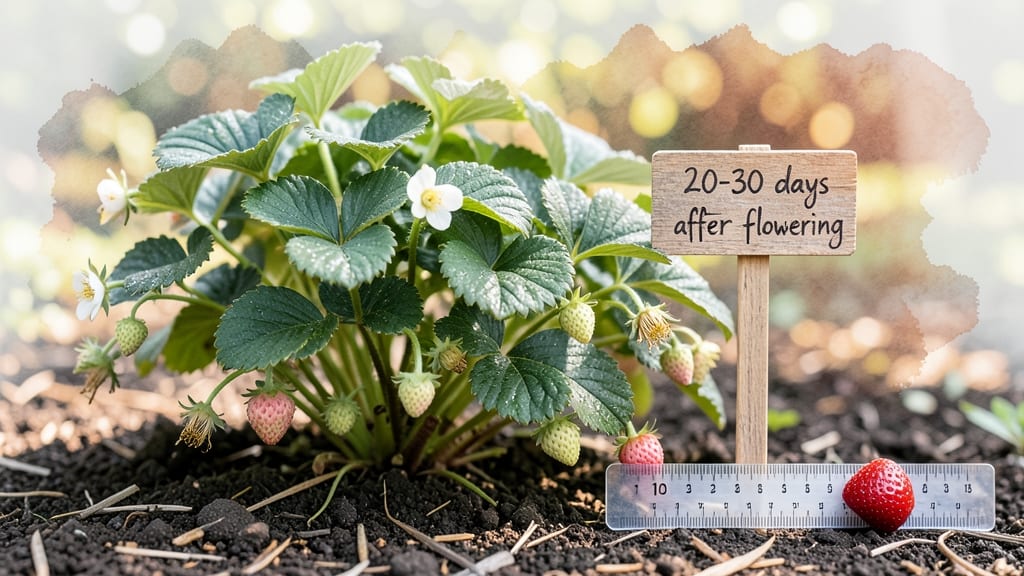
Strawberries take about 25 to 30 days to grow after flowering, turning those delicate white blooms into sweet, ripe fruit 🍓.
Wondering when your strawberry plants will finally bear fruit after those delicate white blooms appear? The wait between flowering and harvest is shorter than you think—but timing, care, and variety play huge roles in speeding up the process.
If you’ve ever watched your June-bearing or everbearing varieties bloom only to wonder why the fruit isn’t ripening on schedule, you’re not alone. The key lies in understanding how sunlight, temperature, and even watering habits can shave days—or weeks—off that 30-day window.
Below, I’ll break down the step-by-step timeline, the factors that accelerate (or delay) ripening, and the simple tricks to ensure your strawberries are ready to harvest faster than ever.


Strawberry growth timeline after flowering: 25-30 days breakdown
Once those delicate white strawberry blossoms appear, you're just 25-30 days away from harvest—but what actually happens between now and then? The transformation from flower to ripe berry follows a precise timeline, with each day-neutral, everbearing, or June-bearing variety following its own schedule.
Understanding this process helps you predict harvest dates and troubleshoot delays.
After pollination, the strawberry fruit begins as a tiny green "pea" that swells rapidly. By day 7, you'll notice the first signs of growth—tiny bumps forming where the blossoms were.
This early stage is critical because environmental factors like temperature swings or water stress can halt development entirely. For June-bearing varieties, this window aligns with late spring's unpredictable weather.
| Stage | Development | June-Bearing | Everbearing/Day-Neutral |
|---|---|---|---|
| Days 1-5 | Pollination → Tiny green "peas" | Late May-early June | Spring-fall (every 3 weeks) |
| Days 6-10 | Rapid swelling → Golf-ball size | Early June | Early-mid season |
| Days 11-15 | Color change begins → Pink/red tint | Mid-June | Late June-July |
| Days 16-20 | Full color → Firm but yielding | Late June | July-August |
| Days 21-25 | Peak ripeness → Ready to harvest | Early July | August-September |
| Days 26-30 | Overripe → Soft, seedy, bruised | Mid-July | Fall (if not harvested) |
At day 10, your strawberries should be about the size of a golf ball. This is when color development begins—June-bearing varieties often show pink tinges first, while everbearing types like 'Albion' or 'Seascape' may turn yellow or white.
If your berries stay green past this stage, check for underwatering or shady conditions, which can delay chlorophyll breakdown.
By day 14, the berries enter their most rapid growth phase. This is when they're most vulnerable to bird damage and rot from overhead watering. Use row covers if birds are a problem, and water at the base of plants instead of from above.
June-bearing varieties will show the most dramatic growth now, often doubling in size within 48 hours.
Between days 18-22, your strawberries should reach harvest readiness. Look for these key signs: full color, slight softness when gently squeezed, and easy detachment from the plant.
Day-neutral varieties like 'Ozark Beauty' may produce multiple flushes during this window, so check plants every 2-3 days to avoid missing the perfect harvest moment.
If your strawberries don't ripen within the expected 25-30 day window, common culprits include inconsistent pollination (especially in greenhouses), temperature extremes (below 50°F or above 90°F), or nutrient deficiencies. Everbearing varieties are more forgiving in these situations, often producing smaller but edible berries even under stress.
Pro tip: Hand-pollinate stubborn flowers by gently brushing the yellow anthers with a paintbrush or cotton swab. This ensures fruit set even in low-bee environments.
For container-grown strawberries, dwarf varieties like 'Tristar' or 'Mara des Bois' typically ripen 2-3 days faster than their in-ground counterparts due to better root zone warmth.
Once you spot the first fully ripe berries, harvest them immediately to encourage the plant to produce more. June-bearing varieties will stop fruiting after their main harvest, while everbearing types may continue producing smaller berries until frost. Store harvested strawberries in the fridge for up to
5 Factors that speed up or slow down strawberry ripening after flowering
Once your strawberries bloom, the clock starts ticking on that 25-30 day window to ripening. But here’s the catch: some factors are entirely in your control, while others depend on Mother Nature.
For example, June-bearing varieties like Jewel or Chandler need perfect conditions to ripen in just 25 days, while everbearing types like Seascape may take 30 days or longer if stressed.
Understanding these five key factors will help you troubleshoot delays and even shave days off the ripening process. Let’s break down what you can influence—and what you can’t—so you can maximize your harvest.
If your strawberries are taking longer than expected to ripen, start by checking your sunlight exposure and watering schedule—these two factors alone can cut ripening time by nearly a week. For example, moving potted strawberries to a sunnier spot or adjusting your irrigation timer can make a huge difference.
Remember, June-bearing varieties are the fastest to ripen (25 days), while everbearing types may take up to 30 days, especially if they’re stressed. If your berries are still green after 30 days, inspect for nutrient deficiencies or pests—these are often the culprits behind delayed ripening.
By focusing on these five factors, you’ll not only speed up ripening but also ensure your strawberries are sweeter, larger, and ready for harvest at the perfect time. Happy gardening! 🌱