
Flowers
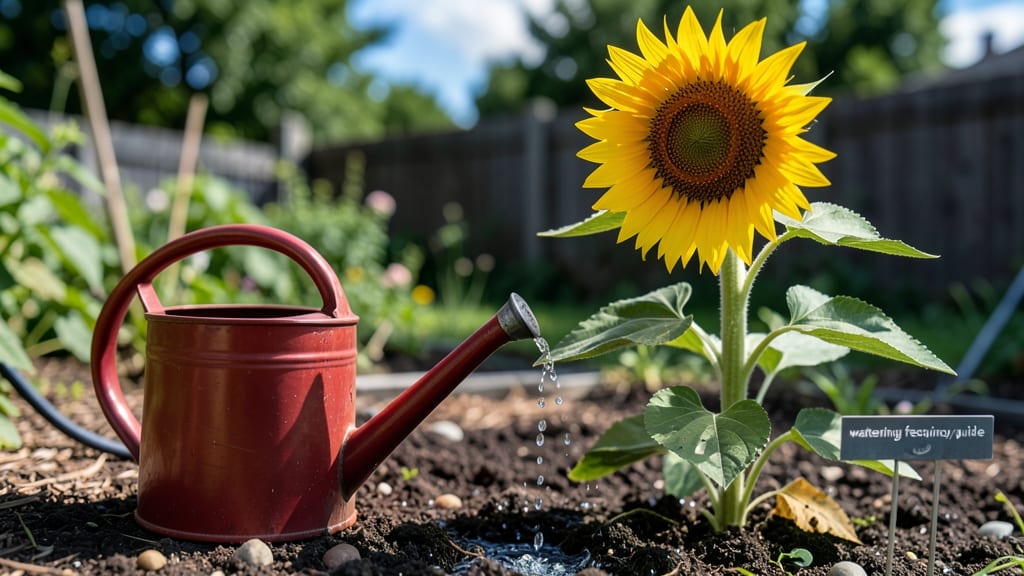
To water sunflowers properly, aim for deep soaks every 3-5 days—but timing shifts as your 🌻 grows from seedling to towering bloom.
Sunflowers bring towering beauty to any garden—but their growth hinges on one critical factor: watering. Get it wrong, and you’ll watch those vibrant blooms wilt before they even open.
Most gardeners overcomplicate it, checking calendars instead of soil. The truth? A simple finger test tells you exactly when to water, saving time and stress.
In this guide, I’ll walk you through the ideal watering schedule by growth stage, how to read your soil, and the three biggest mistakes that stunt sunflower growth.
The perfect sunflower watering schedule by growth stage
Sunflowers thrive on consistency, but their water needs change dramatically from sprout to seed production. Too much water drowns roots, while too little stunts growth—both can leave you with sad, drooping blooms instead of towering sun-kissed giants.
The key is matching your watering routine to each growth stage, ensuring roots develop properly while supporting flowering and seed production.
Most gardeners overlook how soil moisture targets shift as sunflowers mature. Seedlings need frequent, shallow watering, while mature plants prefer deep, infrequent drinks. Understanding these stages helps you avoid wilting leaves or blossom drop, even in hot climates.
Let’s break down the science-backed schedule for each phase, so you can nurture sunflowers from seed to harvest with confidence.
During the seedling stage, your priority is keeping the soil evenly moist—never soggy. Young sunflower roots are delicate, and overwatering can cause rot before they even establish. I’ve found that using a spray bottle for seedlings prevents soil compaction while delivering gentle hydration.
Once your plants hit the vegetative stage (around 2-6 weeks), switch to deep watering every 3-5 days. This encourages roots to grow downward, creating a sturdy foundation for those towering stems.
When sunflowers enter the flowering stage, their water needs shift again. At this point, you’ll notice buds forming—this is when many gardeners make the mistake of increasing water. Instead, reduce frequency to every 5-7 days while ensuring the top 3-4 inches of soil stay moist.
Overwatering now can lead to bud rot or blossom drop, ruining your hard work. I’ve seen this happen in my own garden when summer heat spikes, so I always check soil moisture with my finger before watering.
The seed production stage is where sunflowers become surprisingly drought-tolerant. Once the flower head opens and starts drying, you can space watering out to every 7-10 days. The goal here is to let the soil dry slightly between waterings—this prevents mold from forming on the seed heads.
If you’re growing sunflowers for seeds, this stage is critical. Too much moisture can cause the seeds to spoil before they’re ready for harvest, while just the right amount ensures a bountiful yield.
One tip I’ve learned from years of growing sunflowers: mulching makes all the difference. Apply a 2-3 inch layer of organic mulch around the base of your plants to retain moisture and regulate soil temperature.
This reduces how often you need to water, especially during the vegetative and flowering stages. I use straw mulch because it breaks down slowly and adds nutrients to the soil as it decomposes.
Climate plays a huge role in sunflower watering. In hot, dry regions, you may need to water every 2-3 days during the vegetative stage, while cooler climates might only require watering every 5-7 days.
Always adjust based on soil type too—sandy soil drains faster and needs more frequent watering, while clay holds moisture longer. Pay attention to your sunflowers’ leaves: wilting in the morning signals underwatering, while yellowing leaves often mean overwatering.
For container-grown sunflowers, the rules change slightly. Potted plants dry out faster, so you’ll need to water every 2-3 days regardless of the growth stage. Always check the soil moisture by sticking your finger 1-2 inches deep—if it feels dry, it’s time to water.
Containers also benefit from self-watering mechanisms, like saucers or drip irrigation, to keep roots consistently hydrated without the risk of overwatering.
Remember, the key to sunflower success is consistency. Whether you’re watering seedlings or mature plants, stick to a schedule and adjust based on weather and soil conditions.
With the right approach, you’ll enjoy healthy, vibrant sunflowers that reach their full potential—from tiny sprouts to sun-drenched giants ready for harvest. 🌻
How to perform the finger test for sunflower soil dryness
Mastering the finger test is my go-to method for determining when sunflowers need water. Unlike guesswork, this simple technique reveals the true moisture level in your soil, helping you avoid both overwatering and drought stress. The key? Understanding what each soil texture feels like when it's properly hydrated.
Start by choosing a representative spot near your sunflower's base—avoid areas where water pools or where the soil is unusually dry. Use your index finger (or middle finger for deeper checks) to gently probe the soil to a depth of about 1-2 inches.
This matches the root zone where young sunflowers actively absorb moisture.
- Step 1: Clean your finger to avoid contaminating the soil.
- Step 2: Insert your finger 1-2 inches deep near the plant's base.
- Step 3: Check soil texture—damp but not soggy is ideal.
- Step 4: If dry at the surface, check deeper—2-3 inches for mature plants.
- Step 5: Water only if soil feels dry and crumbly like a squeezed sponge.
Most gardeners make the mistake of watering based on a schedule rather than soil conditions. I’ve seen sunflowers suffer from root rot because someone watered every day, while others wilted because they waited until the soil was bone-dry. The finger test eliminates this guesswork by giving you real-time data.
For sandy soil, which drains quickly, you’ll need to check more frequently—sometimes daily in hot weather. In clay soil, moisture lingers longer, so you might only need to water every 5-7 days. Always test the same depth to maintain consistency in your readings.
Pro tip: Perform the finger test in the morning after sunrise. This gives you the most accurate reading because evening watering can create a temporarily moist surface that doesn’t reflect the true soil moisture level deeper down.
Remember, sunflowers are surprisingly drought-tolerant once established. Overwatering is far more damaging than underwatering—so if your finger test shows moisture beyond 2 inches, hold off on watering. Your sunflowers will thank you with stronger stems and bigger blooms! 🌻