
Size
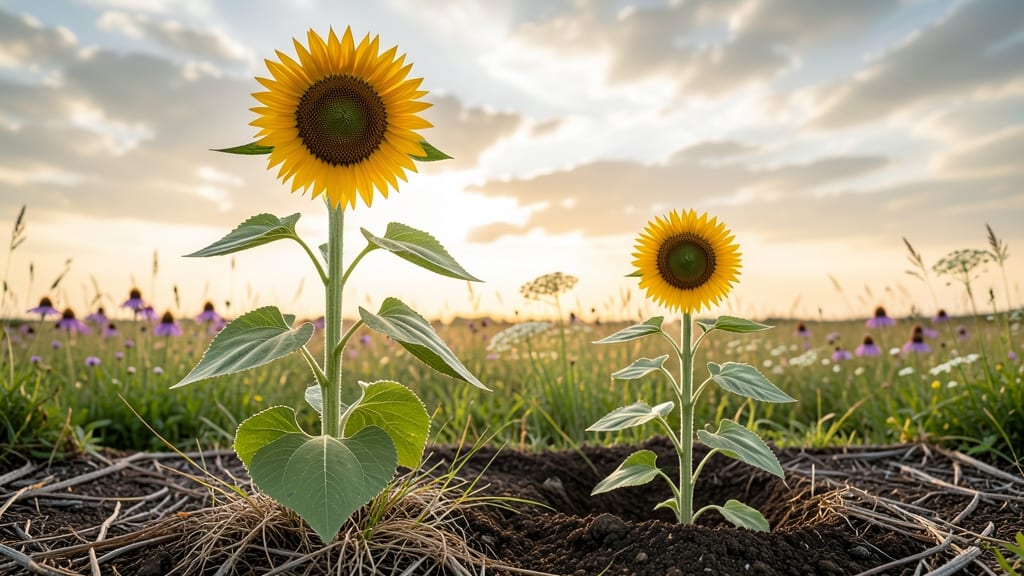
How tall do sunflower plants get? They can be as short as 1 foot or tower over 18 feet—depending on the variety you choose and how you grow them.
Picture this: a backyard where giant sunflowers 🌻 block the view of your neighbor’s fence, or a container on your patio bursting with dwarf varieties that never need staking. The difference isn’t just aesthetics—it shapes your garden’s layout, support needs, and even how much seed you harvest.
Some varieties grow fast enough to outpace a child’s summer, while others stay manageable for small spaces.
But height isn’t just about the seeds you buy—soil, sunlight, and water play a role too.
A sunny plot in Zone 6a with rich soil can coax an extra 2 feet of growth from a standard variety, while poor conditions might leave a "giant" sunflower struggling to clear 6 feet.
Knowing these factors helps you plan for success, whether you’re aiming for shade or a windbreak.
In this guide, I’ll break down the height ranges of 10+ common sunflower types, share spacing tips to avoid crowding, and reveal the one trick that keeps tall varieties from toppling over—no matter how hard the wind blows.


Sunflower varieties ranked by height: from dwarf to giant
Sunflowers come in a stunning range of heights, from tiny patio-friendly varieties that barely reach your knees to giant cultivars that dwarf even the tallest gardeners. Understanding these height differences helps you choose the perfect variety for your space—whether you're working with a small balcony or a sprawling backyard.
The right selection can also impact your garden's aesthetics, pollinator appeal, and even ease of maintenance.
Height isn't just about aesthetics—it directly affects garden planning, support needs, and even harvestability. A 12-foot sunflower requires different care than a 3-foot dwarf, from staking to watering techniques.
Let's explore the full spectrum of sunflower heights, complete with real-world examples and growing tips for each category.
🌻 Height Comparison Table
Dwarf sunflowers like 'Teddy Bear' (1-2 feet tall) are perfect for container gardening or adding height to patio planters without overwhelming the space. These compact varieties often produce multiple blooms per stem, making them excellent for cut flower arrangements.
Their smaller size also means they require less water and nutrients compared to their towering cousins.
Medium-height varieties (3-6 feet) strike a balance between manageability and impact. 'Autumn Beauty', a semi-dwarf favorite, grows 3-5 feet tall and features multi-colored petals that transition from yellow to rust as they mature.
This variety thrives in USDA zones 2-11 and produces edible seeds perfect for birds and humans alike. For small gardens, these varieties offer dramatic height without requiring staking or support.
Standard sunflowers (6-10 feet) like 'Russian Giant' become the centerpiece of any garden. These varieties need well-draining soil and consistent moisture during their rapid growth phase. Their large flower heads (up to 16 inches wide) make them ideal for photography subjects and cut flower bouquets.
However, their height means they may need staking in windy areas to prevent toppling.
Tall varieties (10-12 feet) push the limits of what's possible in a home garden. 'Colossus' can reach 12 feet with proper care, making it one of the tallest commercially available sunflowers. These giants require rich, fertile soil and regular feeding to support their massive growth.
They're best suited for large gardens or areas with minimal wind exposure, as their height makes them vulnerable to stem breakage.
For the ultimate sunflower challenge, giant varieties (12-18 feet) like 'Russian Mammoth' can grow taller than a two-story house. These record-breaking plants need optimal growing conditions
How sunflower height affects your garden: space planning and support needs
Sunflower height isn’t just about aesthetics—it directly impacts your garden’s layout, airflow, and even pollination success. A 3-foot dwarf like 'Teddy Bear' fits perfectly in containers, while a 12-foot giant like 'Mammoth' needs a dedicated space and sturdy support.
Understanding these differences helps you avoid overcrowding, prevent toppling in windy areas, and maximize vertical space in small gardens.
Tall sunflowers act like natural windbreaks, but their height also makes them vulnerable to bending or breaking. In my Zone 6a garden, I’ve learned that spacing and support are just as critical as choosing the right variety.
For example, planting giant varieties too closely can lead to competition for sunlight and nutrients, stunting growth and reducing flower production.
Here’s how to plan based on sunflower height:
- Dwarf Varieties (1-3 ft): Ideal for containers or small gardens. Space 12-18 inches apart to allow airflow and prevent mildew. No staking needed unless in high winds.
- Medium Varieties (3-6 ft): Plant 2-3 feet apart in rows. Use lightweight stakes (like bamboo) if stems lean—insert early to avoid damaging roots.
- Tall Varieties (6-12 ft): Space 3-4 feet apart and use 3-foot stakes or a trellis. Bury stakes 6 inches deep and tie stems loosely with soft fabric to avoid cutting into the stem.
- Giant Varieties (12+ ft): Allocate 5+ feet of space and use heavy-duty stakes or a triple-stake system (3 stakes tied at the top). Plant near fences or walls for added support.
Wind resistance is a game-changer for tall sunflowers. In exposed areas, I’ve seen 10-foot stems snap under storm conditions. To prevent this, plant giants in sheltered spots or group them with wind-resistant companions like corn or tall grasses.
For extra stability, mix dwarf varieties around the base—their lower height reduces wind tunnel effects on taller stems.
Small gardens can still shine with sunflowers by using vertical space. Try container growing for dwarfs or train medium varieties up a sunflower trellis. I’ve had great success with 'Lemon Queen' (4-5 ft) growing along a chicken wire arch, creating a living tunnel.
Just ensure your container has drainage holes and use a balanced fertilizer like 5-10-10 to support upright growth.
Companion planting is another smart strategy. Pair tall sunflowers with shorter pollinators like borage or marigolds to attract bees without blocking sunlight.
In my garden, I’ve noticed basil planted at the base of sunflowers thrives from the shade they provide, while the sunflowers benefit from the pest-repelling properties of the basil.
Remember, even the tallest sunflowers start small. Give them room to grow, and they’ll reward you with bold blooms and abundant seeds—plus, they’ll be the star of your garden’s vertical landscape! 🌻