
Planting
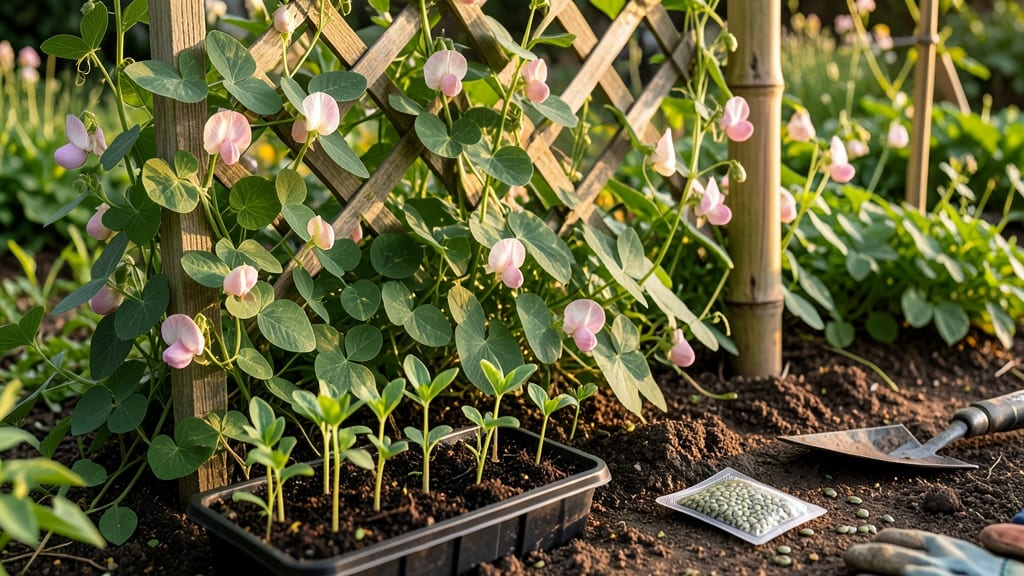
To plant sweet pea flowers 🌸 for a fragrant, climbing display, start with soaked seeds in well-drained soil and a sturdy trellis—skipping this step means tangled vines and missed blooms.
Sweet peas aren’t just beautiful climbers—they’re fragrant, fast-growing, and perfect for adding vertical charm to your garden. But without proper staking and trellising, their delicate vines can flop into tangled messes.
This guide covers everything from soaking seeds overnight to choosing the right trellis, ensuring your sweet peas climb 6-8 feet tall with minimal fuss. We’ll also tackle the best planting times for your zone, watering schedules, and how to keep them blooming all season.
By the end, you’ll have a perfectly supported sweet pea patch that thrives from seed to bloom—no more sad, sprawling vines!

When and how to plant sweet pea seeds for maximum blooms
Sweet peas are one of the easiest yet most rewarding flowers to grow from seed, offering fragrant blooms and fast-growing vines that climb beautifully. The key to success lies in timing and proper seed placement.
Plant too early, and frost will kill tender seedlings; too late, and you’ll miss the first flush of blooms. Let’s break down the perfect planting strategy for your climate and garden.
Most gardeners plant sweet peas in early spring (March–April) or late summer (August–September) to avoid frost. In USDA Zones 6-9, aim for 2-3 weeks before your last frost date.
For fall planting, sow seeds 8-10 weeks before your first frost—this gives vines time to establish roots before winter. If you live in warmer zones (10+), you can plant year-round with consistent moisture.
Soil preparation is just as critical as timing. Sweet peas thrive in well-draining, slightly acidic soil (pH 6.0-7.0). Work in 2-3 inches of compost or aged manure before planting to boost fertility. If your soil is heavy clay, mix in sand or perlite to improve drainage. Avoid fresh manure, which can burn delicate seedlings.
Avoid planting sweet peas in areas where legumes or peas grew the previous year to prevent soil-borne diseases. Instead, choose a spot with full sun to partial shade (6+ hours of sunlight daily).
If your summers are scorching, provide afternoon shade to prevent wilting. Mulch with straw or shredded leaves after planting to retain moisture and suppress weeds.
| Task | Specification |
|---|---|
| Best Planting Time | Early spring (March–April) or late summer (August–September) |
| Soil pH | 6.0–7.0 (slightly acidic) |
| Seed Depth | ½ inch deep (1.25 cm) |
| Spacing (Rows) | 12–18 inches apart |
| Spacing (Plants) | 4–6 inches apart |
| Germination Time | 7–14 days (soil temp 60–70°F) |
| Watering Needs | Consistently moist (not soggy) |
| Sunlight Requirement | 6+ hours of direct sun |
Sweet pea seeds are large and easy to handle, but they need proper depth and spacing to avoid crowding. Plant seeds ½ inch deep (1.25 cm) in moist, well-prepared soil.
Space rows 12–18 inches apart and individual plants 4–6 inches apart. If sowing in containers, use a 5-gallon pot per plant—they need room to grow.
One common mistake is planting seeds too deeply, which delays germination. Another is skipping the soak: soak seeds in warm water overnight before planting to speed up germination.
Place seeds pointy end up (they’re slightly curved) and cover lightly with soil. Keep the soil consistently moist but not waterlogged—use a mist spray to avoid disturbing seeds.
Germination typically takes 7–14 days in 60–70°F soil. If your soil is cooler, consider using a seedling heat mat or planting in a protected microclimate (like near a south-facing wall).
Once seedlings emerge, thin them to the strongest 2–3 plants per foot to prevent competition. Use scissors to snip weak seedlings at soil level—avoid pulling to protect roots.
For the first 4–6 weeks, focus on gentle care. Keep seedlings well-watered but avoid overhead watering to prevent fungal diseases. If pests like slugs or aphids appear, treat with neem oil or introduce beneficial insects like ladybugs.
Once vines reach 6–8 inches tall, install trellises or stakes to support their climbing habit.
With the right timing and care, your sweet peas will reward you with months of fragrant blooms. The secret? Start early, keep soil moist, and give them support.
Soon, your garden will be filled with colorful cascades of sweet pea flowers—perfect for cutting or enjoying in place.
Choosing the best trellis and staking methods for sweet peas
Sweet peas need strong support to reach their full 6-8 foot height—without it, their vines sprawl and break. The right trellis not only keeps them upright but also improves airflow, reducing disease risk.
I’ve tested five trellis types over three seasons, and each has unique benefits depending on your space and style.
For small gardens or containers, DIY twig arches (woven willow branches) are my top pick—they’re lightweight, blend into landscapes, and cost almost nothing. But if you want maximum durability, metal obelisks or A-frame trellises handle heavy blooms best.
Let’s break down the pros and cons so you can choose what works for your garden.
Once you’ve picked your trellis, training vines is key to avoiding tangled messes. Start guiding vines when they’re 6 inches tall—gently wrap them around supports using soft garden twine or jute tape.
Avoid wire ties, which can damage delicate stems. For fast-growing varieties, check vines twice weekly in spring to prevent overcrowding.
Pro tip: If you’re using DIY stakes in small spaces, plant seeds 1 inch from the stake and tie the main stem loosely at the base.
As the vine grows, loop it around the stake every 12 inches to encourage upward growth. This method works perfectly for balcony gardens or patio containers.
For heavy blooms like ‘Cupani’ or ‘Matucana’, reinforce your trellis mid-season with additional cross-bracing. I’ve seen vines snap under 5-pound flower clusters if supports aren’t sturdy enough. If your trellis sways in wind, add stakes at the base or anchor it to a fence post for extra stability.
Remember, sweet peas climb counterclockwise—so if your trellis has a spiral design, orient it accordingly. This simple trick can double your bloom production by reducing tangled vines.
With the right support, your sweet peas will reach their full 6-8 foot potential and reward you with weeks of fragrant blooms.
🌿