
Watering
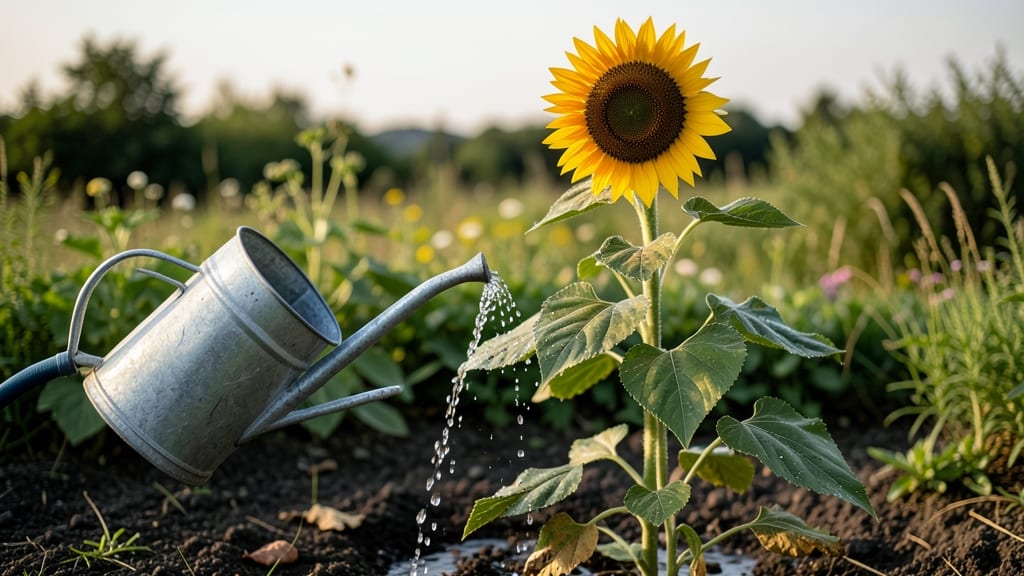
Watering sunflower plants properly is the key to growing those towering, vibrant blooms you’ve been dreaming of 🌻 — and skipping this step means watching your plants wilt before they even reach their potential.
Sunflowers aren’t just beautiful—they’re thirsty giants that need the right watering strategy to reach their full height. Get it wrong, and you’ll end up with droopy stems or stunted blooms, no matter how much sun they get.
Most gardeners make one of two mistakes: either drowning their plants with shallow water or letting them dry out completely. Neither approach works for sunflowers, which thrive on deep, consistent moisture that encourages strong root growth.
In this guide, I’ll walk you through the exact watering schedule, techniques for different growth stages, and how to spot trouble before it starts—so your sunflowers grow tall, healthy, and ready to bloom.
Deep-watering methods for sunflower roots: how often and how deep
Sunflowers develop deep taproots that can reach 6-12 inches or more into the soil, but their growth depends entirely on proper watering techniques. Unlike shallow-rooted plants, sunflowers need consistent moisture at depth to support their towering stems and vibrant blooms.
Skipping this step leads to weak stems that snap under their own weight or wilt in heat waves.
Most gardeners make two critical mistakes: surface watering (which encourages shallow roots) or overwatering (which suffocates roots). The key is deep, infrequent watering that mimics natural rainfall patterns. This method forces roots to grow downward in search of moisture, creating a sturdy foundation for those 10-foot-tall giants.
Here’s the science: Sunflower roots need 1-2 inches of water per week during active growth (spring to early summer), but the water must penetrate 6-12 inches deep. A 1-inch-deep watering at the surface won’t cut it—you’ll end up with a plant that looks parched despite soggy topsoil.
| Growth Stage | Watering Depth | Frequency | Seasonal Adjustments |
|---|---|---|---|
| Seedlings (0-4 weeks) | 2-4 inches | Every 2-3 days | Keep soil evenly moist (no drying) |
| Vegetative (4-8 weeks) | 6-10 inches | 1-2 inches per week | Increase depth as roots deepen |
| Flowering (8-12 weeks) | 10-12 inches | Deep soak every 5-7 days | Reduce frequency in cool weather |
| Mature (Post-Flowering) | 12+ inches (if dry) | Weekly or bi-weekly | Skip if rainy season begins |
To achieve 6-12 inches of penetration, use a soaker hose or drip irrigation placed at the base of the plant. For hand-watering, insert the nozzle 2-3 inches into the soil and let water flow slowly until it drains out the bottom.
Test your depth by sticking a screwdriver or dowel into the soil after watering—if it’s dry at 6 inches, you didn’t go deep enough.
Seasonal adjustments are critical: In drought conditions, increase watering to every 2-3 days with deeper penetration, while in rainy seasons, reduce frequency to once a week or skip entirely if the ground stays soggy.
Overwatering in cool weather leads to root rot, while underwatering in heat causes wilting and bud drop.
My go-to method is the "fork test": After watering, gently insert a trowel or fork into the soil. If the soil clings to the tines 6 inches down, you’ve hit the mark.
If not, water longer or adjust your technique. This simple check saves sunflowers from stress-related diseases like powdery mildew, which thrives in plants with shallow, thirsty roots.
For container-grown sunflowers, the rules change slightly. Pots dry out faster, so water every 1-2 days but still aim for deep saturation. Use a watering can with a long spout to reach the bottom of the pot.
Dwarf varieties (like 'Teddy Bear') need slightly less water, but their roots still crave depth—just scale down to 4-6 inches of penetration.
Pro tip: Water in the early morning (6-9 AM) to reduce evaporation and fungal risks. Avoid evening watering, which keeps foliage damp overnight—a recipe for blight and mold.
Mulch with 2-3 inches of straw or wood chips to lock in moisture and regulate soil temperature, cutting your watering needs by 30%.
Remember, sunflowers are drought-tolerant once established, but that doesn’t mean they’re low-maintenance. Their giant stature demands deep roots, and skipping proper watering now means droopy stems and missed harvests later. With the right technique, your sunflowers will stand tall, proud, and ready for their close-up.
Signs of overwatering vs. underwatering sunflowers: what to watch for
Sunflowers 🌻 are surprisingly sensitive to watering mistakes. Too much water causes root rot and yellowing, while too little leads to wilting and stunted growth. The key is observing leaf color, stem firmness, and soil moisture to catch problems early.
Start by checking the soil surface. If it feels soggy or has a musty smell, you’re likely overwatering. For underwatering, the top 2 inches will be bone-dry, and the plant may pull away from the soil when gently tugged.
Overwatering vs. Underwatering: Quick Guide
Overwatering
- Yellow leaves (especially lower ones)
- Moldy soil or white fungal growth
- Soft, mushy stems when pressed
- Slow growth despite frequent watering
⚠️ Fix: Let soil dry between waterings; improve drainage.
Underwatering
- Wilting leaves (even in morning)
- Dry, crispy leaf edges
- Stems pull away from soil when tugged
- Dull, grayish foliage
💧 Fix: Water deeply at soil level; mulch to retain moisture.
For overwatered sunflowers, stop watering immediately and let the soil dry out. If mold appears, remove affected leaves and apply fungicide if needed. In severe cases, transplant to well-draining soil to save the plant.
When underwatering occurs, water the soil directly (not leaves) in the morning to avoid fungal issues. Use a moisture meter or stick your finger 2 inches deep to check moisture levels before watering again.
Young sunflowers need consistent moisture but mature plants tolerate drought better. Always water at the base to encourage deep roots—never overhead. Adjust frequency based on weather and soil type.
Pay attention to leaf texture too. Healthy sunflower leaves are firm and slightly waxy. Curled or drooping leaves signal stress—either too much or too little water. Balance is everything for these thirsty giants!