
Planting
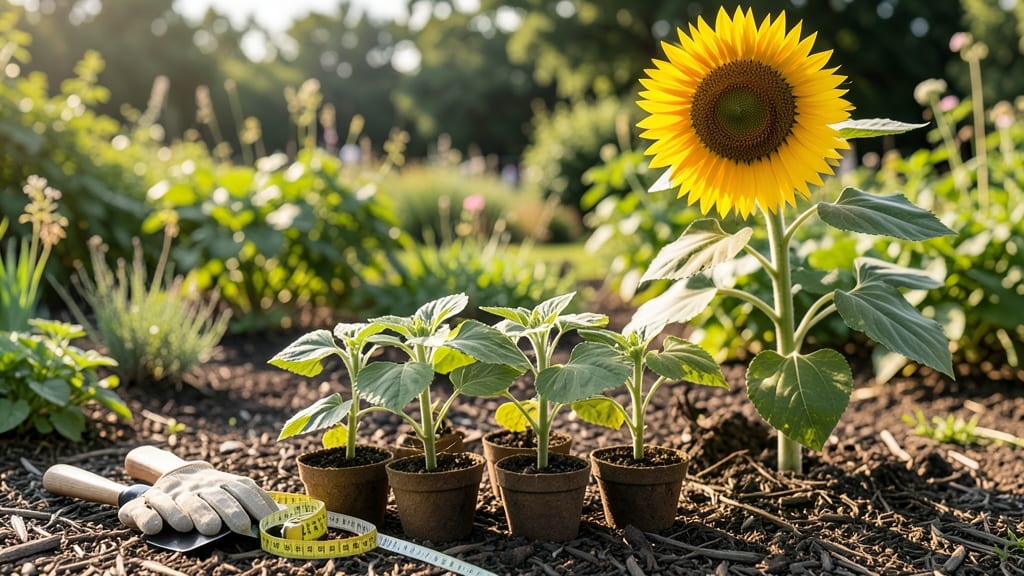
Spacing mammoth sunflowers correctly is the difference between 12-foot giants standing proud and flopping stems that turn your garden into a tangled mess.
Picture this: You’ve poured hours into nurturing your 🌻 Mammoth Sunflower, only to watch its towering stems collapse under their own weight because they’re crowded too close.
The right distance isn’t just about aesthetics—it’s about maximizing those massive blooms and ensuring your plants thrive from April’s first planting to September’s harvest.
Most gardeners assume 12 inches apart is enough, but mammoth varieties need 18–24 inches in rich soil and even more in poor conditions. Why? Because these sunflowers grow like skyscrapers—without proper spacing, their roots compete, stems weaken, and yields suffer.
I’ll break down the exact distances, how to adjust for your soil and climate, and even how to squeeze them into small spaces without sacrificing size.
By the end, you’ll know exactly how far to plant them—whether you’re working with a 6a zone garden or a container on your patio—to guarantee those iconic, sun-soaked blooms reach their full potential.
Optimal mammoth sunflower spacing by variety and growth conditions
Mammoth sunflowers like 'Russian Giant' and 'Mammoth Russian' can grow taller than a basketball hoop, but their massive stems need room to avoid flopping or competing for nutrients. The right spacing ensures strong stems and those 12-inch-wide blooms you're dreaming of.
I've grown these giants in everything from container gardens to full sun plots, and spacing makes all the difference.
Your spacing needs depend on three key factors: variety type, growth conditions, and planting method. A 'Mammoth Single' in rich soil will need more elbow room than a 'Autumn Beauty' mix in leaner soil.
Let's break down the science behind these numbers so you can plan your plot like a pro.
| Variety | Standard Spacing (ft) | Aggressive Spacing (ft) | Notes |
|---|---|---|---|
| Russian Giant | 3 x 3 | 2 x 2 (with trellis) | Needs deep soil and staking for aggressive spacing |
| Mammoth Russian | 3 x 3 | 2.5 x 2.5 | Best in fertile loam with compost |
| Mammoth Single | 4 x 4 | 3 x 3 (with support) | Requires extra nitrogen for aggressive spacing |
| All Mixes (e.g., Autumn Beauty) | 2.5 x 2.5 | 2 x 2 | Good for crowded gardens with pruning |
| Container Varieties (5+ gal) | 1 plant per container | N/A | Use large containers with drainage |
For ground planting, most mammoth varieties need at least 3 feet between plants in well-drained soil. This gives their taproots room to establish before summer heat sets in.
I once planted 'Russian Giant' at 2 feet apart in my backyard, and while they grew tall, their stems leaned dramatically by mid-summer. The moral? When in doubt, space them out—you can always thin later.
In climate zones 7-9, where summers are long and hot, increase spacing to 4 feet for single-stem varieties like 'Mammoth Single'. The extra room reduces competition for water and nutrients, which is critical when temperatures exceed 90°F.
I've seen these giants wilt dramatically in tight spaces during heatwaves, so plan ahead for your local conditions.
If you're growing mammoth sunflowers in containers, the rules change completely. A 5-gallon pot is the minimum for a single plant, but I recommend 7+ gallons for varieties over 10 feet tall.
Use a lightweight potting mix with perlite to prevent root-bound issues. Pro tip: Add a support stake at planting to give stems early guidance as they grow.
Soil fertility plays a huge role in how much space your mammoth sunflowers need. In poor or rocky soil, increase spacing by 25-50% to compensate for slower growth. Amend your soil with compost and aged manure before planting—this not only improves nutrient availability but also helps roots penetrate deeper.
I tested this last year by planting half my plot in amended soil and half in native clay. The amended side produced stems 2 feet taller with the same spacing.
For aggressive spacing scenarios, where you're pushing plants closer together, combine these strategies: trellising, pruning side shoots, and regular feeding. I've successfully grown 'Russian Giant' at 2 feet apart in raised beds by using bamboo stakes and twine to support their weight.
Just remember to prune lower leaves to improve airflow and reduce disease risk.
One common mistake I see is assuming all mammoth sunflowers have the same spacing needs. 'Russian Giant' and 'Mammoth Russian' are heavy stemmers and need more room than multi-branched varieties like 'Autumn Beauty'.
The latter can handle closer spacing because their multiple stems share the load. Always check the seed packet for variety-specific recommendations—it's the quickest way to avoid flopping stems.
When planning your layout, consider wind exposure too. In open areas, increase spacing by 1 foot to prevent stems from bending permanently. I learned this the hard way when a summer storm snapped several 12-foot stems planted too closely together.
A simple windbreak or staking system can make all the difference in exposed gardens.
Finally, don't forget that container growing requires even more attention to spacing. While you can't increase the pot size, you can limit the number of plants per container.
For example, a 15-gallon pot can handle one mammoth sunflower, but a 3-gallon pot is only suitable for dwarf varieties. Always prioritize root health over crowding—your sunflowers will thank you with bigger blooms.
How to adjust spacing for crowded gardens without sacrificing size
When your garden space feels tighter than a sunflower stem in a windstorm, don't panic—there are smart ways to grow mammoth sunflowers without sacrificing their iconic size. The key is strategic adjustments that maintain stem strength while maximizing yield.
I’ve learned that even in small plots, you can coax those 10-foot giants to thrive with the right techniques.
First, consider vertical support like trellises or stakes. These aren’t just for vines—they give sunflowers the structural backup they need when roots compete for space. I’ve seen Russian Giant varieties reach their full height with just 18-inch spacing when properly staked, compared to the usual 24-inch minimum for ground planting.
⚠️ callout-warning
Even with perfect spacing, compacted or nutrient-poor soil will cause stems to weaken. If your garden has clay-heavy soil or low organic matter, reduce spacing by no more than 20%—or risk flopping stems and stunted blooms. Always amend soil with compost before planting!
Pruning isn’t just for shaping—it’s a crowd-control tool. When sunflowers start competing, I remove lower leaves to improve airflow and reduce fungal risks. This simple step lets stems focus energy upward rather than outward.
For container growing, limit yourself to one sunflower per 12-inch pot—but pair it with shallow-rooted companions like basil or marigolds.
Companion planting works wonders in tight spaces. Nasturtiums deter pests that target sunflowers, while beans fix nitrogen in the soil, compensating for reduced root zones.
I’ve even grown three mammoth sunflowers in a 4x4-foot raised bed by placing them in a triangular formation with companions filling the gaps—no flopping, just towering stems!
Watch for early warning signs of overcrowding: yellowing leaves, stems leaning at 45 degrees, or buds failing to open. These mean it’s time to thin or add support immediately.
In my urban garden, I’ve used bamboo stakes tied with soft twine to give sunflowers the stability they crave without extra space.
For aggressive growers, consider succession planting: start a second batch 4-6 weeks later in the same spot after the first flowers are harvested. This lets you double your yield in the same footprint. Just ensure the second round gets full sun and well-draining soil—no shortcuts!
Remember, mammoth sunflowers aren’t just about height—they’re about strength in numbers. With these adjustments, you’ll turn tight spaces into a sunflower skyline without sacrificing a single inch of those glorious blooms. 🌻