
Plants
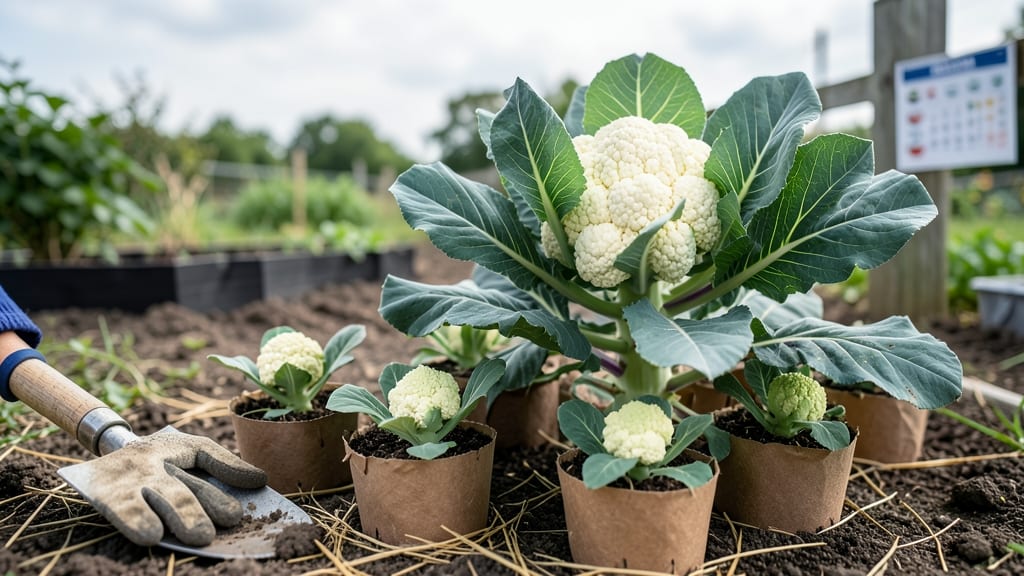
To plant cauliflower in Michigan, aim for mid-April to early June or late July to early August—timing that aligns with your zone’s 5b-6b frost dates and avoids the heat of summer.
Michigan’s unpredictable frost dates can make or break your 🥬 harvest—plant too early, and frost ruins tender seedlings; too late, and you miss the sweet, creamy heads.
Spring planting gives you a July-August harvest, while fall crops stretch into October or November, but only if you start seeds indoors by mid-July.
Below, I break down the exact weeks to plant by region, how to adjust for late frosts, and the fastest-maturing varieties that thrive in Michigan’s short season.
Michigan cauliflower planting calendar: frost dates by Zone (4-6)
Timing is everything when growing cauliflower in Michigan. With Zone 4-6 frost dates ranging from mid-April to mid-October, you’ll need precise planting windows to avoid frost damage or missed harvests. Spring and fall crops both work, but each requires different strategies to thrive in Michigan’s short growing season.
For spring cauliflower, aim to plant 4-6 weeks before your last frost date—typically mid-April in Detroit, late April in Grand Rapids, and early May in Traverse City. Fall plantings should go in late July to early August to mature before the first frost hits in October.
Microclimates near lakes or urban areas can shift these dates by 1-2 weeks.
Here’s a quick reference for Michigan’s key frost dates by region, plus the ideal planting windows for both spring and fall crops:
| Region | Last Frost (Avg.) | First Frost (Avg.) | Spring Planting Window | Fall Planting Window |
|---|---|---|---|---|
| Detroit (Zone 6a) | April 15 | October 15 | March 20 - April 15 | July 20 - August 10 |
| Grand Rapids (Zone 5b) | April 25 | October 5 | April 1 - April 25 | July 15 - August 5 |
| Traverse City (Zone 5a) | May 5 | September 25 | April 15 - May 5 | July 1 - July 25 |
Adjust these dates if you’re in a microclimate—like a south-facing slope or near a large body of water—which can delay frost by 1-2 weeks. For example, Detroit’s urban heat islands often see later frosts than rural areas. Always check your local USDA Plant Hardiness Zone for precision.
For spring plantings, start seeds indoors 6-8 weeks before transplanting (around February-March). Harden off seedlings for 1-2 weeks before moving them outdoors. In cooler Zone 4 areas, use row covers or cold frames to protect young plants from late frosts.
Fall plantings require fast-maturing varieties like ‘Snowball Y Improved’ (58 days) or ‘Purple of Sicily’ (75 days). Sow seeds directly in the garden 10-12 weeks before your first frost—so by early August in Detroit or mid-July in Traverse City.
Avoid planting too early in fall, or heads may bolt before frost.
Soil temperature matters too! Cauliflower seeds need soil at 45°F or warmer to germinate. In early spring, warm soil with black plastic mulch or wait until late April when soil temps reliably stay above 50°F. For fall, aim for soil temps between 50°F and 75°F for optimal growth.
Pro tip: Use frost-sensitive varieties like ‘Early Snowball’ (60 days) for spring and heat-tolerant types like ‘Graffiti’ (purple, 65 days) for fall. These adapt better to Michigan’s extremes. Always monitor your local frost forecast—a late-season heatwave can push frost dates back by weeks!
🌱
How to extend Michigan’s growing season for cauliflower (cold tolerance hacks)
Michigan’s short growing season can be brutal on cauliflower—those tender seedlings just can’t handle sudden frosts. But with the right cold tolerance hacks, you can push your harvest window by 3-4 weeks and enjoy those creamy heads long after your neighbors give up.
The key? Hardened seedlings, protective covers, and fast-maturing varieties that outrun frost.
I’ve grown cauliflower in Zone 5b for years, and the difference between a failed crop and a bountiful one often comes down to these three simple strategies. Start with transplant timing, then layer on frost protection like a gardener’s winter coat.
Trust me, your future self will thank you when you’re harvesting in October instead of September.
- 🌱 Start seedlings indoors 6-8 weeks before last frost (early April in most of Michigan). Use grow lights—natural light alone won’t cut it this early.
- 🌡️ Hardening off seedlings for 10-14 days before transplanting. Acclimate them to 40°F nights and wind—this builds frost resistance.
- ✂️ Choose fast varieties like ‘Snowball Y Improved’ (58 days) or ‘Purple of Sicily’ (65 days). These mature before late-summer heat sets in.
- 🛡️ Use row covers or cold frames to extend the season by 2-3 weeks. Remove covers during the day to prevent overheating.
- 📅 Plant a second crop in late July for a fall harvest. Aim for varieties that mature in 70-80 days to beat frost.
Let’s talk row covers—they’re my secret weapon. A floating row cover (like Agribon) adds 4-8°F of protection and can shield seedlings from light frosts down to 25°F.
I’ve even used them to push harvests into November in sheltered microclimates. Just remember to secure the edges with bricks or soil so wind doesn’t rip them away.
For late-season planting, I swear by cold-hardy varieties like ‘Early Snowball’ (60 days) or ‘White Magic’ (70 days). These handle brief frost dips better than standard varieties. Plant them in well-draining soil with a thick mulch layer (straw works great) to insulate roots.
Combine this with drip irrigation to keep soil temps stable—cold roots = stunted growth.
Pro tip: Monitor your local frost dates using the Midwest Regional Climate Center—their data shows that Traverse City’s first frost often hits October 10, while Detroit averages October 15.
Adjust your planting windows accordingly. And if you’re in a frost-prone pocket, consider a mini greenhouse for your most valuable plants—it’s worth the investment for that last harvest.
Don’t forget: Soil temperature matters just as much as air temp. Cauliflower needs soil at 45°F or warmer to germinate. Use a soil thermometer—if it’s colder, wait or use black plastic mulch to warm the soil faster.
Pair this with compost-rich beds, and you’ll give your plants the nutrient boost they need to bulk up before frost hits.