
Flowers
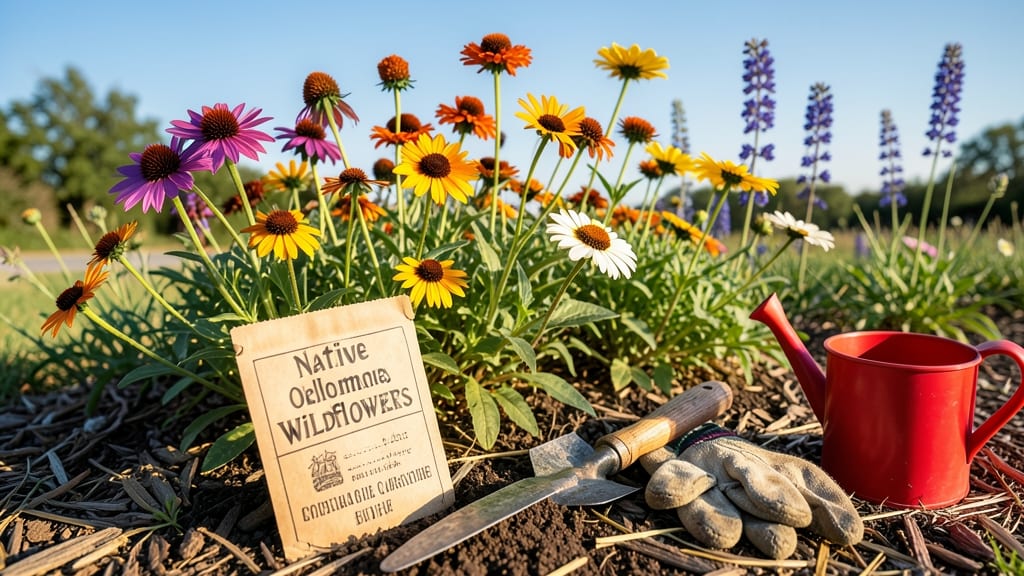
Plant wildflowers in Oklahoma between late winter and early spring or in fall for the best results, aligning with the state’s 6a-8a zones.
Timing matters more than you might think. Skip the window, and you risk frost damage in spring or stunted growth in summer. But get it right, and your meadow will burst into color year-round—think 🌼 from April to July.
Oklahoma’s climate varies wildly from east to west, so I’ll break down the ideal months by microclimate. Whether you’re in humid subtropical East or semi-arid West Oklahoma, knowing when to plant ensures your wildflowers thrive.
You’ll also discover how to prep your soil, pick the right native species, and avoid common mistakes that waste seeds. Let’s turn your land into a pollinator paradise—starting with the perfect planting schedule.
Best planting months for Oklahoma wildflowers by region (with frost-date maps)
Oklahoma’s wildflowers thrive when planted at the perfect time—too early, and frost zaps tender seedlings; too late, and summer’s heat stresses young plants. The state’s four distinct regions—East, West, North, and South—each have unique frost dates and soil conditions.
I’ll break down the best months to plant, including native species timing and soil prep tips tailored to your microclimate. Pro tip: Fall planting often yields stronger blooms than spring!
To visualize your last frost dates, check the interactive map below (or use the table as a guide). For example, North Oklahoma (Zone 6a) has a March 15 average last frost, while South Oklahoma (Zone 8a) warms up by February 15.
These dates dictate when to sow seeds for spring-blooming varieties like Bluebonnets versus fall-planted perennials like Black-eyed Susans.
Here’s how to match your region to the best planting window:
| Region | Last Frost Date | Best Planting Months | Native Species Timing | Soil Prep Tip |
|---|---|---|---|---|
| East (Humid Subtropical) | March 1-15 | September-October | Black-eyed Susans (Fall), Lupines (Spring) | Amend clay soil with compost |
| West (Semi-Arid) | February 15-March 1 | August-September | Blanket Flower (Summer), Coreopsis (Fall) | Add gypsum to break alkaline soil |
| North (Temperate) | March 15-April 1 | April-May or September | Bluebonnets (Spring), Purple Coneflower (Fall) | Loosen compacted soil with rototiller |
| South (Hot Summer) | February 1-15 | September-October | Mexican Sunflower (Fall), Salvia (Spring) | Mulch to retain moisture |
For East Oklahoma, focus on fall planting (September-October) to establish roots before winter. The region’s clay-heavy soil benefits from compost amendments to improve drainage. Native Black-eyed Susans thrive here, while Lupines prefer spring sowing for early blooms.
In West Oklahoma, where alkaline soils dominate, gypsum helps break up the soil structure. Plant Blanket Flower seeds in late summer (August-September) to avoid spring drought stress. This region’s semi-arid climate means seeds need deep watering immediately after planting.
Northern Oklahoma’s cooler springs make April-May planting ideal for Bluebonnets, while September sowing works for Purple Coneflower. The temperate climate allows for two planting windows—spring for annuals and fall for perennials. Always loosen compacted soil before scattering seeds.
Southern Oklahoma’s hot summers demand fall planting (September-October) to avoid seedling stress. Mexican Sunflowers and Salvia love this heat, but mulching retains moisture in the sandy loam soils. Pro tip: Use a light fertilizer in early fall to boost root growth before winter.
Regardless of region, avoid planting in extreme heat (June-August) or during freeze warnings. For best results, test soil pH (aim for 6.0-7.0) and mix in compost to a depth of 6 inches. Scatter seeds lightly—they need light to germinate, so don’t bury them!
Need a visual frost-date guide? Bookmark this: The Oklahoma Mesonet provides real-time frost maps (mesonet.org). For a quick reference, North Oklahoma sees frost until April 15, while South Oklahoma rarely drops below freezing after January 15.
Ready to plant? Grab your wildflower seed mix, mark your calendar, and watch your garden transform into a pollinator paradise
How to extend Oklahoma wildflower blooms through all four seasons
Oklahoma’s wildflowers thrive when you strategically stagger plantings to create a year-round color show. The key is selecting species that bloom in different seasons and preparing the soil 6-8 weeks before planting.
Start with spring ephemerals like Lupines, which burst into bloom in March, while summer perennials like Blanket Flower need late spring sowing to avoid heat stress.
For fall interest, plant Goldenrod in early September—its golden plumes will contrast beautifully against winter-hardy Purple Coneflowers, which bloom sporadically even in December. Native species like Black-eyed Susans and Mexican Hat bridge gaps between seasons naturally, requiring minimal intervention once established.
| Wildflower Species | Bloom Season | Planting Month | Companion Plant |
|---|---|---|---|
| Lupines | March-May | September-October | Purple Coneflower |
| Blanket Flower | June-September | March-April | Black-eyed Susan |
| Goldenrod | August-November | September | Mexican Hat |
| Purple Coneflower | July-December | September-October | Yarrow |
Use this bloom calendar to map out your garden’s color timeline.
For example, plant Lupines in September for early spring blooms, then add Blanket Flower in March to take over as temperatures rise. Goldenrod’s late-season display will transition seamlessly into winter’s dormant Purple Coneflowers, which often retain seed heads for winter interest.
Companion planting boosts pollinator activity and reduces pests. Pair Blanket Flower’s bright oranges with Black-eyed Susans’ golden centers to attract bees and butterflies continuously. Add Yarrow near Coneflowers to deter aphids naturally.
Mulch with straw or pine needles after planting to retain moisture and suppress weeds during Oklahoma’s hot, dry summers.
Water newly planted seeds daily for 2 weeks to ensure germination, then taper to deep watering twice weekly once established. Most Oklahoma wildflowers thrive on rainfall alone after the first year.
Avoid fertilizing—these native species prefer lean, well-draining soil. Instead, top-dress with compost annually in early spring to replenish nutrients.
With this seasonal layering approach, your Oklahoma garden will never lack color. Start small with one species per season, then expand as you master timing. Soon, you’ll have a self-sustaining wildflower meadow that blooms from March through December—with minimal effort!