
Container Gardens
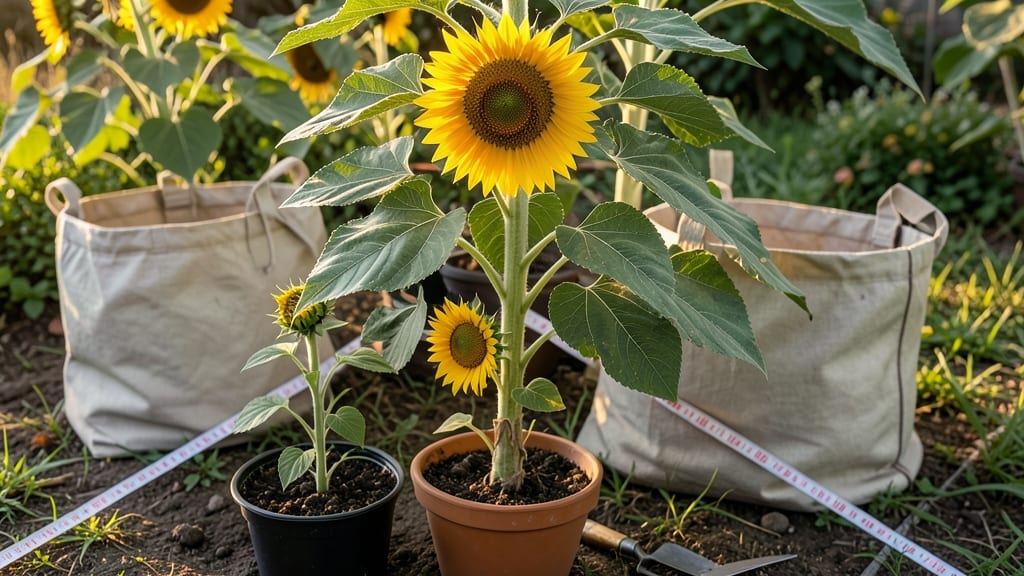
To grow sunflowers 🌻 in pots, you’ll need a container that matches their height—dwarf varieties thrive in 5-gallon pots, while giants demand 20-gallon or larger spaces to avoid stunted roots.
Picture this: your 10-foot-tall sunflower toppling over because its pot was too shallow, or your dwarf variety struggling to reach its full potential in a cramped container.
The right pot size isn’t just about aesthetics—it’s the foundation for healthy growth, and getting it wrong means missing out on those iconic blooms.
Sunflowers aren’t one-size-fits-all, and neither are their containers. A 3-foot 'Teddy Bear' needs just 12 inches of depth, while a 12-foot 'Russian Giant' demands 24+ inches to support its massive root system.
Below, I’ll break down the exact pot dimensions for every variety, plus how to adjust for drainage, stability, and even wind resistance.
You’ll also discover 5 pro tips to maximize growth in containers, from staking techniques for towering varieties to the best soil mixes for preventing root rot. By the end, you’ll know exactly how to give your sunflowers the space they need to shine—literally.
Sunflower pot size requirements by height: giant vs dwarf varieties
Sunflowers 🌻 come in all shapes and sizes, from delicate 3-foot dwarfs to towering 12-foot giants, and each variety demands a different pot size to thrive. The key is matching your container to the sunflower’s mature height and root system—too small, and you’ll end up with leggy, unstable plants.
Too large, and you risk waterlogged soil that invites root rot. Let’s break down the exact pot dimensions for every sunflower type, so you can give your plants the space they need to flourish.
For dwarf varieties like 'Teddy Bear' or 'Moulin Rouge' (1–3 feet tall), a 5-gallon pot with 12 inches of depth is perfect. These compact sunflowers have shallow roots, so they don’t need much room to spread.
But if you’re growing a standard variety like 'Autumn Beauty' (6–8 feet), you’ll need a 15-gallon pot with at least 18 inches of depth to support their deeper root systems and heavier stems.
Now, here’s where things get interesting: giant sunflowers like 'Russian Giant' or 'Mammoth' (10–15 feet tall) require 20-gallon or larger containers with 24+ inches of depth. These monsters need stability, and a shallow pot will cause them to topple over in wind or rain.
Think of it like this: a 12-foot sunflower needs a pot that’s at least half its height in depth to anchor its roots securely.
Beyond pot size, width matters too. Sunflowers need room to spread their roots outward, especially as they mature. A general rule is to give your sunflower a pot that’s at least 12 inches wider than its mature height.
So, a 6-foot sunflower should have a pot with a 18-inch diameter or larger. This extra space prevents root binding, which can stunt growth and make your plant more susceptible to disease.
One common mistake I see is using round pots for giant sunflowers. While they’re cute, they offer less stability for tall varieties. Instead, opt for rectangular or square containers with a wider base. This gives your sunflower a broader foundation to resist wind and keeps it upright.
If you’re growing multiple sunflowers in one pot, space them 12–18 inches apart to avoid competition for nutrients and water.
Don’t forget about drainage—sunflowers hate soggy feet! Every pot should have drainage holes at the bottom, and you might want to add a 2-inch layer of gravel or perlite to improve airflow.
For heavy clay pots, consider adding fabric grow bags, which allow roots to breathe while still providing structure. And if you’re growing in fabric pots, choose ones labeled for large plants, as they break down faster with aggressive root systems.
Pro tip: If you’re unsure about your pot’s gallon size, measure it yourself. A 12-inch diameter pot holds about 5 gallons, while a 16-inch pot holds roughly 10 gallons. For giants, a 20-inch diameter pot can hold up to 25 gallons—perfect for those 12-foot monsters.
Always err on the side of a larger pot if you’re between sizes, as sunflowers will outgrow their containers faster than you think!
Finally, remember that soil quality plays a huge role in container growth. Use a lightweight, well-draining potting mix blended with compost or worm castings to provide nutrients without
How to choose the right pot material and drainage for sunflowers
Sunflowers need more than just space—they demand the right pot material and drainage system to thrive. A heavy clay pot might crack under a 12-foot giant, while a lightweight fabric grow bag could topple in wind.
The material you choose affects everything from root health to wind resistance, especially when growing sunflowers in containers where stability matters.
Drainage isn’t just about holes—it’s about preventing root rot in confined spaces. Sunflowers hate soggy feet, and without proper drainage, even the largest pot becomes a death trap.
I’ve learned this the hard way with my 'Russian Giant'—it took two summers to recover from overwatered roots in a pot without drainage holes.
Here’s the breakdown: ceramic pots offer stability but can crack in freezing temps, while fabric pots allow roots to breathe but dry out faster. For sunflowers, the right choice depends on your climate, variety, and how much you’re willing to monitor watering.
Pot Material Pros & Cons
Ceramic Pots
- Pros: Heavy (prevents toppling), aesthetic appeal, retains moisture
- Cons: Can crack in freeze-thaw cycles, heavier to move
Fabric Pots
- Pros: Lightweight, promotes air pruning, easy to move
- Cons: Dries out faster, less stable in wind, requires frequent watering
Plastic Pots
- Pros: Affordable, durable, wide drainage hole options
- Cons: Can overheat in sun, less breathable for roots
Wooden Planters
- Pros: Natural look, good insulation, sturdy
- Cons: Requires sealing, heavier than plastic, limited drainage options
For drainage, the golden rule is at least 4 drainage holes in the bottom of the pot. But here’s the trick: larger sunflowers need extra side drainage too.
I’ve seen 10-foot giants develop root rot because their pots had holes only at the bottom—water pooled at the roots despite "proper" drainage. Add a 2-inch layer of gravel at the bottom, but don’t skimp on the soil depth above it.
Wind resistance is often overlooked, but a 12-foot sunflower in a lightweight fabric pot is a recipe for disaster. For towering varieties, I recommend 5-gallon+ ceramic pots or heavy-duty plastic barrels with wide bases.
If you’re growing dwarfs, even a 3-gallon fabric pot works—but add stakes early to prevent tipping.
Adjust your soil mix too: sunflowers in pots need 60% potting soil, 30% perlite, and 10% compost to prevent compaction. I’ve had my 'Mammoth' sunflowers thrive in this blend, while regular garden soil led to root-bound plants.
The key is keeping the mix lightweight and aerated—especially in deep containers.
Pro tip: If your pot lacks drainage, elevate it on pot feet or a tray with pebbles. This creates airflow underneath while still preventing soil erosion. And always water deeply but less frequently—sunflowers in pots dry out faster, but soggy soil is their worst enemy.