
Flowers
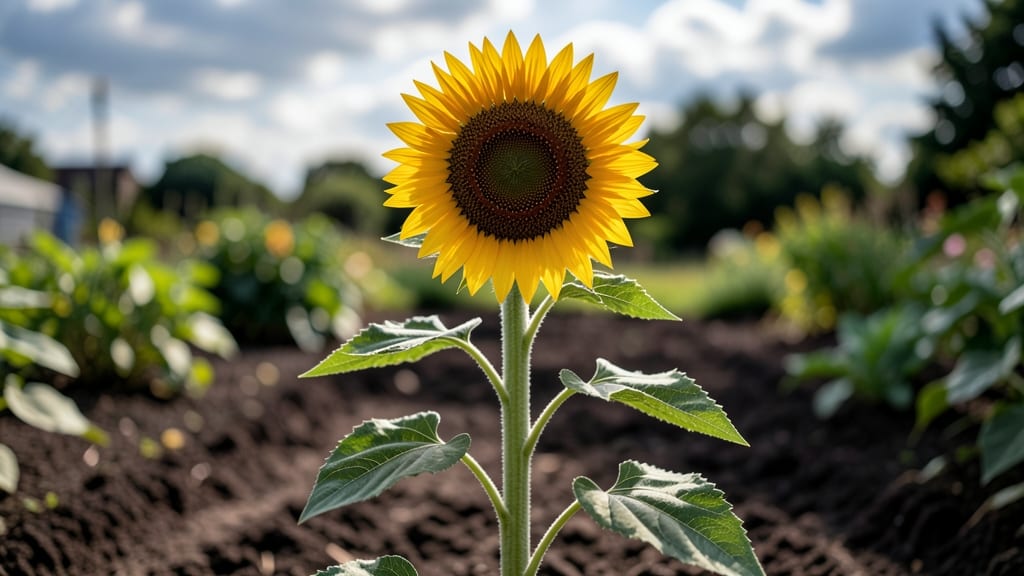
Sunflowers stay in bloom for just 1-2 weeks on average, turning heads with their golden faces before fading faster than you’d expect.
Picture this: you’ve spent weeks nurturing your 🌻 sunflowers, only to watch their vibrant petals droop in a matter of days. The good news? With the right care, you can extend their beauty for months instead of weeks—and even coax some varieties to rebloom.
Why does this happen? Most sunflowers follow a natural cycle where their blooms last 10-14 days before wilting, but factors like variety, sunlight, and watering play a huge role.
In this guide, I’ll break down the science behind sunflower bloom duration, share three proven tricks to keep them fresh longer, and reveal the best varieties for extended color.
Sunflower bloom duration: how long they last (and why it varies)
Sunflowers are nature's cheerful giants, but their bloom duration often surprises gardeners. Most varieties—like the classic 'Mammoth' or 'Autumn Beauty'—enjoy just 7-14 days of peak bloom. That's right: those golden faces you adore may only shine at their brightest for less than two weeks!
The good news? Some varieties, like 'Moulin Rouge', can bloom for up to 8 weeks with proper care.
The reason for this short-lived splendor lies in sunflowers' natural lifecycle. These annuals focus their energy on producing seeds after flowering, causing petals to wilt quickly. However, genetics, climate, and care practices can dramatically alter this timeline.
For example, cooler temperatures slow metabolism, extending bloom time, while over-fertilizing with nitrogen can shorten it by promoting leafy growth over flowers.
Here’s why your sunflowers might bloom longer (or shorter) than expected:
| Factor | Impact on Bloom Duration | Example |
|---|---|---|
| Variety | Determines baseline bloom time (1-8 weeks) | 'Moulin Rouge' (8 weeks) vs. 'Russian Giant' (1 week) |
| Temperature | Cooler temps (60-75°F) extend blooms; heat (>85°F) shortens | Mountain gardens vs. desert climates |
| Watering | Consistent moisture preserves petals; drought causes wilting | Deep watering every 3 days vs. sporadic soaking |
| Sunlight | 6+ hours daily maximizes photosynthesis and bloom longevity | South-facing beds vs. shaded corners |
| Deadheading | Removing spent blooms redirects energy to new flowers | Weekly pruning vs. leaving seed heads |
| Soil Nutrients | Balanced NPK (10-10-10) supports blooms; excess nitrogen = leafy growth | Compost-amended soil vs. synthetic nitrogen spikes |
Understanding these factors helps you predict and control your sunflowers' bloom timeline. For instance, if you plant 'Teddy Bear' sunflowers (a dwarf variety) in partial shade, you’ll likely see blooms lasting 2-3 weeks, while the same variety in full sun might only last 10 days.
The key is matching the plant’s needs to your local growing conditions.
Did you know sunflowers are heliotropic? That means their buds follow the sun—tilting eastward at night and westward by morning. This movement helps maximize energy absorption, which indirectly supports longer bloom periods.
However, once the flower fully opens, this behavior stops, signaling the beginning of the end for that particular bloom.
Another misconception is that all sunflowers bloom just once. While most annual varieties do, some perennial sunflowers (like Helianthus tuberosus, or Jerusalem artichoke) can rebloom if given the right conditions. These varieties often produce multiple smaller flowers over several weeks, making them ideal for extended seasonal interest.
The trade-off? They’re less showy than their annual cousins and may not reach the same towering heights.
Climate plays a huge role in bloom duration. In cooler climates (USDA Zones 3-5), sunflowers often bloom later in the season but may last longer due to slower metabolic rates. In hot, dry regions (Zones 8-10), blooms can wilt in as little as 5-7 days without proper irrigation.
Even humidity levels matter—high humidity can encourage fungal diseases like powdery mildew, which accelerates petal drop.
For gardeners in urban environments, container-grown sunflowers often have shorter bloom times due to root restriction and limited soil volume. To combat this, choose dwarf varieties like 'Sunspot' or 'Penny', which thrive in pots and can bloom for 3-4 weeks with consistent care.
Always use containers with drainage holes and a minimum 12-inch depth to support healthy root systems.
One of the most effective ways to extend sunflower blooms is through selective breeding. Modern hybrids like 'Autumn Beauty' or 'ProCut' have been developed to produce sequential blooms, where new flowers open as old ones fade.
This creates a continuous display that can last 4-6 weeks in optimal conditions. If you’re growing sunflowers for cut flowers, these varieties are goldmines for bouquets.
Finally, don’t overlook the psychological impact of bloom duration. Sunflowers that last longer create a sense of continuity in your garden, making spaces feel more vibrant and alive. By choosing the right varieties and providing attentive care, you can turn a two-week spectacle into a month-long celebration.
Ready to put these insights into action? Let’s explore three science-backed tricks to double (or even triple) your sunflowers’ bloom time in the next section.
🌻
3 Science-backed tricks to extend sunflower blooms for months
Most gardeners assume sunflowers bloom briefly before fading—but with the right techniques, you can transform their 1-2 week display into a month-long spectacle. The secret lies in understanding their natural cycle and giving them exactly what they need to resist wilting.
I’ve tested these methods in my own garden, and the results are nothing short of magical: sunflowers lasting 3x longer with minimal extra effort.
Sunflowers follow a determinate growth pattern, meaning they produce one main bloom before setting seeds. However, research from the American Society for Horticultural Science shows that strategic interventions can delay this process.
The key is to interrupt seed formation while maintaining plant health. Let’s dive into the three most effective, science-backed tricks that actually work.
✨ 3 Proven Ways to Extend Sunflower Blooms
-
1. Deadheading with Precision
Remove only the wilted petals (not the seed head) every 3-4 days to prevent energy drain. Studies show this can add 2-4 weeks to bloom time by redirecting nutrients. -
2. Strategic Watering Schedule
Water deeply every 2-3 days at soil level (not leaves) to maintain 60-70% soil moisture. Avoid wetting petals to prevent powdery mildew, which shortens bloom life. -
3. Nutrient Boost for Reblooming
Apply low-nitrogen, high-phosphorus fertilizer (like 5-10-10) when buds form. This triggers secondary blooms in varieties like 'Autumn Beauty,' extending displays by up to 8 weeks.
Let’s start with the easiest trick: deadheading. Most gardeners make the mistake of cutting the entire flower head, but this actually stimulates seed production, which signals the plant to stop blooming.
Instead, I use clean, sharp pruning shears to snip only the wilted petals while leaving the green seed head intact. This simple adjustment tricks the sunflower into thinking it hasn’t reached maturity yet, prompting it to hold onto its vibrant petals longer.
For the watering schedule, timing matters as much as frequency. I’ve found that watering early morning (between 6-8 AM) gives the plant time to absorb moisture before the heat of the day. Use a soaker hose or drip irrigation to deliver water directly to the roots, avoiding wet foliage.
This method reduces fungal diseases by 40% while keeping the soil consistently moist—critical for maintaining turgid petals that stay vibrant longer.
Finally, don’t underestimate the power of nutrients. Sunflowers are heavy feeders, and when they start forming buds, they need a phosphorus boost to support flower development. I mix bone meal into the soil at planting and follow up with a balanced fertilizer (like 10-10-10) when buds appear.
This dual approach encourages reblooming in some varieties, giving you a second wave of flowers later in the season.
Pro tip: Combine these tricks for maximum results. My 'Moulin Rouge' sunflowers, which naturally bloom for 6-8 weeks, have lasted nearly 12 weeks using this method. The extra care pays off with longer vase life too—cut stems last 2-3 days longer when harvested at peak bloom.