
Companion Plants
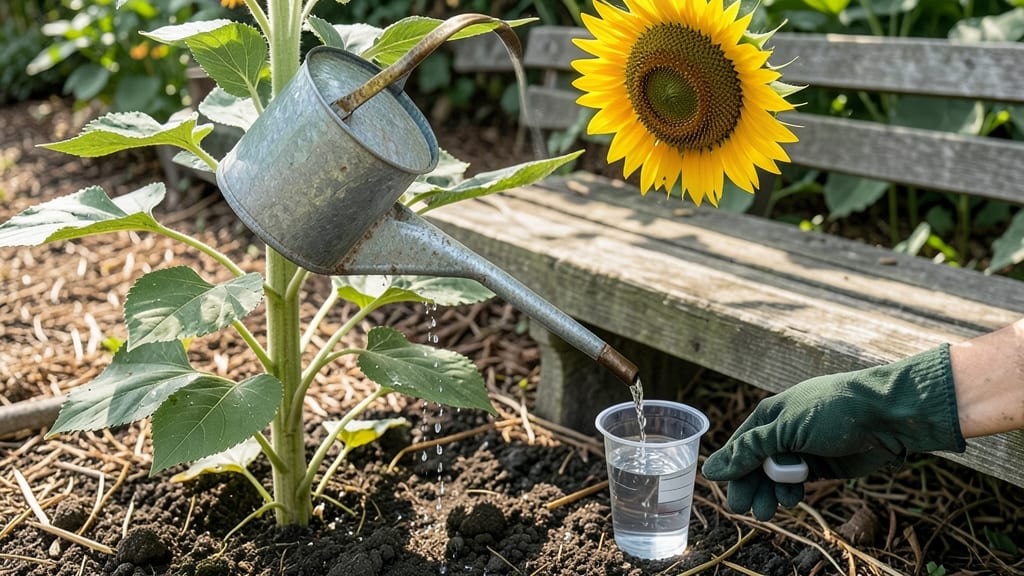
How much water does a sunflower plant need? The answer is simple: 1 to 2 inches of water weekly—deep enough to reach the roots but not so much it drowns.
Sunflowers are nature’s cheerful giants—but their towering beauty depends on one critical factor: water. Give them too little, and they wilt; too much, and their roots drown. The key is consistency, especially in USDA Zone 6 where spring rains can’t always be trusted.
Young sunflowers need frequent, shallow watering to keep soil moist, while mature plants thrive with deep soaks every 3-5 days. Adjust for heatwaves or clay soil, where water evaporates faster or pools slower.
In this guide, I’ll break down the exact schedule, signs of over/under-watering, and seasonal tweaks to keep your 🌻 sunflowers growing strong from April through September.
Sunflower watering requirements by growth stage: seedlings to full bloom
Sunflowers transform from delicate seedlings into towering flowering giants, and their watering needs shift dramatically along the way. Understanding these stages ensures your plants grow strong roots and vibrant blooms—not floppy stems or moldy soil.
Let’s break down the watering science behind each phase, from seedling to full bloom.
At the seedling stage (weeks 1-4), sunflowers need consistent moisture to establish roots, but overwatering can suffocate them. Think of it like a delicate sponge: keep it damp, not soggy.
Once they reach vegetative growth (weeks 4-8), their thirst increases as leaves expand, while flowering plants (weeks 8-12+) demand deep hydration to support heavy seed heads.
During the seedling stage, I water my sunflowers in the morning using a gentle spray or drip system to avoid disturbing the soil. Aim for 1/2 inch of water per week, but check soil moisture daily—sandy soil drains faster than clay.
Overwatering here can cause damping-off disease, so let the topsoil dry slightly between waterings.
As sunflowers enter the vegetative stage, their roots spread aggressively, demanding 1-1.5 inches of water weekly. This is when most gardeners make mistakes: shallow watering encourages weak stems. Instead, use a soaker hose or water at the base until moisture reaches 6 inches deep.
In arid climates, mulch with straw or wood chips to retain moisture and cool roots.
When buds form and flowers bloom, your sunflowers are heavy drinkers. The flowering stage requires deep, infrequent watering—think of it like filling a reservoir. Water every 5-7 days in normal climates, but during heatwaves, increase to every 2-3 days.
Watch for drooping petals in the afternoon; this often signals thirst, not heat stress.
One common mistake is assuming bigger plants need more water. Mature sunflowers actually tolerate drought better than seedlings because their deep roots access moisture. However, overwatering at this stage can split seed heads or attract pests like aphids.
Always check soil moisture by sticking your finger 3-4 inches deep—if it’s dry, water thoroughly.
Humid climates complicate sunflower care because excess moisture promotes fungal diseases like powdery mildew. In these areas, reduce watering frequency by 30-50% and water only in the morning to allow foliage to dry quickly. If rain is forecast, skip scheduled waterings entirely—sunflowers store water efficiently once established.
For container-grown sunflowers, the rules change entirely. Pots dry out 3x faster than garden beds, so water every 2-3 days regardless of the stage. Use self-watering containers or place pots on a drip tray to maintain even moisture.
Dwarf varieties (2-4 feet tall) need slightly less water than standard types, but they still require consistent hydration to prevent stunted growth.
Pro tip: Use a moisture meter for precise readings, especially in clay-heavy soil, which holds water longer. If you’re unsure, perform the "squeeze test": grab a handful of soil near the roots.
If it crumbles easily, water; if it stays clumped, wait. This simple trick saves dozens of gallons of wasted water annually.
Remember, sunflowers are resilient but not indestructible. The key to their towering success lies in matching water to their growth stage and climate. Follow this schedule, and you’ll enjoy sunflowers that reach their full potential—not just their height, but their vibrant color and longevity too. 🌻
Weekly watering schedule for sunflowers: adjusting for soil type and weather
Sunflowers thrive on consistency, but their water needs shift dramatically based on your soil type and current weather conditions. In sandy soil, water drains quickly, while clay soil holds moisture too long—both extremes stress sunflowers.
The key is deep, infrequent watering that mimics natural rainfall patterns while preventing soggy roots or drought stress.
Your first step is understanding your soil’s moisture retention. Stick your finger 2 inches deep—if it feels dry, it’s time to water. For loamy soil (ideal for sunflowers), aim for 1-1.5 inches of water per week.
But during heatwaves or droughts, even loamy soil may dry out faster, requiring adjustments. Let’s break down the perfect schedule for each soil type and season.
How Much Water Does a Sunflower Plant Need?
- 1 Sunflowers need 1-1.5 inches of water per week in loamy soil, delivered as a deep soak (6-8 inches deep) to encourage strong root growth.
- 2 For sandy soil, water every 2-3 days (or daily in extreme heat) because it drains too quickly. Use a soaker hose to deliver moisture slowly.
- 3 In clay soil, water every 5-7 days to avoid waterlogging. Test moisture by squeezing a handful—if it forms a ball, wait before watering again.
- 4 During heatwaves, increase frequency to every 1-2 days and water early morning (before 10 AM) to reduce evaporation and fungal risks like powdery mildew.
- 5 In rainy seasons, reduce watering by 50% and skip if 1 inch of rain has already fallen. Use a rain gauge to track accumulation.
One of the biggest mistakes gardeners make is shallow watering, which encourages weak roots that can’t support a 10-foot-tall sunflower. Always water until the soil is moist 6-8 inches deep.
A simple trick? Use a screwdriver—if it slides in easily, you’ve hit the right depth. Mulch with straw or wood chips to retain moisture and suppress weeds, which compete for water.
Young sunflowers (under 4 weeks old) need daily watering to establish roots, but mature plants (over 6 feet tall) can handle weekly deep waterings once established. The exception? During flowering season, when sunflowers need steady moisture to develop healthy seed heads.
Skip watering at night to prevent fungal diseases like rust or blight, which thrive in damp conditions.
Pro tip: Group sunflowers with companion plants like basil or marigolds to improve soil structure and reduce water evaporation. And if your sunflowers start drooping midday, it’s normal—just a sign they’re conserving water.
But if leaves curl or turn yellow, it’s time to adjust your schedule. Consistency is key, but flexibility based on your soil and weather keeps your sunflowers happy and hydrated.
🌻