
Companion Plants
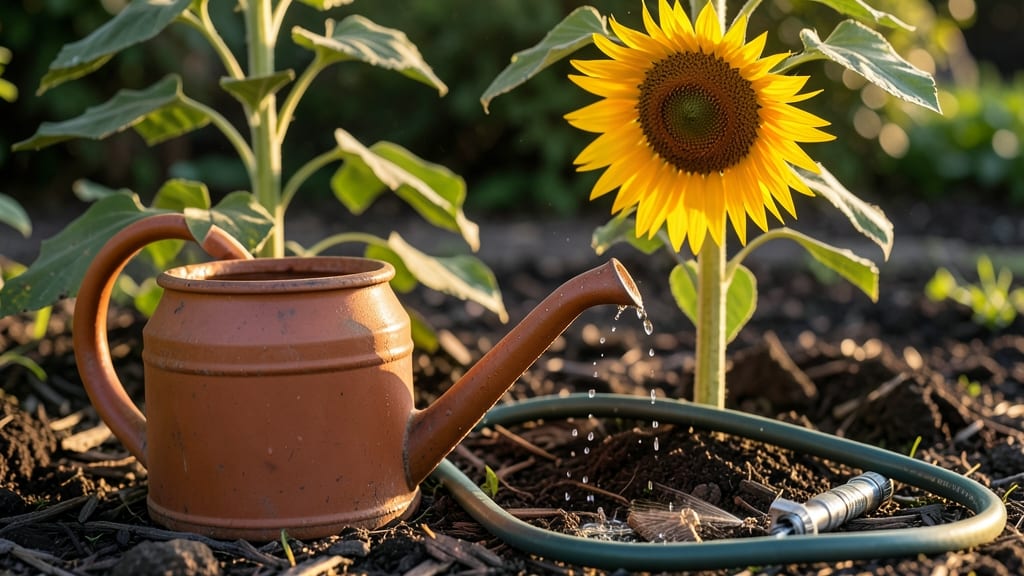
Watering a sunflower plant the right way keeps those towering 🌻 blooms reaching for the sky without wasting a drop.
You’ve probably seen sunflowers wilt in scorching heat or drown in soggy soil—both are signs you missed the sweet spot. The secret isn’t just how much you water, but when and how deeply, especially as your plant grows from a tiny seedling to a sun-soaked giant.
In this guide, I’ll break down the ideal watering schedule by growth stage, from seedlings to full bloom, plus how to adjust for your soil type and climate. No more guesswork—just lush, thriving sunflowers that stand tall and proud.
You’ll learn the 3 key signs of over- or under-watering, the best time of day to water, and a simple trick to prevent root rot while keeping those roots happy and hydrated.
Sunflower watering schedule by growth stage: from seed to full bloom
Sunflowers start their journey as delicate seeds but grow into towering giants with deep roots that crave consistency. The key to their success lies in understanding their watering needs at each stage—from the first sprout to their majestic full bloom.
Unlike many plants, sunflowers demand deep, infrequent watering to encourage strong root development, not frequent shallow drinks. Let’s break down the perfect schedule to keep your sunflowers thriving without drowning their roots.
Your sunflower’s watering routine should shift as it grows, mirroring its changing needs. Seedlings need gentle moisture to prevent washing out, while mature plants can handle drought-like conditions once established. The secret?
Monitoring soil moisture at the right depth—about 2-3 inches down—rather than watering on a rigid schedule. This approach prevents both root rot and wilting while maximizing your time in the garden.
| Growth Stage | Watering Frequency | Soil Moisture Target | Water Amount | Best Time |
|---|---|---|---|---|
| Seedling (0-2 weeks) | Every 2-3 days | Top 1 inch moist | ¼ cup per plant | Morning |
| Vegetative (3-6 weeks) | Every 3-4 days | Top 2-3 inches moist | 1-1.5 gallons per plant | Early morning |
| Flowering (7-12 weeks) | Every 5-7 days | Top 3-4 inches moist | 2-3 gallons per plant | Morning or late afternoon |
| Mature (Post-Bloom) | Every 7-10 days | Top 4-6 inches moist | 3-4 gallons per plant | Early morning |
| Heatwave Adjustment | Every 2-3 days | Top 2-3 inches moist | Increase by 50% | Early morning |
During the seedling stage, your sunflowers are most vulnerable. Their tiny roots can’t compete with evaporation or heavy watering, so focus on keeping the top 1 inch of soil consistently moist. Use a spray bottle or gentle watering can to avoid disturbing the soil around the seeds.
Once they’ve sprouted and reached about 2 inches tall, you can gradually increase the water volume while keeping the frequency high—this encourages rapid root growth without overwhelming the young plants.
As your sunflowers enter the vegetative stage (typically 3-6 weeks after planting), their water needs shift dramatically. This is when they start developing their iconic tall stems and broad leaves, and they’ll drink up to 1.5 gallons per plant every 3-4 days.
The goal here is to water deeply, ensuring moisture reaches 2-3 inches down. Think of it like giving them a long, refreshing drink rather than a quick sip. Mulching with straw or wood chips can help retain moisture and reduce evaporation, cutting down on your watering chores.
When your sunflowers begin flowering, they’re at their most demanding stage. The buds and blooms require consistent moisture to prevent drooping or cracking, but overwatering can lead to fungal issues.
Aim for 2-3 gallons per plant every 5-7 days, always watering at the base of the plant rather than the leaves. Early morning watering is ideal—it allows foliage to dry quickly, reducing the risk of powdery mildew, a common sunflower nemesis.
If you notice the petals wilting by midday, it’s a sign they need more frequent watering during extreme heat.
Once your sunflowers have fully bloomed and are preparing for seed production, you can ease up slightly on the watering schedule. Mature plants are more drought-tolerant, thanks to their extensive root systems.
However, they still need 3-4 gallons every 7-10 days to maintain their structural integrity, especially if you’re growing tall varieties that can top 10 feet. Pay attention to the soil—if it’s dry 4-6 inches down, it’s time to water.
This stage is also when you can reduce mulch slightly to allow the soil to dry out more between waterings, preventing root rot.
Adjusting for heatwaves or drought conditions is crucial, especially in regions with high temperatures or low humidity. During these periods, increase your watering frequency to every 2-3 days and boost the volume by 50%.
Water deeply in the early morning to give the soil time to absorb moisture before the heat of the day. If you’re in a particularly dry climate, consider installing a drip irrigation system to deliver water slowly and directly to the roots, minimizing waste and stress on the plants.
One of the biggest mistakes gardeners make is watering sunflowers too frequently with shallow applications. This leads to weak, shallow roots that can’t support the plant’s towering growth. Instead, focus on deep watering sessions that encourage roots to grow downward in search of moisture.
Use your finger to check soil moisture—if the top 2-3 inches are dry, it’s time to water. If it’s still damp, hold off. This
Signs your sunflowers are overwatered or underwatered (and how to fix it)
Your sunflowers might be sending you SOS signals through their leaves and stems. Yellowing foliage or drooping blooms aren't just random—these are clear indicators your watering routine needs adjustment.
The key is learning to read your plants like a pro gardener, so you can act fast before root rot or wilting takes hold.
Overwatering is sneaky—it doesn't just mean muddy soil. Your sunflowers might show yellow lower leaves, a mushy stem, or even moldy soil around the base. These are red flags that your plants are drowning in excess moisture.
On the flip side, underwatering causes crispy edges, drooping leaves, and a hollow-sounding stem when tapped.
Pros-Cons Box: Watering Sunflowers Correctly
If your sunflowers are overwatered, start by letting the soil dry out. Stop watering immediately and only resume when the top 2 inches of soil feel dry to the touch.
For severe cases, you may need to repot the plant into fresh, dry soil. Adding perlite or sand can also improve drainage and prevent future issues.
For underwatered sunflowers, give them a deep soak—aim for 1-2 gallons of water per plant. Water slowly to let it absorb fully, and avoid wetting the leaves to prevent fungal diseases.
After the initial drink, maintain a consistent schedule, watering every 2-3 days during hot weather and 3-4 days in cooler conditions.
Remember, healthy roots are the foundation of strong sunflowers. Always check soil moisture before watering—stick your finger in the soil. If it's damp, wait a day. If it's bone dry, it's time to hydrate. Your sunflowers will thank you with vibrant blooms reaching for the sky! 🌻