
Watering
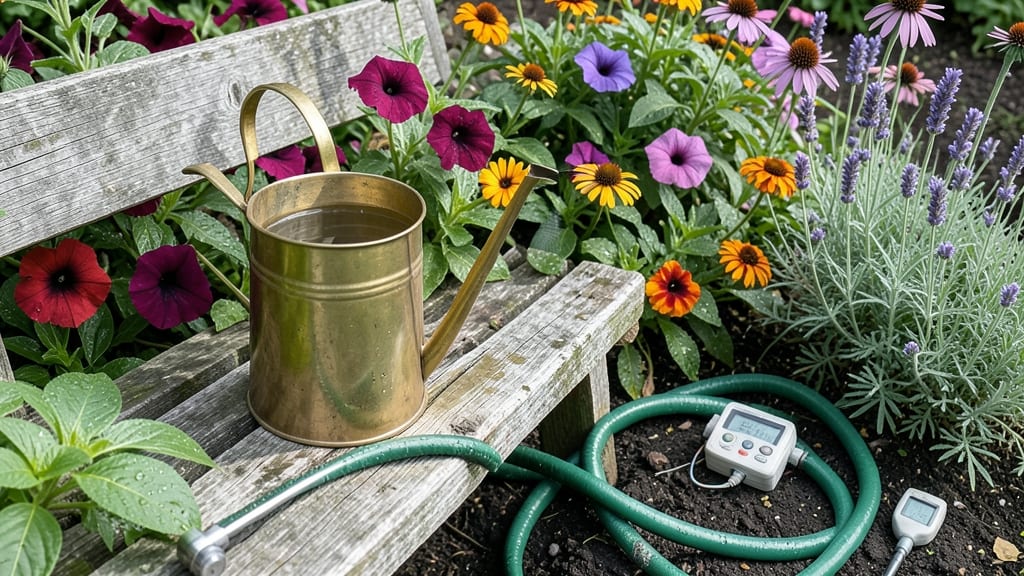
Watering your flower garden the right way keeps those 🌸 blooms vibrant all season — but guessing how often is the fastest way to kill them.
Most gardeners either drown their flowers or leave them thirsty, both of which lead to drooping petals and wasted effort. The truth? A science-backed schedule makes all the difference, adjusting for soil, climate, and even plant type.
In this guide, you’ll learn the exact watering frequency for your USDA Zone 6a garden, when to cut back in summer heat, and how to spot the subtle signs of over- or underwatering before it’s too late.
By the end, you’ll water with confidence — no more guesswork, just lush, thriving blooms that last from spring through fall.
Seasonal watering schedule for flower gardens by climate zone
Watering your flower garden isn't a one-size-fits-all task—it's a seasonal science that changes with temperature, rainfall, and plant types. In USDA zones 3-10, the same flowers may need daily watering in summer but only bi-weekly in winter.
Understanding these shifts prevents wilted petals or root rot, keeping your garden vibrant year-round.
Your climate zone and flower types dictate the perfect schedule. For example, drought-resistant lavender thrives with minimal summer watering, while thirsty impatiens demand consistent moisture.
Below, I break down the ideal watering frequency for each season, adjusted for USDA zones 3-10, plus how to tweak for rainfall and soil.
Pro Tip: Always water deeply but infrequently—aim for 1-2 inches of moisture per week (check with a trowel). Shallow watering encourages weak roots and surface evaporation, while deep watering strengthens plants for heat waves and droughts.
In spring (March-May), focus on reviving roots after winter dormancy. Start with weekly deep watering in colder zones (USDA 3-6) and every 3-5 days in warmer zones (USDA 7-10).
Use a soil probe to check moisture—if the top 2 inches are dry, it's time to water.
Summer (June-August) is the most critical season for watering. In USDA zones 7-10, daily or every-other-day watering is often necessary, especially for thirsty annuals like petunias. Mulch with 2-3 inches of straw or wood chips to retain moisture and reduce evaporation.
For drought-resistant plants, stick to deep watering every 5-7 days.
Fall (September-November) signals a gradual reduction in watering. As temperatures drop, reduce frequency by 30-50%. By October, most gardens only need weekly watering, except for tender perennials like black-eyed Susans, which still need moderate moisture.
Winter (December-February) is about minimal intervention. In USDA zones 3-6, water only if the ground is bare and no snow cover exists—typically every 2-4 weeks. In warmer zones (7-10), bi-weekly checks suffice
How to adjust watering frequency for different soil types and flower varieties
Your flower garden thrives when watering matches both soil type and plant needs. Sandy soil drains quickly, while clay holds moisture too long—both extremes stress flowers.
Annuals like petunias need frequent hydration, while lavender perennials prefer dry spells. Let’s break down how to tailor your watering schedule for optimal bloom health.
Start by testing your soil moisture. Stick your finger 2-3 inches deep—if dry, water; if damp, wait. Sandy soil may need daily checks in summer, while clay soil might only require watering every 7-10 days.
Adjust based on rainfall: skip watering if 1 inch of rain falls in 24 hours. This simple test saves overwatering and root rot.
| Soil Type | Watering Frequency | Flower Examples | Deep Watering Tip |
|---|---|---|---|
| Sandy | Every 1-2 days (summer) | Petunias, Marigolds | Water 6-8 inches deep |
| Loamy | Every 3-5 days | Coneflowers, Dahlias | Water 4-6 inches deep |
| Clay | Every 7-10 days | Lavender, Black-Eyed Susans | Water 3-4 inches deep |
| Silt | Every 2-4 days | Snapdragons, Zinnias | Water 5-7 inches deep |
Annuals like petunias and marigolds demand consistent moisture—water deeply 2-3 times weekly in summer. Their shallow roots can’t reach deep reserves, so shallow watering leads to wilting. Use a drip irrigation system to deliver water slowly at the base, reducing evaporation.
For perennials like lavender or coneflowers, deep soakings every 7-10 days encourage root depth and drought resilience.
Deep watering is key: aim for 6-8 inches deep for most flowers. Use a soil probe or screwdriver to check moisture levels—if dry at 3 inches, water again. Morning watering (before 10 AM) prevents fungal diseases by letting foliage dry quickly.
Avoid evening watering, which traps moisture on leaves overnight. Mulch with 2-3 inches of organic mulch to retain soil moisture and regulate temperature.
Adjust for seasonal changes: in spring, water lightly to encourage root growth; in fall, reduce frequency as plants prepare for dormancy. Drought-tolerant flowers like black-eyed Susans thrive with less water, while tropical annuals like impatiens need frequent hydration.
Always observe your plants—yellowing leaves signal overwatering, while dry, crispy edges mean underwatering. Fine-tune your schedule based on these cues.
Pro tip: group flowers with similar water needs together. Place thirsty annuals near your water source and drought-tolerant perennials in hotter, sunnier spots. With these adjustments, your flower garden will flourish with minimal effort—no more guesswork, just science-backed blooms! 🌸