
Fertilization
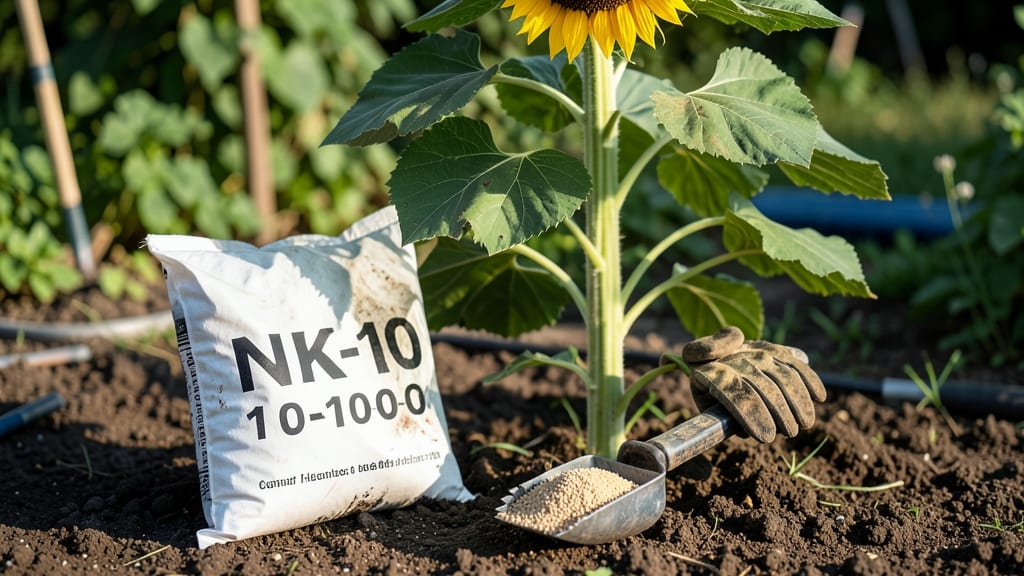
Fertilizing sunflowers with the right sunflower fertilizer 10-10-10 gives them the balanced boost they need to reach their towering potential 🌻—but too much or too little can stunt their growth.
Picture this: you’ve just planted your sunflower seeds in USDA Zone 6a, and you’re eager to see them grow. But without the right fertilizer timing, you might end up with weak stems or sparse blooms instead of the vibrant giants you dreamed of.
In this guide, I’ll walk you through the best times to apply 10-10-10 fertilizer, how much to use at each growth stage, and what to watch for to avoid common mistakes.
Whether you’re a beginner or a seasoned gardener, these tips will help you grow sunflowers that stand tall and proud—just like the ones in your favorite backyard gardens.
When and how to apply 10-10-10 fertilizer for sunflowers
Sunflowers thrive when their nutrient needs align with their growth stages. The 10-10-10 fertilizer provides balanced nitrogen, phosphorus, and potassium—ideal for sunflowers reaching heights of 6-14 feet. But applying it at the wrong time can lead to wasted nutrients or even harm your plants.
Let’s break down the critical timing and methods for both granular and liquid forms to maximize your sunflowers’ potential.
Before grabbing that bag of fertilizer, test your soil pH—sunflowers prefer a slightly acidic to neutral range of 6.0-7.0. If your soil is too alkaline, the nutrients in 10-10-10 won’t be as available.
Amend with peat moss or sulfur if needed, and always water thoroughly after applying fertilizer to help nutrients penetrate the soil. Timing is everything, and we’re about to dive into the exact moments your sunflowers will thank you for.
Step-by-Step Guide to Applying 10-10-10 Fertilizer for Sunflowers
- Pre-Planting (2-4 Weeks Before Sowing):
Mix 1-2 lbs of 10-10-10 per 100 sq ft into the top 6 inches of soil. This jumpstarts root development before seeds germinate. For containers, use ½ cup per 5-gallon pot.
- At Planting (Seedlings or Transplants):
Apply ½ lb of 10-10-10 per 100 sq ft around the base, keeping it 2 inches away from stems to avoid burning young roots. Water immediately to activate nutrients.
- Early Growth (4-6 Weeks After Germination):
Use ½ lb of 10-10-10 per 100 sq ft every 4-6 weeks to support leafy growth. For liquid fertilizer, dilute 1 tbsp per gallon of water and apply at the soil line.
- Flowering Stage (When Buds Form):
Switch to ½ lb of 10-10-10 per 100 sq ft every 6-8 weeks to boost bloom size and stem strength. Avoid over-fertilizing—too much nitrogen here can reduce flower production.
- Granular vs. Liquid Application:
Granular: Sprinkle evenly and water in. Liquid: Mix with water and apply to the soil (not leaves) using a watering can or hose-end sprayer.
- Post-Flowering (After Harvest):
Skip fertilization. Sunflowers enter dormancy, and feeding now can encourage weak regrowth before winter. Focus on cleaning up debris and amending soil for next year.
For container-grown sunflowers, reduce amounts by half to prevent nutrient burn. Smaller pots dry out faster, so monitor soil moisture closely—over-fertilizing in tight spaces can lead to salt buildup, stunting growth.
If you notice yellowing leaves or crispy edges, flush the soil with water to dilute excess salts.
One of my favorite tricks is to side-dress sunflowers during the flowering stage. Simply sprinkle a small handful of 10-10-10 granules along the soil surface, 3 inches from the stem, and water it in.
This targeted approach ensures nutrients reach the roots where they’re needed most without overwhelming the plant.
If your sunflowers are dwarf varieties, like those under 4 feet tall, cut the fertilizer dose by 30-50%. These compact plants don’t need as much fuel to thrive, and over-fertilizing can lead to leggy stems or fewer blooms.
Always tailor your approach to the specific variety—mammoth sunflowers (8-14 ft) will demand more nutrients than their shorter cousins.
Pro tip: Apply fertilizer in the morning when temperatures are cooler. This reduces the risk of leaf burn and allows nutrients to absorb slowly throughout the day. Avoid applying fertilizer when rain is forecasted—nutrients can wash away before your sunflowers have a chance to use them.
Finally, keep an eye on your sunflowers’ growth response. Healthy sunflowers will show dark green leaves, strong stems, and vibrant buds. If you see slow growth or pale foliage, it might be time for another light feeding.
But if leaves turn yellow or brown with crispy edges, you’ve overdone it—cut back on fertilizer and focus on watering and soil health.
With the right timing and technique, your sunflowers will reach for the sky with confidence, rewarded with bold blooms and sturdy stems. Happy growing! 🌻
Optimal dosage of 10-10-10 fertilizer for sunflower growth stages
Sunflowers are hungry plants, especially when they're stretching toward the sky. A 10-10-10 fertilizer provides that perfect balance of nitrogen, phosphorus, and potassium to fuel every growth stage. But applying the wrong amount can stunt their progress or even harm them.
The key is matching the fertilizer dose to your sunflower's current needs—whether it's a dwarf variety or a towering mammoth sunflower reaching 12 feet.
Timing matters just as much as quantity. Too early, and you risk burning tender roots. Too late, and your sunflowers might struggle to reach their full potential.
We've broken down the science-backed dosages for each growth phase, so you can give your sunflowers exactly what they need when they need it most.
🌱 Did You Know? Sunflowers absorb nutrients most efficiently in warm soil (above 60°F). Applying fertilizer when soil temperatures are cooler can lead to nutrient lockout, where roots can't access the nutrients even if they're present.
For dwarf varieties, like 'Teddy Bear' or 'Moulin Rouge,' stick to the lower end of the dosage scale. These sunflowers typically max out at 3-4 feet tall, so they don't require the same nutrient boost as their towering cousins.
A ½ lb per 100 sq ft application every 6 weeks during their active growth phase is usually sufficient. Their smaller size means they're less prone to nutrient overload, which can cause leaf burn or stunted growth.
On the other hand, mammoth sunflowers like 'Russian Giant' or 'Mammoth' can grow 10-14 feet tall and need more fuel to support their massive stems and blooms. These varieties benefit from the full 1 lb per 100 sq ft dosage during early growth.
Think of it as giving them a growth hormone boost—they'll reward you with stems thicker than your wrist and blooms that can reach 16 inches across!
Pro tip: Always water your sunflowers thoroughly before applying fertilizer. This helps prevent root burn and ensures the nutrients are carried deep into the soil where the roots can access them.
And remember, less is more—you can always add a little more fertilizer, but you can't take it away once it's in the soil.
🌻 For container-grown sunflowers, reduce the dosage by half. A 5-gallon pot only needs about ¼ lb of 10-10-10 fertilizer at planting and another ¼ lb when buds form. Container sunflowers have limited root space, so they're more sensitive to over-fertilization.