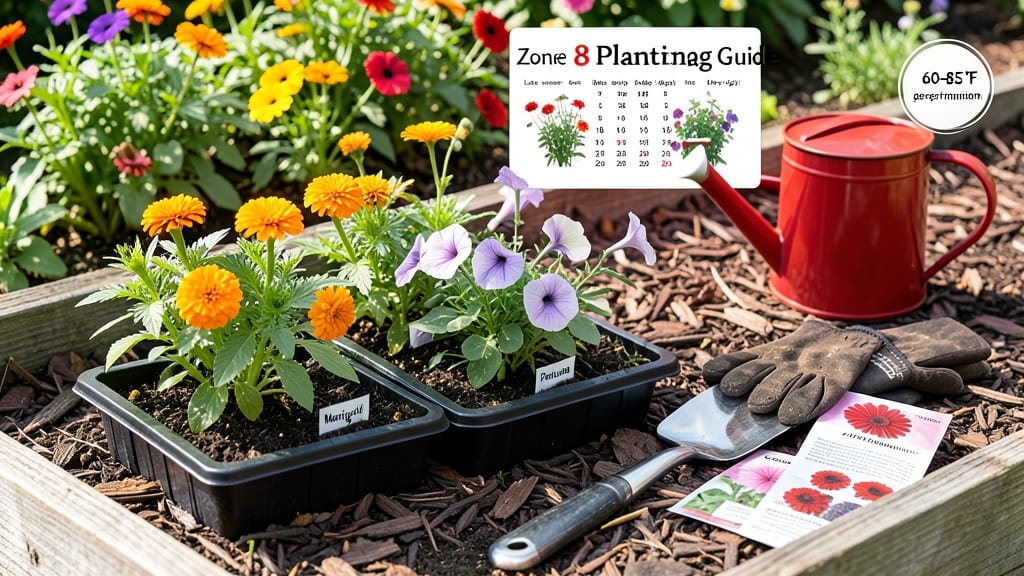
To plant flowers in Zone 8 for year-round blooms, timing is everything—spring and fall each offer unique advantages that can mean the difference between weak and vibrant blooms.
Zone 8 gardeners enjoy a long growing season, but planting at the wrong time can lead to stunted growth or lost plants. Whether you're in California, Texas, or Florida, mastering the spring vs. fall schedule will transform your garden into a nonstop floral display.
Cool-season flowers like pansies thrive when planted in early spring or fall, while warm-season favorites such as marigolds need to wait until after the last frost. Understanding these distinctions ensures your flowers establish strong roots before extreme heat or cold sets in.
Below, I break down the best planting windows for annuals, perennials, and bulbs, along with soil prep tips and regional adjustments to keep your 🌸 flowers blooming all year.
Jan
🌸
Feb
🌸
Mar
🌸
Apr
🌸
May
🌸
Jun
🌸
Jul
🌸
Aug
🌸
Sep
🌸
Oct
🌸
Nov
🌸
Dec
🌸
Best spring planting times for flowers in Zone 8 (by flower type)
Spring in Zone 8 offers a 6-8 week window between frost risk and summer heat—critical for planting flowers that thrive in your region. Unlike cooler zones, you can grow both cool-season and warm-season flowers, but timing determines success.
Plant too early, and frost zaps tender seedlings; too late, and summer drought stunts growth. Let’s break down the ideal planting times by flower type, including soil temperature cues and microclimate adjustments for Zone 8a vs. 8b.
First, check your last frost date: March 15 in Zone 8a (e.g., Dallas, San Antonio) and February 15 in Zone 8b (e.g., Orlando, Tampa). Soil temperature is your true guide—wait until it hits 60°F+ for warm-season flowers.
Use a soil thermometer to avoid guessing. For cool-season flowers, plant 6-8 weeks before last frost (early February in 8b, late February in 8a) to give roots time to establish before heat arrives.
Microclimates matter in Zone 8! Coastal areas (e.g., San Diego) stay milder, while inland cities (e.g., Phoenix) heat up faster. Adjust planting by 2-4 weeks later in hotter microclimates. For example, zinnias can go in March 1 in Zone 8b coastal but wait until April 1 in Zone 8a desert.
Now, let’s dive into the best spring planting times for popular flowers, organized by type. This summary table includes ideal soil temps, frost risk windows, and Zone 8a vs. 8b adjustments to maximize blooms.
| Flower Type |
Zone 8a Planting Window |
Zone 8b Planting Window |
Soil Temp Requirement |
Sunlight Needs |
Key Notes |
| Cool-Season Annuals |
Feb 15 – Mar 15 |
Jan 15 – Feb 28 |
45°F–60°F |
Full sun to partial shade |
Pansies, snapdragons, sweet peas. Plant early to avoid summer heat. |
| Warm-Season Annuals |
Apr 1 – May 15 |
Mar 1 – Apr 15 |
60°F+ |
Full sun |
Marigolds, zinnias, petunias. Wait until soil warms to avoid rot. |
| Perennials |
Feb 1 – Mar 31 |
Jan 15 – Feb 28 |
50°F–65°F |
Varies (check labels) |
Daylilies, coneflowers, black-eyed Susans. Early planting = stronger roots. |
| Bulbs (Spring-Blooming) |
Oct–Dec (fall) or Feb (spring) |
Nov–Jan (fall) or Jan–Feb (spring) |
50°F–60°F |
Full sun to partial shade |
Tulips, daffodils, hyacinths. Spring planting works but fall is better. |
| Vines & Climbers |
Mar 15 – Apr 15 |
Feb 15 – Mar 31 |
55°F+ |
Full sun to partial shade |
Clematis, morning glories, sweet peas. Stake
Why fall planting often works better than spring (with exact dates)
Fall planting gives Zone 8 flowers a head start by letting roots establish in cooler soil before summer's brutal heat. Unlike spring, when seedlings face pests, weeds, and drought stress, fall-planted flowers often bloom earlier and more vigorously the next year.
The science? Root growth thrives at 60-70°F—perfect fall temps in Zone 8!
Another advantage: fewer weeds and pests compete with your new plants. By late fall, many insects are dormant, and weeds haven’t yet germinated. Plus, mulching in fall locks in moisture, giving your flowers a hydration buffer through winter.
This is why pros swear by fall planting for perennials, bulbs, and even some annuals.
📅 Here’s your Zone 8 fall planting calendar—with exact deadlines to avoid missed opportunities:
1. Early September (Bulbs & Tender Perennials)
Plant spring-blooming bulbs (tulips, daffodils) and tender perennials (lavender, salvia). Soil temps are still warm enough for roots to grow but cool enough to avoid heat stress.
2. Mid-September (Cool-Season Annuals)
Sow pansies, snapdragons, and sweet alyssum. These thrive in 50-60°F soil and will bloom through winter in milder Zone 8 microclimates (like coastal areas).
3. Late September (Hardy Perennials)
Transplant daylilies, coneflowers, and black-eyed Susans. They’ll establish roots before first frost (Nov 15 in 8a, Dec 1 in 8b) and rebound faster in spring.
4. October (Fall-Blooming Annuals)
Add calendulas, stock, and ornamental kale. These love cool weather and add color to late-season gardens. Stop planting by mid-October in Zone 8a.
5. November (Bare-Root Plants)
Order and plant bare-root roses, shrubs, and fruit trees. Dormant roots handle cooler temps and establish before spring growth spurts.
Pro tip: Zone 8b (warmer areas) like Houston or Orlando can plant 2-3 weeks later than Zone 8a (e.g., San Francisco or Denver). Always check your local frost dates—they vary even within the same zone!
Fall-planted flowers also outcompete weeds next season because their roots are already deep. Plus, mulch applied in fall insulates soil, keeping roots 5-10°F warmer than air temps—critical for survival in Zone 8’s mild winters. Try straw or shredded leaves for best results.
Ready to try? Start with one fall-planted perennial this year—like Russian sage or coreopsis—and watch how vigorous and early it blooms compared to spring-planted friends. Your garden will thank you! 🌿
★★★★★5.0(8 reviews)
|