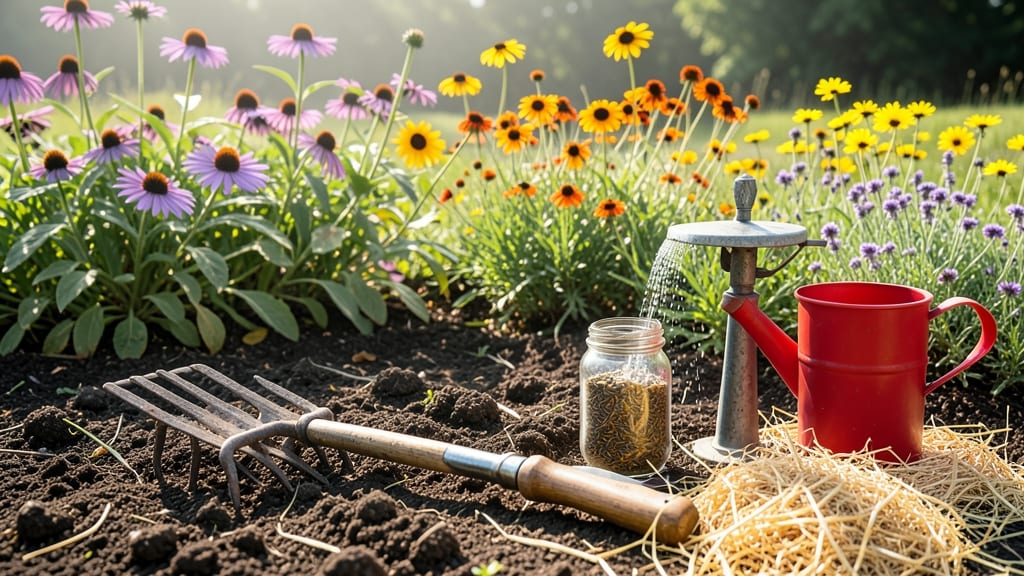
Planting wildflower seeds in Missouri at the right time ensures vibrant blooms all season long, with early spring or fall being the key windows for success.
Missouri’s diverse climate—from humid summers to chilly winters—can make wildflower planting tricky, but timing is everything for vibrant blooms that last all season. Whether you're in St. Louis or Kansas City, the right window makes the difference between a patch of color and a missed opportunity.
Most gardeners in zones 5b-6b get the best results by sowing seeds in March or April for spring blooms or in September or October for fall germination. This aligns with the last frost date around April 15, giving seeds time to establish before summer heat arrives.
Below, I’ll break down the exact months for your specific zone, soil prep tips, and how to keep your wildflowers thriving once they sprout. Ready to transform your landscape with low-maintenance beauty?
🌼When to Plant Wildflowers
Jan❄️
Feb🌱
Mar🌼
Apr🌼
May🌱
Jun☀️
Jul☀️
Aug🌱
Sep🌼
Oct🌼
Nov🌱
Dec❄️
Ideal Time
Also Good
Missouri’s best planting months for wildflowers by USDA zone
Timing your wildflower planting in Missouri can transform your garden from a patchy mess to a vibrant, low-maintenance pollinator paradise. The key lies in understanding your USDA zone—whether you're in cooler Zone 5a or warmer Zone 7b—and aligning planting with nature's rhythms.
Annuals and perennials each have their own sweet spot, with fall planting often outperforming spring for deeper root establishment before winter.
Missouri's climate creates a unique opportunity: two prime planting windows—early spring and fall—that work beautifully for most wildflower varieties. In Zones 5a-6a, where frosts linger longer, aim for March-April or September-October.
Warmer Zones 6b-7b can extend spring planting into May and fall planting into November, giving you more flexibility to experiment with different species.
Why timing matters: Planting too early in spring risks frost damage to tender seedlings, while late spring planting may struggle with summer heat before establishing roots. Fall planting, however, gives seeds time to germinate and develop roots before winter dormancy, resulting in earlier and more robust blooms the following season.
USDA Zone
Best Planting Window
Annuals Strategy
Perennials Strategy
Key Consideration
5a (Northeast MO)
March 15-April 15 September 15-October 15
Spring: Direct sow after last frost Fall: 6-8 weeks before first frost
Fall planting preferred Spring: Wait until soil reaches 50°F
Short growing season Protect with mulch
5b (Central MO)
March 1-April 30 September 1-October 31
Spring: After April 15 Fall: October 1-November 1
Fall planting ideal Spring: Early March
Moderate frost risk Use cold-hardy mixes
6a (Southwest MO)
February 15-April 15 August 15-November 1
Spring: February-March Fall: September-November
Fall planting best Spring: February-March
Longer growing season Drought tolerance key
6b (Southeast MO)
February 1-April 30 August 15-December 1
Spring: February-April Fall: September-December
Fall planting preferred Spring: February-March
Humid climate Choose disease-resistant varieties
How to choose the right wildflower mix for Missouri’s climate
Missouri’s variable climate demands wildflower mixes that thrive in both dry spells and humid summers. Native species like black-eyed Susans and purple coneflowers are my top picks—they’re drought-tolerant and attract pollinators year-round. These plants have adapted to Missouri’s clay-heavy soils and inconsistent rainfall, making them low-maintenance champions.
Non-native mixes might offer brighter blooms, but they often require extra watering and soil amendments. For example, cosmos and zinnia pack a punch visually but struggle in Missouri’s hot summers without consistent moisture.
If you’re set on non-natives, opt for heat-tolerant varieties like Mexican sunflower or blanket flower.
For seasonal interest, mix early bloomers like wild bergamot (spring) with late-season stalwarts such as goldenrod (fall). This ensures continuous color from April through October. Missouri’s rainfall patterns—heavy springs and dry summers—make this strategy perfect for minimizing gaps in your garden’s visual appeal.
Native Wildflower Mixes
Pros:
Drought-resistant
Supports pollinators
Low maintenance
Cons:
Limited color options
Slower establishment
Non-Native Wildflower Mixes
Pros:
Vibrant colors
Faster blooming
Cons:
Needs more water
May spread aggressively
When selecting a mix, check the seed packet label for Missouri-specific recommendations. Look for blends labeled as “prairie mixes” or “native pollinator mixes”, as these are tailored to Missouri’s USDA zones 5b-6b. For example, Prairie Moon Nursery offers regionally adapted seeds that thrive with minimal intervention.
If your soil is clay-heavy (common in Missouri), amend it with compost or sand to improve drainage. Drought-resistant varieties like butterfly weed and partridge pea will reward you with bold blooms even in dry spells. These plants store water efficiently, making them ideal for Missouri’s unpredictable rainfall.
For long-lasting blooms, prioritize perennial wildflowers over annuals. While annuals like sunflowers provide instant color, perennials like coneflowers and black-eyed Susans return year after year with less effort. This makes them a cost-effective choice for Missouri gardeners.
Finally, consider your garden’s sunlight exposure. Full-sun areas (6+ hours) suit goldenrod and coneflowers, while partial shade works for wild columbine and wild geranium. Matching your mix to your site’s conditions ensures healthier plants and longer blooming seasons. 🌼