
Flowers
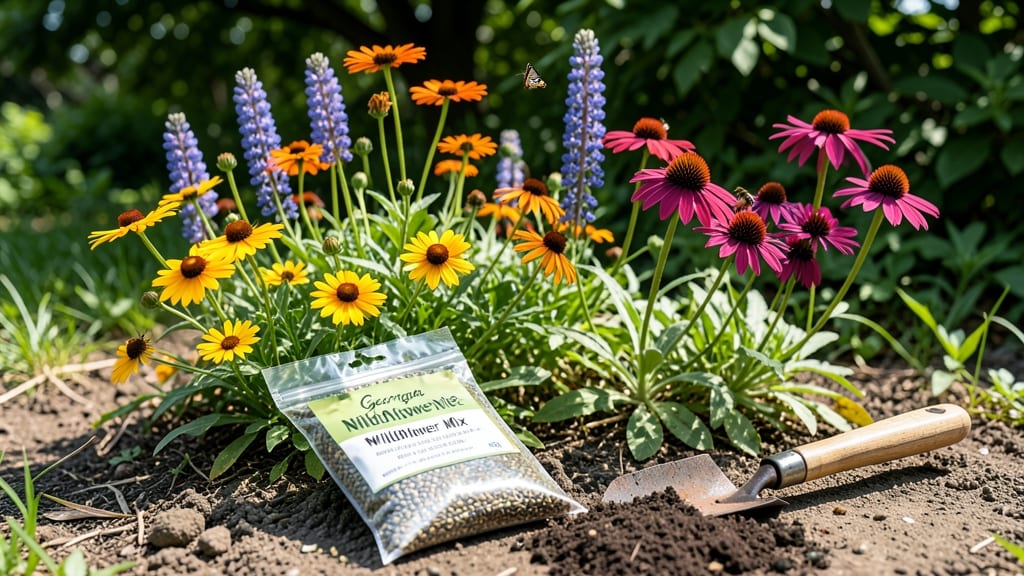
Planting wildflowers in Georgia at the right time means the difference between a year-round riot of color and a patch of dirt that never quite takes.
The best windows for sowing seeds are late winter to early spring or late summer to early fall, when the soil warms up just enough to encourage germination—but not so much that drought or heat zaps your seedlings before they sprout.
Here’s the catch: Georgia’s climate zones don’t all play by the same rules. The mountains in the north (like Zone 7a) can still see frost in May, while the Wiregrass region in the south might already be baking by then.
Plant too early in the Piedmont, and you risk losing your 🌼 to a late freeze; too late, and you’ll miss the first flush of spring blooms.
This guide breaks down the exact months to plant by microclimate—plus how to prep your soil, pick the right seed mixes, and avoid common mistakes that turn wildflower dreams into a wildfire hazard (yes, some mixes are more flammable than others).
By the end, you’ll know not just when to plant, but how to stretch your blooms from March through October, even in Georgia’s hottest, driest stretches. Let’s get started.
Georgia’s wildflower planting calendar by microclimate Zone
Georgia’s four distinct microclimate zones—North Georgia mountains, Central Piedmont, South Georgia coastal plains, and Wiregrass region—each demand different planting strategies. The key? Aligning your schedule with frost dates and rainfall patterns unique to your area.
For example, North Georgia’s USDA Zone 7a faces earlier frosts than South Georgia’s Zone 8b, where winters are milder. Let’s break down the perfect timing for both annuals and perennials in each zone.
Annual wildflowers like cosmos and zinnia thrive when sown 4-6 weeks before last frost, while perennials such as black-eyed Susan and coneflower benefit from fall planting for deeper root establishment.
In drought-prone areas like the Wiregrass region, aim for late summer planting to capitalize on September rainfall before winter dry spells. Adjust your schedule if your area experiences early or late frosts—check your local Cooperative Extension Service for precise dates.
🌱
For North Georgia’s cooler climate, focus on spring planting (March–April) to avoid late frosts that can damage tender seedlings. If you’re in the Piedmont region, where soils are often clay-heavy, amend your beds with organic matter like compost or leaf mold to improve drainage.
This is especially critical for perennial wildflowers, which need healthy soil to establish deep roots before winter.
In South Georgia’s warmer zones, you can push the envelope by planting annuals in late fall (October) for winter and early spring blooms. The Wiregrass region, however, demands extra caution—drought is a major risk, so late summer planting (August–September) ensures seeds germinate before winter dry spells.
Always check local rainfall forecasts; a dry spell after planting can stall germination.
Pro tip: Use mulch (straw or pine needles) to retain moisture and regulate soil temperature. In North Georgia, a 3-inch layer of mulch can protect seeds from temperature fluctuations, while in South Georgia, it helps conserve water during summer heat waves.
For perennials, mulch also suppresses weeds, reducing competition for nutrients.
If you’re unsure about your local frost dates, err on the side of caution. Plant annuals 2–3 weeks later than the recommended window if your area has a history of late frosts.
For perennials, fall planting is ideal—seeds sown in August–September will establish roots before winter and bloom vigorously the following year. This strategy works
How to choose wildflower seed mixes for Georgia’s unique seasons
Georgia’s diverse climate zones demand smart seed mix choices to ensure your wildflowers thrive year-round. The wrong blend can leave you with wilted annuals in summer or bare patches in winter.
Native mixes like lupines and black-eyed Susans are hardy, while non-natives might need extra care during Georgia’s humid winters or drought-prone summers.
Start by checking the USDA Zone on your seed packet—Georgia spans 7a to 9a. Mountain regions (Zone 7a) need cold-tolerant varieties, while coastal areas (Zone 9a) can handle heat-loving bloomers. For example, goldenrod thrives in cooler fall months, while coreopsis dominates summer heat.
Here’s the key: Seasonal timing matters more than the seed mix itself. Spring bloomers like lupines need cool soil temps (below 70°F) to germinate, while summer staples like coneflowers prefer warmer soil (above 60°F). Fall plantings of aster or black-eyed Susan ensure winter interest.
Native Seed Mixes
- ✅ Pros:
- 🌱 Supports local pollinators (bees, butterflies)
- 💧 Drought-resistant (ideal for Georgia summers)
- 🌿 Low-maintenance (no fertilizer needed)
- ❌ Cons:
- 🌡️ Limited color variety (fewer bright blooms)
- ⏰ Slower germination (4-6 weeks)
Non-Native Seed Mixes
- ✅ Pros:
- 🌈 Vibrant colors (more options)
- ⏳ Faster blooming (3-4 weeks)
- 🌡️ Tolerates heat better in Zone 9a
- ❌ Cons:
- 💧 Needs more water (not drought-proof)
- 🐝 May attract pests (aphids, spider mites)
- 🌱 Can self-seed aggressively (weedy)
For spring blooms, prioritize lupines and phlox—they thrive in Georgia’s cool, moist early months. In summer, black-eyed Susans and coreopsis dominate with heat tolerance and low water needs. Fall plantings should include asters and goldenrod for late-season color before frost.
Pro tip: Mix native perennials (like coneflowers) with annuals (like marigolds) for continuous blooms. Native perennials return yearly, while annuals fill gaps with instant color. Always check seed packets for sunlight requirements—Georgia’s full-sun zones (like Piedmont) need heat-loving varieties, while shaded mountain gardens require partial shade mixes.
Finally, avoid invasive species like kudzu or Japanese honeysuckle, which can overtake your garden. Stick to certified native mixes from trusted suppliers like American Meadows or Wildseed Farms for guaranteed success in Georgia’s unique seasons. 🌼