
Companion Plants
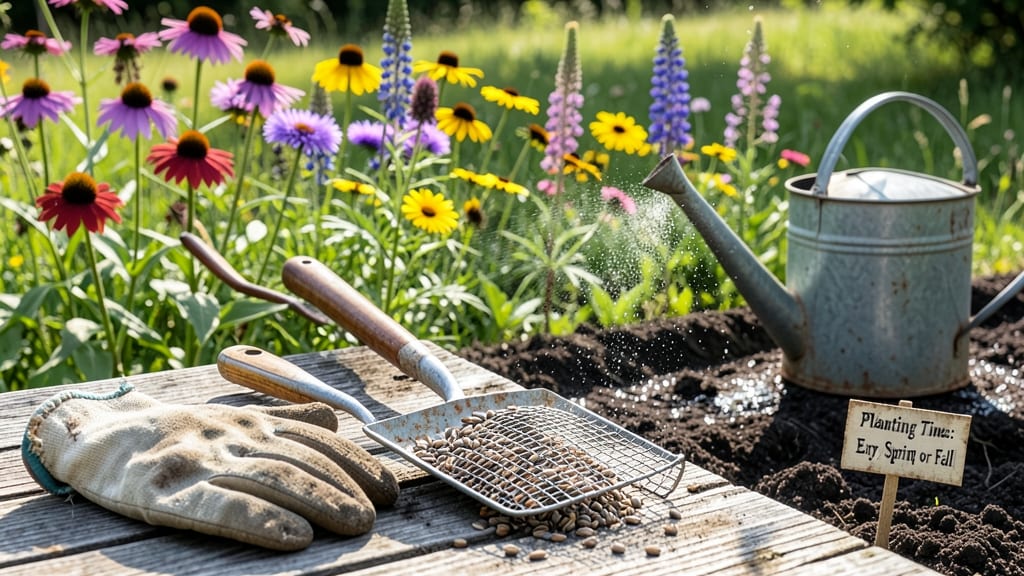
To plant wildflower seeds in PA at the best time, aim for early spring (March-April) or fall (September-October) when soil temperatures and moisture align perfectly for germination.
You’ve probably seen those vibrant meadows in late summer and wondered how to recreate them—but timing is everything. In Pennsylvania’s zones 5-7, planting too early risks frost damage, while sowing too late can leave seeds struggling to establish before winter.
The key is matching your microclimate: urban heat islands like Pittsburgh may allow earlier sowing, while the cooler Poconos need a later start.
Wildflowers like black-eyed Susans and butterfly weed thrive when planted just before the last frost (around April 15 in most areas) or in early fall, giving roots time to anchor before dormancy. Fall planting also skips summer heat stress, a common pitfall for beginners.
Below, I’ll break down the exact windows by zone, soil prep tricks to boost success, and how to choose seeds that match your region’s climate—so you end up with a meadow that blooms year after year, not a patchy disappointment.
Pennsylvania wildflower planting calendar by hardiness Zone (3-7)
Pennsylvania’s diverse climate—from the cool mountain valleys of the Poconos to the warmer urban heat islands of Pittsburgh—means wildflower planting windows vary dramatically. Even within a single zone, your last frost date can shift by weeks.
For example, Philadelphia’s average last frost is April 15, while Scranton’s can be as late as May 1. Understanding these microclimates ensures your wildflower seeds germinate when soil temperatures hit that critical 40-60°F range.
Most Pennsylvania gardeners focus on spring and fall planting, but the exact timing depends on your USDA zone and local conditions. In Zone 3 (northwest PA), you’ll need to start seeds indoors by March 1 for outdoor transplanting by May 1.
Meanwhile, Zone 7 gardeners in the Delaware Valley can direct-sow seeds as early as February 15 without frost risk. The key is balancing soil warmth, moisture levels, and predictable rainfall.
For annual wildflowers, like cosmos or zinnia, you can push the envelope slightly. In Zone 6-7, sow seeds as early as February 1 under row covers or in a greenhouse. These fast-growing varieties tolerate cooler soil better than perennials, which need warmer conditions to establish roots.
My rule of thumb? If your soil temperature stays above 50°F for 5 consecutive days, it’s safe to sow most annual seeds.
Fall planting offers a second chance for success, especially in Zone 4-5 where summers can be unpredictable. Aim to sow seeds 6-8 weeks before your first frost (typically September 1-October 15).
This gives seedlings time to germinate and develop roots before winter dormancy. Perennials like coneflower and purple coneflower benefit most from fall planting, as they establish deeper roots over winter.
Regional exceptions matter—big time. In Pittsburgh’s urban core, asphalt and buildings create microclimates 5-10°F warmer than rural areas just 10 miles away. Use a soil thermometer to confirm conditions match your planting guide.
For example, if your backyard hits 60°F soil temp by March 10 (like in Zone 6), you’re good to go. But if you’re in the Poconos and soil is still 45°F, wait until April 15.
Preparation is everything. Before sowing, clear the area of weeds and loosen the top 2 inches of soil with a rake. Wildflowers thrive in well-draining soil, so avoid compacted or waterlogged areas. For large meadows, use a broadcast spreader to distribute seeds evenly.
After sowing, press seeds lightly into the soil with a board or rake—just enough to ensure soil contact without burying them. A thin layer of straw mulch helps retain moisture and deter birds.
Watering is critical in the first 2-4 weeks after planting. Keep soil consistently moist (not soggy) until seedlings emerge. In Zone 3-4, morning watering is best to prevent overnight freezing.
Once established, most wildflowers are drought-tolerant, but young plants need regular care. In drought-prone areas like the Ridge and Valley, consider adding native grasses to your mix—the
How PA microclimates affect wildflower germination success
Your wildflower seeds might thrive in Philadelphia by mid-March, but the same seeds in the Poconos could rot in the cold ground until April. This isn't just about zones—it’s about elevation, soil moisture, and whether your backyard sits in an urban heat island or a rural valley.
For example, Scranton’s higher elevation (2,000+ ft) delays soil warming by 2-3 weeks compared to Philadelphia’s coastal warmth. Even within 50 miles, these microclimates can shift your ideal planting window by 4 weeks or more.
Let’s break down the key factors. Elevation is your first clue: every 1,000 feet of altitude can push your last frost date back by 5-7 days.
That means seeds planted in State College (Zone 5, 2,500 ft) need to wait until April 15, while Lancaster (Zone 6, 400 ft) can start as early as March 15.
Then there’s soil moisture: drought-prone areas like the Ridge and Valley region require deeper watering after sowing, while humid Appalachian valleys may need well-draining soil to prevent rot.
If you’re in the Poconos, aim to sow seeds by April 15—any later risks seedlings struggling before the first frost. In contrast, Philadelphia’s urban heat can let you plant black-eyed Susans as early as February 15 under row covers.
The Ridge and Valley region demands extra caution: its drought-prone soils mean you’ll need to water deeply after sowing and mulch to lock in moisture. My soil thermometer is my secret weapon here—I wait until readings hit 50°F+ for 3 days straight before planting.
Late sowing is a gamble, especially in Zone 3-4. Seeds planted after May 1 in the Poconos may not germinate before summer heat arrives, leaving you with bare soil instead of blooms.
For annuals, you can push the limit slightly—cosmos and zinnias might still sprout if soil stays moist—but perennials like coneflowers need that 6-8 week head start before winter.
In Zone 6-7, late sowing is less risky, but even there, seeds planted after June 1 rarely produce reliable blooms that season.
To mitigate risks, I recommend fall planting in Zone 4-5. Seeds sown in September-October germinate in cool weather, develop roots over winter, and burst into bloom the following spring. This strategy works especially well for native perennials, which thrive with established root systems.
For drought-prone areas, mix in native grasses like little bluestem—they stabilize soil moisture and reduce evaporation, giving your wildflowers a fighting chance.
Pro tip: Check your local Cooperative Extension Service for hyper-local data. Their frost maps often reveal neighborhood-level variations that generic zone guides miss. For example, Pittsburgh’s North Side might be Zone 6, but its South Hills could feel like Zone 5 due to elevation.
By aligning your planting with these microclimates, you’ll turn your wildflower patch from a gamble into a guaranteed success.