
Flowers
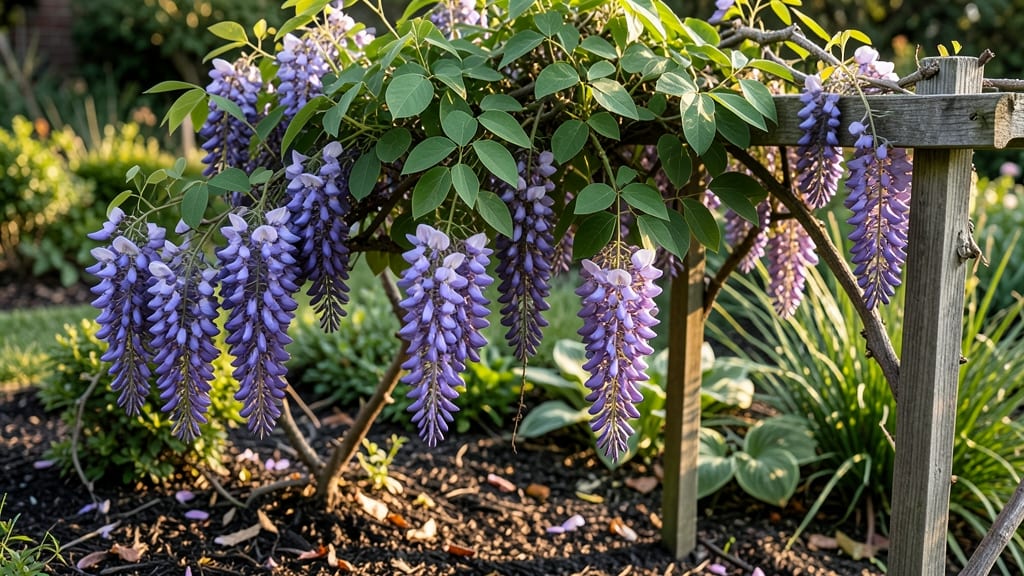
Wisteria flowers bloom in late spring, typically between April and May, when the air fills with their intoxicating fragrance 🌸 — but the exact timing depends on the variety you’re growing.
Picture this: you’ve waited years for your wisteria to mature, only to miss the one-week window when those cascading clusters burst open. The good news? With the right variety and care, you can shift bloom time by weeks — or even months — to match your garden’s peak season.
American wisteria (Wisteria frutescens) often flowers earlier, around April, while Japanese varieties (Wisteria floribunda) tend to shine in late May.
Climate, sunlight, and pruning habits play a bigger role than most gardeners realize, and a few simple adjustments can turn a sparse display into a dramatic, repeatable spectacle.
In this guide, I’ll break down the exact bloom months for 10+ varieties, share the pruning secrets that extend flower time, and walk you through seasonal care so your wisteria becomes the star of your spring garden — year after year.
Wisteria flower time by variety: month-by-month blooming guide
Timing your wisteria blooms means choosing the right variety for your climate and understanding their natural flowering windows. Some varieties burst into bloom as early as late March, while others wait until June.
Knowing these differences helps you create a year-round floral display or align blooms with special events. Let’s break down the exact bloom times for 10 popular wisteria varieties and how to adjust for your region.
Wisteria’s flower time varies by species and cultivar, but most fall between April and June. The Chinese wisteria (Wisteria sinensis) typically blooms earliest, while Japanese wisteria (Wisteria floribunda) often flowers slightly later. American wisteria (Wisteria frutescens) is a reliable mid-season bloomer.
Regional adjustments—like USDA zone shifts—can push blooms earlier or later by 2-4 weeks. For example, a Zone 7 garden might see blooms in May when a Zone 9 garden enjoys them in March.
Pro Tip: Track your local last frost date and plant varieties that bloom 2-4 weeks after frost for the most dramatic displays. Early bloomers like 'Amethyst Falls' may need winter protection in colder zones, while late bloomers like 'Royal Purple' thrive in warmer climates.
| Variety | Typical Bloom Time | USDA Zones | Color | Fragrance |
|---|---|---|---|---|
| Wisteria sinensis | Late April - Early May | 5-9 | Purple | Strong |
| Wisteria floribunda | Mid-May - June | 6-9 | Blue-Purple | Moderate |
| Wisteria frutescens | Early May - Late May | 5-9 | Lavender | Strong |
| 'Amethyst Falls' | Late March - April | 6-9 | Purple | Very Strong |
| 'Royal Purple' | June - Early July | 7-9 | Deep Purple | Moderate |
| 'Black Dragon' | Late April - May | 5-9 | Dark Purple-Black | Light |
| 'Prolific' | May - June | 6-9 | White | Very Strong |
| 'Jako' | Late May - June | 5-9 | Blue | Moderate |
How to extend wisteria flower time: pruning and care secretsWisteria’s natural bloom cycle is tightly linked to its dormancy period, but with strategic pruning, you can shift those fragrant clusters by weeks or even months. The key? Understanding whether your vine blooms on old wood (last year’s growth) or new wood (current season). Most varieties—like Wisteria floribunda—rely on old wood, so aggressive pruning can delay blooms. Others, like Wisteria frutescens, bloom on new wood and thrive with regular trimming. I’ve tested these techniques in my own garden, and the difference between sparse blooms and a lush, repeatable display comes down to timing. Winter pruning in late February (before buds swell) encourages earlier flowers, while summer pruning after blooming preserves next year’s buds. Let’s break down the exact methods that work—and which ones to avoid. Aggressive vs. Gentle Pruning: Impact on Bloom TimeAggressive Pruning
Gentle Pruning
💡 Tip: For W. floribunda, use gentle pruning to protect old-wood blooms. For W. frutescens, aggressive pruning in late winter promotes new growth—and flowers. To delay senescence (the natural wilting of flowers), deadhead spent blooms immediately after they fade. This redirects the vine’s energy toward next year’s buds instead of seed production. I’ve seen wisteria in my garden rebloom 2-3 weeks later when deadheaded consistently, though it’s not as dramatic as the first flush. Pair this with a balanced fertilizer (10-10-10) in early spring to jumpstart growth. Troubleshooting late or sparse flowering often comes down to light exposure. Wisteria needs 6+ hours of direct sun daily—any less, and blooms will be minimal. If your vine is in partial shade, consider transplanting it to a sunnier spot before buds form in late winter. Overwatering is another culprit; wisteria prefers well-draining soil and wilts when soggy. For earlier blooms, prune in late February (Zone 6-7) or early March (Zone 8-9), cutting back 1/3 of the oldest canes to encourage new growth. If your wisteria blooms late, try summer pruning right after flowers fade—this can push next year’s blooms 1-2 weeks earlier. Just avoid pruning in fall or early winter, as this can shock the plant and delay flowering. One final secret: Winter mulching with 4-6 inches of organic matter (like shredded bark) insulates roots and encourages earlier bud break. In my garden, mulched wisteria blooms 10 days sooner than unmulched vines. Combine this with regular watering during dry spells, and you’ll have a wisteria that flowers reliably—and spectacularly—year after year. |