
Flowers
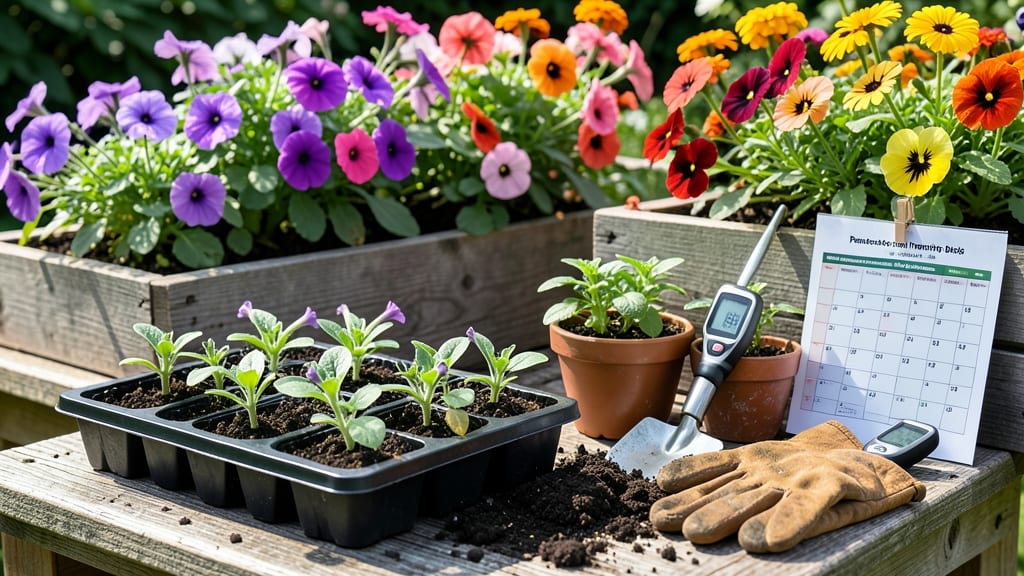
To plant flowers in Pennsylvania at the perfect time means catching the window between frost and heat—usually mid-April to early June for spring blooms and late August to October for fall color.
Timing is everything in Pennsylvania gardening—plant your flowers too early, and they’ll freeze; too late, and they’ll bolt before summer’s peak. With PA’s diverse USDA zones (4-7), knowing the exact planting windows for annuals, perennials, and bulbs can mean the difference between a showstopping garden and a sad, wilted disappointment.
Whether you’re in the cooler Zone 5 of the Poconos or the milder Zone 7 near Philadelphia, the last frost date (around April 15) is your cue for spring planting.
For fall, aim for 6-8 weeks before the first frost—usually late August to early October—to give roots time to establish before winter.
Inside, I’ll break down the best planting months for your favorite flowers, how to adjust for late frosts or heatwaves, and the top late-season bloomers to keep your garden vibrant until November. Let’s get those 🌸 thriving!
Pennsylvania USDA zones 4-7: exact flower planting months by type
Pennsylvania’s diverse USDA zones (4-7) create unique planting challenges, from the cold Poconos (Zone 4) to the warmer Philadelphia suburbs (Zone 7). Each zone has specific frost dates that dictate when to plant annuals, perennials, and bulbs for maximum blooms.
For example, Pittsburgh (Zone 6) typically sees its last frost around April 15, while Erie (Zone 5) can linger until May 1. Understanding these differences ensures your coneflowers, black-eyed Susans, and tulips thrive.
To simplify, I’ve broken down planting windows by flower type and zone, including cool-season annuals (like pansies) that tolerate early spring and warm-season varieties (like marigolds) that need soil above 60°F.
Perennials like hostas and peonies can handle early spring or fall planting, while bulbs like tulips must go in the ground by November to establish roots before winter. Let’s dive into the exact months for each category.
📌 PRO TIP: Use a soil thermometer to confirm 60°F+ soil temps for warm-season plants—this often aligns with mid-May in Zone 4 but can be as early as April in Zone 7. For bulbs, plant in fall (September-October) for spring blooms, but adjust for earlier frosts in Zone 4.
For Zone 4 gardeners (e.g., Scranton or State College), late April or early May is the sweet spot for hardy annuals like sweet peas, while Zone 7 areas (Philadelphia, Lancaster) can start warm-season flowers like zinnias in April.
Always check your local frost dates—the Penn State Ag Extension provides hyper-local forecasts for PA counties. Pro tip: Start seeds indoors 6–8 weeks before your last frost date to extend your blooming season.
Perennials like coneflowers (Echinacea) and black-eyed Susans (Rudbeckia) are low-maintenance powerhouses that thrive when planted in early spring or fall. In Zone 5 (Erie, Altoona), aim for April 15–May 1 in spring or September 15–October 1 in fall.
These plants establish deep roots before winter, giving them a head start in spring. For bulbs like tulips, timing is critical—plant them 6 weeks before the first frost (typically September in Zone 4 and October in Zone 7).
If you’re in Zone 6 (Pittsburgh, Harrisburg)
How to adjust planting dates for Pennsylvania’s unpredictable weather
Pennsylvania’s weather can throw even the most experienced gardeners for a loop—one week of 60°F sunshine can turn into a 32°F frost overnight. In USDA zones 5-6, where I garden, these swings force me to play detective with my planting schedule.
The Poconos might still see frost in mid-April, while the Lehigh Valley could be frost-free by mid-March. Without adjustments, your marigolds or petunias could end up as confetti.
My secret weapon? A combination of soil temperature checks, row covers, and knowing my region’s backup planting windows. For example, in zone 6 (where I live), I start cool-season flowers like pansies in early April, but I keep a 14-day buffer for late frosts.
Warm-season flowers like zinnias wait until mid-May, but I’m always ready to cover young plants if the forecast calls for 30°F nights.
Here’s the critical mistake I see new gardeners make: they rely on calendar dates instead of soil conditions. A 50°F soil temperature is the magic number for many seeds to germinate, but in Pennsylvania, that can mean April in Philadelphia or May in the Allegheny Mountains.
I use a soil thermometer to confirm readiness—no guessing games.
⚠️ callout-warning⚠️ PA-Specific Frost Risks You Can’t Ignore
Poconos (Zone 5-6): Frost can hit April 15-30—wait until May 1 for warm-season flowers like tomatoes or peppers.
Pittsburgh (Zone 6): Last frost averages April 20, but 1 in 3 years sees frost in May. Use row covers for 3-4 weeks after planting.
Philadelphia/Lehigh Valley (Zone 7): Frost-free by April 15, but heatwaves can scorch tender seedlings. Start cool-season flowers indoors in March for a head start.
Pro Tip: Bookmark your local Cooperative Extension Service frost alerts—they’re your early-warning system.
Row covers are my lifesaver for extending planting windows. A simple frost blanket can push warm-season planting back by 2-3 weeks. For example, I plant basil under cover in late April and remove it once nighttime temps stay above 50°F.
This gives me 6-8 weeks of growth before the plant outgrows the cover. Just remember: remove covers during the day to prevent heat stress.
For backup planting windows, I keep a succession planting schedule. If my first batch of zinnias bolts in July heat, I sow a second round in early August for fall blooms.
In zone 6, this works because the first frost usually hits in mid-October, giving late bloomers like cosmos or asters plenty of time to shine. I also keep flat of seedlings on standby for June gaps—just in case.
One year, a June heatwave fried my marigold seedlings before they could establish. I learned to harden off plants gradually and water deeply at the base to encourage strong roots.
Now, I also mulch heavily to retain moisture and plant in the late afternoon to reduce transplant shock from midday sun. These tweaks have saved my garden from multiple meltdowns.
Finally, I never plant warm-season flowers before soil temps hit 60°F—even if the air feels warm. Use a moisture meter to check; dry soil heats up faster and can trick you.
And if you’re in higher elevations (like State College), add 1-2 weeks to your planting timeline. Pennsylvania’s microclimates are brutal—respect them, and your flowers will thrive.