
Planting
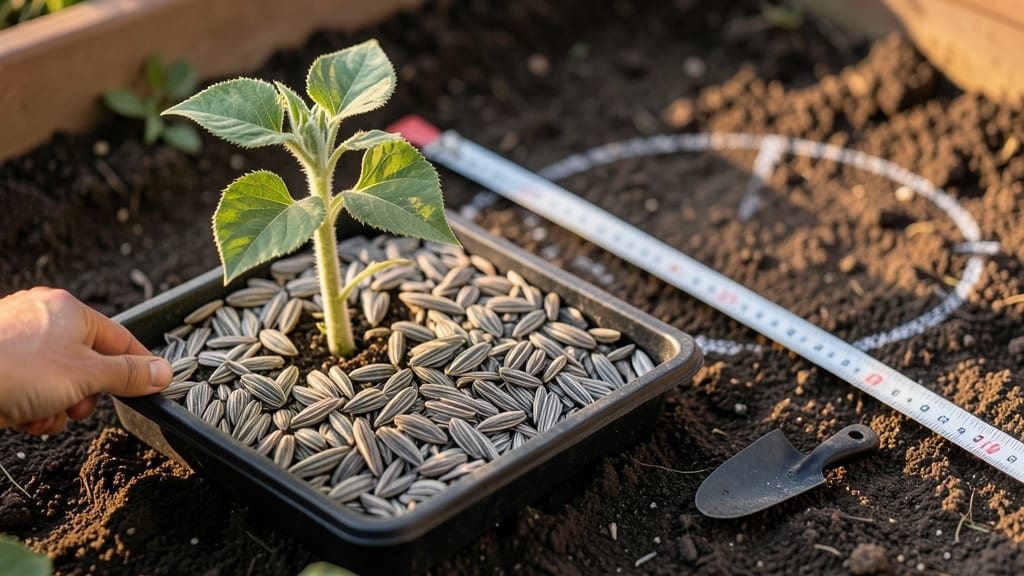
Planting sunflower seeds the right distance apart is the key to avoiding stunted growth and maximizing your harvest 🌻 — and the spacing depends entirely on whether you’re growing dwarf, standard, or giant varieties.
Picture this: you’ve spent weeks waiting for those bright yellow blooms to emerge, only to watch them struggle because they’re fighting for sunlight and nutrients. That’s what happens when spacing is off, and it’s a mistake that’s easier to fix before you even drop the seeds.
In this guide, I’ll walk you through the exact spacing rules for each sunflower type, from 6 inches apart for dwarf varieties to 36 inches for giants, plus how to adjust for your soil and climate. You’ll also discover how to avoid common pitfalls like overcrowding and uneven rows.
By the end, you’ll know not just how far apart to plant sunflower seeds, but how to arrange them for the strongest stems, biggest blooms, and easiest harvest — no guesswork included.

Optimal sunflower seed spacing by variety type: dwarf vs giant vs standard
Sunflowers thrive when planted with the right spacing—too crowded, and they’ll fight for nutrients; too spread out, and you’ll miss out on vibrant blooms.
The key lies in matching your sunflower variety to the perfect planting distance. Dwarf varieties need tight spacing, while giant sunflowers demand room to stretch their towering heights. Let’s break down the exact measurements for each type to ensure your garden flourishes.
Before planting, check your sunflower seed packet for variety-specific guidelines, as some hybrids may have unique needs.
For most gardeners, however, the general rules apply: dwarf sunflowers (like 'Teddy Bear' or 'Moulin Rouge') should sit 12–18 inches apart, while standard varieties (such as 'Mammoth' or 'Autumn Beauty') need 18–24 inches. Giant sunflowers (like 'Russian Giant' or 'Mammoth Russian') require the most space—24–36 inches between plants—to prevent competition and ensure those massive blooms reach their full potential.
Row spacing is just as critical as plant-to-plant distance. For dwarf varieties, keep rows 2–3 feet apart, while standard and giant sunflowers need 3–4 feet between rows to allow airflow and reduce disease risk.
Planting depth is consistent across all types: 1 inch deep is ideal, as sunflower seeds need darkness to germinate but won’t tolerate being buried too deeply.
Here’s a quick comparison to help you visualize the perfect layout for your garden:
| Variety Type | Plant Spacing (inches) | Row Spacing (feet) | Planting Depth (inches) | Mature Height |
|---|---|---|---|---|
| Dwarf (e.g., 'Teddy Bear') | 12–18 inches | 2–3 feet | 1 inch | 2–4 feet |
| Standard (e.g., 'Mammoth') | 18–24 inches | 3 feet | 1 inch | 8–12 feet |
| Giant (e.g., 'Russian Giant') | 24–36 inches | 3–4 feet | 1 inch | 10–15 feet |
For dwarf sunflowers, think of them like a cheerful border plant. Their compact size makes them perfect for containers, small gardens, or even as edging along pathways. When planting, use a hand trowel to create small holes and place 2–3 seeds per spot (thin to the strongest seedling later).
This spacing works beautifully in square-foot gardening, where you can fit up to 9 dwarf sunflower plants per square foot.
If you’re growing standard sunflowers, aim for a more relaxed layout. These varieties strike a balance between space efficiency and height, making them ideal for cut flower gardens or mixed borders.
Plant them in clusters of 3–5 for a fuller look, and always face them toward the sun to maximize their photosynthesis. A little extra space here ensures each plant gets enough sunlight and air circulation, reducing the risk of powdery mildew.
Giant sunflowers are the showstoppers of the garden, but they need room to shine—literally. These towering plants can reach heights of 12–15 feet, so give them the maximum spacing of 3 feet between rows and 3 feet apart in the row.
If you’re growing them as a windbreak or privacy screen, you can plant them closer (24 inches apart), but expect slightly smaller blooms. For the biggest heads, stick to the wider spacing and watch them grow into stunning, sun-loving giants.
Pro tip: Use a measuring tape or a simple garden ruler to mark your spacing before planting. This ensures consistency and prevents overcrowding. For large gardens, consider using a grid layout with stakes or strings to guide your planting.
Once your sunflowers are in the ground, water them deeply to encourage strong root development, especially during the first few weeks after germination.
Remember, sunflowers are annuals, so they’ll complete their life cycle in one season. Proper spacing now means bigger blooms, healthier plants, and a garden that’s the talk of the neighborhood.
Whether you’re growing sunflowers for their beauty, seeds, or even bird feed, the right spacing sets the stage for success.
🌻
Common sunflower spacing mistakes and how to avoid them
Even experienced gardeners sometimes make spacing mistakes with sunflowers. Overcrowding is the most common error, leading to stunted growth and poor yields. I’ve seen sunflower patches where seeds were planted just 4 inches apart—resulting in weak stems and competition for sunlight.
The good news? These mistakes are easy to fix with the right knowledge.
Another frequent issue is uneven planting depth. Some seeds end up too shallow, while others get buried too deep—both scenarios delay germination.
I always recommend using a seed spacing guide or marker flags to ensure consistency. Soil conditions also play a critical role; compacted or nutrient-poor soil can distort even the best spacing plans.
Critical Spacing Rule
How far apart to plant sunflower seeds depends on variety: dwarf types need 12-18 inches, standard varieties require 18-24 inches, and giant sunflowers demand 24-36 inches. Row spacing should be 2-4 feet apart to prevent shading.
Ignoring soil fertility can also backfire. If your soil is rich in nutrients, you can plant seeds slightly closer together—about 10-15% tighter than standard spacing. However, in poor soil, I recommend spacing seeds 20-30% wider to compensate for slower growth.
Always test your soil’s pH (ideal range: 6.0-7.5) before planting.
Climate matters too. In hot, dry regions, wider spacing (up to 36 inches) helps reduce competition for water. Meanwhile, in cool, moist climates, you can safely plant seeds closer together.
I’ve found that succession planting in cooler zones allows for tighter spacing since the second planting benefits from the first’s shade.
One mistake many gardeners overlook is companion planting conflicts. Sunflowers should not be planted near beans or peas, as they compete for the same nutrients and can stunt each other’s growth.
Instead, pair them with basil, marigolds, or borage, which improve soil health and deter pests. Always check companion planting charts before finalizing your layout.
Finally, avoid skipping mulch after planting. A 2-3 inch layer of organic mulch helps retain moisture, suppress weeds, and regulate soil temperature—all critical for even sunflower growth.
I use straw mulch in my garden, and it’s made a noticeable difference in seedling survival rates. Adjust spacing slightly wider if you’re using thick mulch to prevent overcrowding as the plants mature.
With these adjustments, your sunflowers will thrive—tall, strong, and ready to brighten your garden all season long. 🌻